
America is back to training allies to fight terrorists—without sliding into another open-ended ground war.
Story Snapshot
- Nigeria’s military announced that about 200 U.S. troops are arriving to train and provide technical expertise, with Nigerian forces retaining full command authority.
- The deployment builds on a smaller U.S. presence already supporting intelligence efforts and follows U.S. strikes reported in late 2025.
- Nigeria faces overlapping threats from Boko Haram, Islamic State-linked factions, bandit networks, and newer Sahel-linked groups pushing south.
- Officials stress the U.S. role is non-combat training, but previous strikes and surveillance support show the partnership is expanding.
Nigeria Requests U.S. Trainers as Extremist Violence Spreads
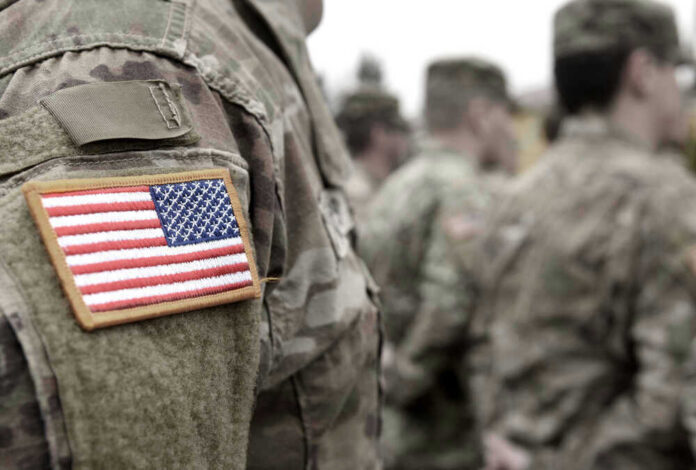
Nigerian defense officials said roughly 200 U.S. troops are arriving to train Nigerian forces battling extremist and armed groups, emphasizing the Americans are not there for combat operations.
Nigeria’s Defense Headquarters spokesman, Maj. Gen. Samaila Uba described the mission as technical and training support provided at Nigeria’s invitation, with Nigerian troops maintaining full command. A U.S. official also confirmed the approximate number of troops, according to reports.
About 100 U.S. troops plus equipment have arrived in Nigeria to help train soldiers in the West African country as the government fights against Islamic militants and other armed groups, the Nigerian military announced Monday.https://t.co/mn2J29gSLP
— 7News Boston WHDH (@7News) February 16, 2026
Nigerian authorities indicated the U.S. personnel would be dispersed and focused on strengthening capability rather than running missions. That distinction matters for Americans wary of “mission creep” after decades of costly foreign engagements.
The stated structure—trainers under host-nation command—mirrors a limited-footprint model designed to improve partner forces while reducing the likelihood that U.S. troops become direct targets or conduct raids.
How This Fits Into a Wider Counterterror Picture
The training deployment comes after other U.S. activity tied to Nigeria’s security crisis. Reporting cited U.S. airstrikes in December 2025 against Islamic State-affiliated militants in northwestern Nigeria, and said a small U.S. team arrived in January 2026 to support intelligence work.
Another reported strike on Christmas Day involved Tomahawk missiles aimed at Islamic State affiliates, though residents disputed the effectiveness and claimed the missiles hit empty areas.
The threat environment in northern Nigeria is complex and has worsened as instability in the Sahel spills over into the region. Nigeria has fought Boko Haram for more than a decade, while the Islamic State West Africa Province splinter intensified attacks and competition for territory.
Beyond jihadist groups, heavily armed bandit networks have fueled kidnappings and violence linked to criminal enterprises such as illegal mining, creating overlapping conflicts that stretch Nigeria’s forces thin.
Newer Militant Entrants Raise the Stakes for Regional Stability
Recent reporting also points to emerging actors adding pressure on Nigeria’s north, including an Islamic State-linked group referred to as Lakurawa and al-Qaeda’s JNIM, which reportedly carried out its first attack inside Nigeria in October 2025.
This matters because Sahel-based groups have proven adaptable, exploiting weak governance, remote terrain, and cross-border smuggling routes. For U.S. planners, that creates a familiar dilemma: threats can metastasize quickly, but overreaction risks another prolonged commitment.
What “Non-Combat” Means—and What It Doesn’t
Officials portrayed the incoming Americans as trainers, not combat troops, and Nigerian leaders stressed sovereignty by asserting Nigerian command authority.
Still, “non-combat” does not mean “no risk,” especially when extremist groups target symbols of foreign support. U.S. surveillance flights reportedly operate from a base in Ghana, supporting intelligence sharing and joint analysis.
That enabling—intelligence, training, and technical assistance—can be decisive, but it can also expand over time if security conditions deteriorate.
Politics, Christians, and the Limits of What the Reporting Confirms
The deployment also lands in a politically sensitive conversation about religious violence and state protection. Prior commentary associated with President Trump highlighted claims that Nigerian authorities failed to protect Christians. At the same time, analysts cited in coverage argued the reality is more complicated, noting most victims in northern attacks are Muslims and that multiple armed actors drive the violence.
Based on the available reporting, the strongest documented takeaway is that Nigeria’s government faces sharp criticism for failing to protect civilians broadly.
U.S. troops arrive in Nigeria to help train its troops, Nigerian military says https://t.co/8NibmWWD0j
— don85375 (@don85375) February 16, 2026
For Americans watching from home—still frustrated after years of spending blowouts, globalist priorities, and policies that seemed to put U.S. interests last—the central question is whether this remains a disciplined, limited mission.
The reporting describes a training role under Nigerian command, which is a narrower posture than past nation-building efforts. What remains unclear is how long the mission will last, how success will be measured, and whether further strikes or deployments will follow if violence escalates.
Sources:
US Will Send Troops to Nigeria to Train the Military to Fight Extremism