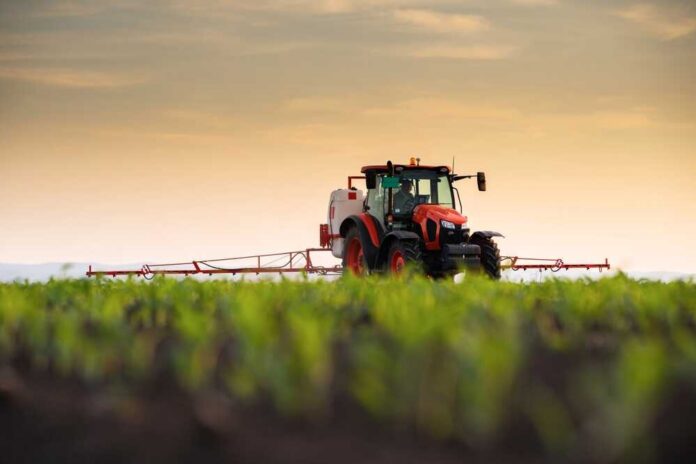
The Iran war turned energy into a silent tax on Louisiana farmers, pushing some from thin profit to a raw fight for survival.
Story Snapshot
- Fertilizer and fuel costs jumped fast after the Iran war, hammering Louisiana farm budgets.
- Some farmers face six-figure overruns, while neighbors are shielded by early contracts.
- War-driven price shocks stack on drought, low crop prices, and inflation, tightening margins.
- Political spin about “Trump’s Iran war” risks drowning out the farmers’ real economic pain.
When a faraway war lands in a Louisiana farm budget
The Iran conflict did not drop bombs on Louisiana, but it did blow a hole in farm budgets through energy markets. Nitrogen fertilizer prices at the Port of New Orleans jumped roughly one-third in a single week at the start of the conflict, leaping from about $516 to $683 per metric ton.
That kind of spike is not a slow trend. It is a shock. For row-crop farmers who buy large loads at once, the jump becomes an immediate, painful bill.
High energy costs from Iran war heighten pressure on struggling Louisiana farmers: "It's a game of survival" https://t.co/cE0IxSoi8h
— CBS News (@CBSNews) July 12, 2026
Urea fertilizer is made using natural gas, so it moves almost in lockstep with global energy prices. When the Strait of Hormuz closed, nearly half of the world’s urea exports were suddenly at risk. That disruption fed straight into Louisiana, where fertilizer dealers draw from Gulf Coast imports.
Purdue University economists warned that such jumps can erase much of a corn or cotton farmer’s profit for the year if they are exposed at the wrong time. Louisiana’s farmers are living that warning, not reading it in a journal.
Fuel bills turn routine work into a high-risk gamble
Fertilizer is only half the story. Every pass of a tractor, every spray flight, burns fuel. During the Iran war, diesel and gasoline rose to levels rural communities had not seen since 2022, adding about $26 per week to a typical rural household’s fuel bill compared to before the conflict.
On a farm scale, that sting gets much sharper. In northeast Louisiana, agriculture pilot Reed Keahey watched his jet fuel price jump from $2.46 in February to a peak of $4.11 in May.
Keahey buys 7,500 gallons at a time to spray fields. At $4.11 per gallon, that single purchase cost just over $30,000, far above what similar flights cost just months earlier. He told CBS News he had to absorb the squeeze so his farmer clients did not feel it.
That choice sounds noble, but it shifts the war’s cost from the fuel pump straight onto the aviation business that supports local agriculture. For a small operator, a swing of tens of thousands of dollars can turn a safe season into a financial cliff.
Fertilizer budgets blown apart and the uneven pain
On the ground, farmers like the Guerrero family in northeast Louisiana saw their fertilizer budgets “shot.” Their urea costs ran over budget by between $120,000 and $130,000 as prices spiked. For a mid-sized operation, that is not a rounding error.
It is the difference between paying the bank and praying the bank will wait. The American Farm Bureau president, Zippy Duvall, warned that the conflict in Iran would make fuel and fertilizer costs “soar even farther” in places like Louisiana. The numbers now back up that warning.
Yet the pain is uneven, and this matters for honest debate. Purdue’s balanced assessment points out that farmers who locked in fertilizer in fall 2025 or early winter 2026 at lower prices were “largely protected” for the 2026 season.
Their cost per metric ton sat around $330 to $380. That means two neighbors can face very different realities. One is eating a six-figure overrun. The other is insulated, at least for now. Any claim that “every” Louisiana farmer is being crushed by war-driven energy costs overstates the case.
The squeeze is bigger than just war, but the war sharpened it
Energy shocks rarely act alone. CoBank’s chief executive officer, Tom Halverson, has said farmers are caught between lower commodity prices and higher input costs, including inflation and trade disruptions dating back years. In Louisiana, those national forces sit atop local stress.
The state’s agriculture sector posted a $1.69 billion loss in 2023, before the Iran war’s energy spike began, leaving many operations starting 2026 already weakened. War-driven costs hit a farm system that was not healthy to begin with.
High energy costs from the Iran war heighten pressure on struggling Louisiana farmers: "It's a game of survival" https://t.co/x1HtWTALQQ
— CBS Mornings (@CBSMornings) July 13, 2026
At the same time, national data show that fuel often accounts for a smaller share of farm input costs than fertilizer. Pre-war studies put fuel at around 3% to 4% of input costs for many row crop farmers, while fertilizer can be 20% to 30% of corn production expenses.
That fits the Louisiana pattern: the biggest blow is fertilizer, especially nitrogen. Still, when diesel, gasoline, and jet fuel all jump at once, even a “small” share becomes a serious problem on thin margins.
Politics, spin, and what American common sense should focus on
Much of the national coverage brands this conflict as “the Trump administration’s war in Iran,” turning a real economic shock into a political weapon.
Commentators talk more about total war costs, like Brown University’s $113 billion estimate, than about the $120,000 fertilizer hole on a single Louisiana farm.
That focus might excite partisan audiences, but it misses what this should highlight: whether government choices abroad are making it harder for Americans at home to earn a living.
There is also a risk that media narratives about foreign lobby influence or national security spin lead some viewers to distrust farmer testimony as “political” rather than practical. Yet the core facts here are plain and documented. Fertilizer and fuel prices jumped sharply after the war in Iran.
Some Louisiana farmers and ag pilots saw real, large cost increases tied to those jumps. Others were insulated by smart early contracts. The honest story is not that war alone will wipe out Louisiana agriculture, but that it pushed already struggling operations closer to the edge.
Sources:
cbsnews.com, americanprogress.org, youtube.com, facebook.com, dw.com