

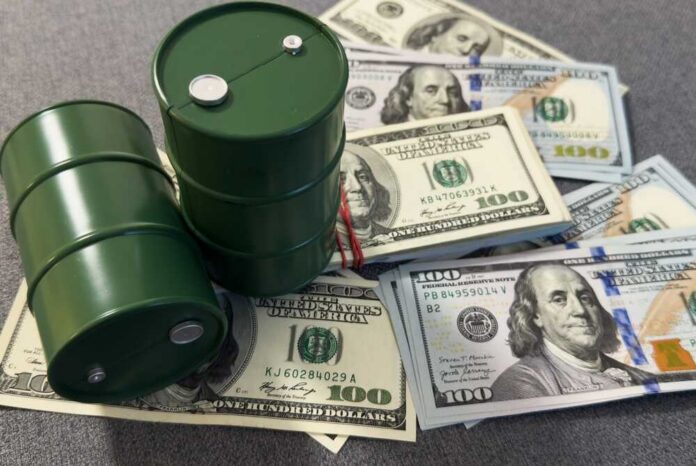
Oil did not just slip after Trump’s Iran deal; it fell off a ledge and took a three‑month war premium with it.
Story Snapshot
- Brent crude and U.S. oil prices crashed 4–5% in a single session after the U.S.–Iran deal.
- The peace framework promises a reopened Strait of Hormuz, but the text is vague and the risks are not gone.[3]
- Stocks jumped, gasoline futures fell, and American drivers may see cheaper gas — if the deal holds.
- Core flashpoints like missiles and terror proxies remain untouched, so this “peace” sits on shaky ground.
Oil’s Drop Was Fast, Deep, And Purely About Fear Coming Out Of The Price
Markets did not wait for diplomats to finish their coffee. Within hours of the Trump–Iran announcement, Brent crude dropped roughly 4%, and U.S. benchmark crude fell close to 5%, hitting the lowest levels since early March. Traders call this “war premium” coming out of the barrel.
For months, every missile, drone, and rumor about the Strait of Hormuz added a few dollars. One headline about peace yanked those dollars out in a single trading day.
Recent quotes show Brent crude around the low‑80s per barrel, a three‑month low after being near $120 when the conflict peaked.[1][2] Futures data confirm a sharp one‑day sell‑off as news of a 60‑day ceasefire and planned reopening of Hormuz hit the wires.[4]
This is classic de‑escalation trading: oil down, stocks up, safer assets softer. Nothing in the physical world changed that fast. What changed was the fear that tomorrow’s headlines would bring more attacks.
The Strait Of Hormuz Is The Real Story Behind Your Gas Bill
The Strait of Hormuz is a narrow sea lane that carries a big share of the world’s seaborne oil. When it closes, even partly, the world gets nervous. The framework deal promises a 60‑day ceasefire and reopening of the strait to normal shipping.[2][3]
President Trump claimed ships are already moving and vowed that the route will be “completely open.”[4] European governments signaled they are ready to lift some sanctions on Iran if the plan holds.
On paper, that is good news for anyone who buys gasoline or groceries. With tankers no longer stuck at anchor, more oil should reach refineries, which can ease prices down the supply chain.
GasBuddy analysts already see crude down about 5% and project that average gas could slip below $3.75 per gallon before the July 4 holiday if trends continue. This is basic supply and demand: fewer bombs in a vital chokepoint, more oil on the water, lower prices at the pump — at least for now.
This Is Not A Real Peace Deal Yet, And The Fine Print Is Missing
The feel‑good headline hides a harder truth: what was signed is a memorandum of understanding, not a full peace treaty.[1][3] Key issues like Iran’s nuclear program, sanctions relief, and the role of its regional militias are kicked into 60 days of future talks.[2][3]
Reporters note that the actual text of the agreement was not released right away. Even basic mechanics of how and when the Strait of Hormuz fully reopens remain unclear.[3]
Energy analysts warn that traders may have moved faster than reality. Shipping and insurance companies still see mines, missiles, and mistrust in the water.[1] They want proof that the ceasefire holds before they price routes as truly safe. That means oil flows may take three to six months to normalize even if everyone behaves.
From a common‑sense view, that is exactly why you do not build policy on rosy assumptions. You wait for verifiable facts: cleared sea lanes, actual tanker traffic, and written terms.
Unfinished Wars, Toll Fights, And Why Stability Is Still A Question Mark
The framework leaves major security problems untouched. Iran’s ballistic missile program and its support for groups like Hezbollah, Hamas, and the Houthis are not settled in this deal. Israeli Prime Minister Benjamin Netanyahu was not part of the talks, yet Iran reportedly tied the ceasefire to a halt in Israeli strikes on Hezbollah in Lebanon.
That is a recipe for future friction. If rockets fly from Lebanon or Israel keeps hitting Hezbollah, Tehran can claim the deal is broken and return to escalation.
Oil prices plunge to lowest levels since early March after Trump signs Iran deal https://t.co/Ca9UL0iYsL
— FOX Business (@FoxBusiness) June 15, 2026
There is also a brewing fight over money in the water. Trump told Americans the Strait of Hormuz would be “toll‑free forever,” but Iranian officials signaled they still plan to regulate and charge for passage. If Iran imposes fees or complex rules, shipping costs rise even with no shooting.
Insurance firms may also keep premiums high, citing “residual risk,” long after the last missile falls. That looks a lot like regulatory capture dressed up as caution, and consumers will pay the price if it sticks.
What A Skeptical Lens Says To Watch Next
Many wonder what can be verified, and who is accountable if it fails? Right now, we have market prices, public statements, and media framing, but not the full treaty text.
Serious oversight would demand the released memorandum, clear data on how many ships pass through Hormuz each week, and independent checks on any billions in frozen Iranian assets that might be released. Without that, promises of “stability” are sales pitches, not settled facts.
Americans should also watch Washington. Some Republicans in Congress already object to major sanctions relief and big cash transfers back to Tehran.
They worry that handing Iran money without hard limits on missiles and proxies repeats past mistakes. That skepticism aligns with common sense: peace is good, but paying a hostile regime to act nicely, with weak enforcement, often ends badly. If violence in the region flares again, the current oil price drop can reverse just as fast as it came.
Sources:
[1] Web – Oil prices plunge to lowest levels since early March after Trump signs …
[2] YouTube – US and Iranian negotiators reach deal to re-open strait of …
[3] Web – U.S. and Iran announce a deal to end the war, reopen …
[4] Web – US and Iran sign ceasefire agreement, details remain unclear