
South Carolina just closed the book on the largest measles outbreak to hit America in over four decades—and what it reveals about vaccine hesitancy in our most trusted institutions should alarm every parent paying attention.
At a Glance
- South Carolina’s Upstate measles outbreak officially ended after 997 confirmed cases, making it the largest U.S. outbreak in 35+ years, surpassing even the 2025 West Texas outbreak
- The outbreak began in Christian academy schools with low vaccination rates and primarily infected unvaccinated children; 93% of all cases involved people who had never received the MMR vaccine
- After 42 days with zero new cases—marking two complete measles transmission cycles—health officials declared victory on April 26, 2026, following six months of intensive community response
- Nearly 18,000 MMR vaccine doses were administered across the Upstate region, demonstrating that swift public health action and community collaboration can contain even highly contagious diseases
How a Preventable Disease Became a Regional Crisis
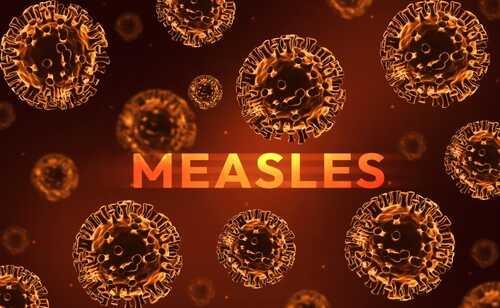
Measles is perhaps the most contagious virus known to medicine. Without immunity, nine out of ten exposed people will contract the disease. Yet the United States eliminated measles in 2000 through aggressive vaccination campaigns.
That elimination lasted a quarter-century until pockets of vaccine hesitancy created perfect conditions for the virus to resurface. This outbreak proves that complacency about eliminated diseases is dangerous.
South Carolina health officials ended a six-month measles outbreak that sickened 997 people, the largest U.S. single-location outbreak since measles was declared eliminated. https://t.co/0Daio0OL4N
— NEWSMAX (@NEWSMAX) April 27, 2026
The Unlikely Epicenter: Private Schools and Faith Communities
The outbreak didn’t begin in a crowded urban center or among transient populations. It seeded itself in Upstate South Carolina’s Christian academy elementary and middle schools—institutions where low vaccination rates created a vulnerable population concentrated in close quarters.
By October 2025, when health officials confirmed the outbreak, cases had already begun spreading through these networks. The majority of the 997 cases involved children ages five to seventeen, with 263 cases in children under five.
Numbers That Tell the Vaccination Story
The data cuts through debate: 932 of 997 cases—94 percent—involved completely unvaccinated individuals. Twenty cases occurred in partially vaccinated people, while just twenty cases appeared in fully vaccinated individuals, representing breakthrough infections of remarkable rarity.
This distribution reveals the MMR vaccine’s extraordinary effectiveness and exposes the vulnerability of unvaccinated clusters. The virus found its easiest path through communities where immunity was deliberately absent.
From Explosion to Containment in Six Months
The outbreak trajectory followed a predictable but alarming pattern. Initial cases in October escalated rapidly through November and December as holiday gatherings and church exposures amplified transmission. By January 2026, the outbreak peaked with fifty-eight new cases per week. Then something shifted.
By late March, no new cases appeared in the Upstate region. By April twenty-first, the total had frozen at 997 cases, holding steady through the critical forty-two-day window required to confirm outbreak conclusion.
What Stopped the Spread
Public health officials credit three factors: aggressive vaccination campaigns that delivered approximately eighteen thousand MMR doses, voluntary isolation by infected individuals, and quarantine compliance among exposed unvaccinated people.
Schools and faith communities, despite their initial role in seeding the outbreak, ultimately partnered with the South Carolina Department of Public Health to implement containment measures. This collaboration transformed institutions from outbreak vectors into outbreak fighters.
South Carolina's measles outbreak is over after sickening nearly 1,000 people https://t.co/CeQ8BENo40 pic.twitter.com/1SeGsrMVaf
— WOKV News (@WOKVNews) April 27, 2026
The outbreak’s conclusion carries lessons that extend far beyond South Carolina’s borders. When vaccination rates drop below critical thresholds, even diseases we’ve declared eliminated can resurface with frightening speed.
The fact that this outbreak originated in private schools rather than public institutions suggests that vaccination mandates in public education remain effective barriers to disease spread. Communities with lower mandates face higher risks.
Sources:
South Carolina Declares End to Upstate Measles Outbreak After 997 Cases
South Carolina: No new measles cases in Upstate outbreak
2025 Measles Outbreak | South Carolina Department of Public Health