A New Jersey quarry’s fossil trove sheds light on prehistoric extinction events, challenging the scientific community’s understanding.
Story Overview
- The Edelman Fossil Park in New Jersey holds over 100,000 fossils from a critical extinction period.
- Unique soil chemistry and sedimentary history at the site ensure exceptional preservation.
- Rowan University transformed the site into a research and educational hub.
- The park draws global scientific interest and boosts local education and tourism.
Discovering a Prehistoric Treasure Trove
The Edelman Fossil Park in Mantua Township, New Jersey, is a global point of interest due to its extraordinary concentration of fossils dating back to the Cretaceous-Paleogene (K/Pg) boundary.
This period, marked by the mass extinction of the dinosaurs and 75% of Earth’s species, provides critical insights into prehistoric life and extinction events. The former marl quarry’s unique soil composition and sedimentary history have preserved over 100,000 fossils, making it a scientific “Pompeii of dinosaurs.”
Rowan University, supported by philanthropists Ric and Jean Edelman, established the fossil park in 2016.
This transformation from an industrial site to a center of research and education exemplifies successful collaboration between academia, philanthropy, and local communities. The park not only advances scientific understanding but also engages the public in the wonders of paleontology through educational programs and tours.
The Scientific Significance of the Site
The fossil-rich layer of the quarry dates to the Maastrichtian–Danian age, approximately 66 million years ago, coinciding with the asteroid impact that ended the Cretaceous period. Originally a shallow marine shelf, the area deposited organic-rich, glauconitic greensands that later became the Navesink and Hornerstown formations.
These unique geological conditions have preserved fossils in a state that offers direct evidence of the mass extinction event, including remains of both marine and terrestrial species.
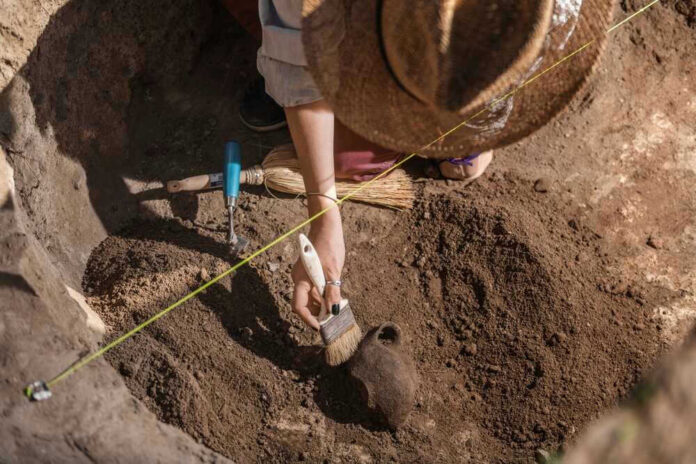
Ongoing excavations and research continue to yield new discoveries, including rare marine reptiles and further evidence of the extinction event.
The park hosts research teams and public fossil digs, enhancing its status as a fully operational scientific and educational venue. New studies focus on microstratigraphic analysis and paleoecological transitions, contributing significantly to the wider scientific community.
Impact on Education and Local Economy
The Edelman Fossil Park not only serves as a center for scientific research but also significantly impacts local education and the economy. Through its educational programs, the park fosters community pride and scientific literacy among residents and schoolchildren.
The increased tourism generated by the park enhances local economic activity, while the site’s public-private partnership model strengthens political support for science and conservation.
Why Does This Quarry in New Jersey Hold So Many Fossils? The Secret Lies in the Soil. https://t.co/79xVm35RnG
— Popular Mechanics (@PopMech) September 30, 2025
Rowan University and its partners have ensured that the site remains a leading source of paleontological research. This endeavor sets a precedent for converting industrial sites into valuable scientific and educational resources.
As fossil discoveries continue, the Edelman Fossil Park stands as a testament to the power of collaboration in advancing human knowledge and understanding of Earth’s history.
Sources:
Peer-reviewed research from Frontiers in Earth Science
Cape May Magazine: Edelman Fossil Park Museum
Popular Mechanics: New Jersey Fossil Park Secrets
Edelman Fossil Park Official Documentation