

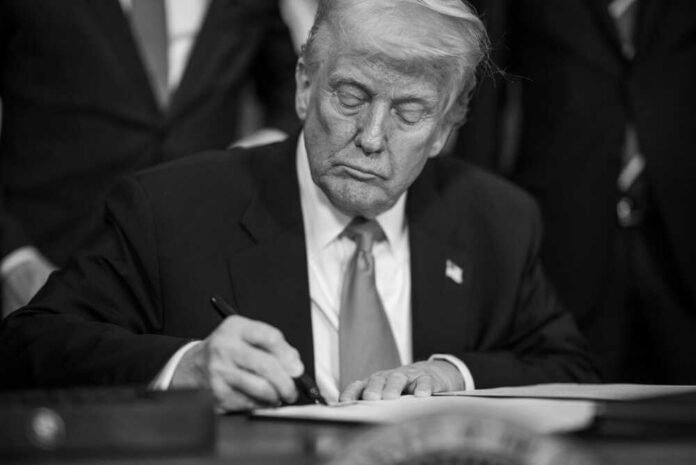
Trump’s new mail-in voting crackdown is already running into a hard constitutional wall—and even Republican election officials are openly saying courts will likely strike it down.
Story Snapshot
- President Trump signed an executive order on April 4, 2026, directing sweeping federal actions to restrict mail-in voting ahead of the 2026 midterms.
- The order calls for a national list of “approved” absentee voters, directs the Postal Service to deliver ballots only to verified voters, and tells states to preserve election records for five years.
- Democrats and a coalition of 23 states filed multiple lawsuits within a day, arguing the president cannot unilaterally rewrite election rules.
- Republican election officials in Pennsylvania and Arizona publicly predicted the order will be overturned as unconstitutional.
What Trump Ordered—and Why It Immediately Triggered Lawsuits
President Donald Trump signed a broad executive order on April 4, 2026, targeting the handling of mail-in ballots nationwide.
The order directs federal agencies to create a national list of approved absentee voters, pushes the U.S. Postal Service to deliver ballots only to verified voters, and instructs the Attorney General to investigate wrongful ballot distribution.
Lawsuits arrived almost immediately from Democrats, voting-rights groups, and 23 states, putting implementation on hold.
Trump signs order tightening mail-in voting, drawing swift legal threats https://t.co/Ee1Xy5Bml2
— Reuters Legal (@ReutersLegal) April 1, 2026
Legal challengers argue the executive branch cannot override state election systems through an order, especially on rules governing ballot distribution and voter eligibility.
The legal fight is also political: the order lands as both parties prepare for high-stakes 2026 midterms, and it revives long-running national arguments over mail voting that intensified after 2020.
Court challenges now determine whether federal agencies can be compelled to reshape state-run processes from Washington.
Why Even GOP Election Officials Say the Order Is Vulnerable
Republican election officials have been unusually blunt about the order’s odds in court. Pennsylvania Secretary of State Al Schmidt has stressed that election rules must be clear and lawful to avoid confusion and distrust.
Former Maricopa County Recorder Stephen Richer has said the goals of election confidence matter, but the method is the problem—warning that sweeping, top-down mandates can inflame public doubt rather than settle it. Their comments matter because they come from officials who’ve run elections under pressure.
That skepticism rests on a basic constitutional reality: states primarily administer elections, with Congress—not the president—holding the key federal authority to set certain rules.
The main legal argument cited by critics concerns limits on the president’s unilateral control over elections.
Trump’s earlier election-related executive actions faced blocks in federal court, and election-law analysts cited in coverage say this order is vulnerable for similar reasons, making rapid injunctions a real possibility.
States and Democrats Frame It as Federal Overreach Into State Powers
The lawsuits were filed fast and across multiple venues, including actions backed by Democrat leaders and coalitions of states.
Arizona and Pennsylvania are among the states referenced in coverage as part of the pushback, and officials in other states publicly urged voters to follow existing state procedures while litigation proceeds.
Critics describe the order as an intrusion into state election administration, while the White House defends it as an “integrity” measure.
Mail Voting Reality Check: Security Claims vs. Evidence in the Record
Coverage of the new order also highlights a key tension: Trump has criticized mail voting as fraud-prone for years, yet election officials across states—including Republicans—have repeatedly said mail voting can be administered securely.
Reporting also points to extensive prior investigations, including a lengthy Arizona probe that found no widespread fraud.
Those facts don’t end the policy debate, but they do shape how judges may evaluate claims of necessity versus documented outcomes.
What Happens Next—and the Risk of Another Trust-Damaging Court Fight
As of April 6, 2026, the order has been signed but remains tied up in active litigation, with no final rulings yet.
The most likely near-term outcome is a court injunction that blocks enforcement while judges weigh constitutional limits and agency authority.
For conservative voters who want both election integrity and lawful governance, the core test is whether reforms happen through durable legislation. Orders that courts toss can deepen cynicism and leave Americans with more chaos than clarity.
If the administration wants lasting changes before November, Congress and the states remain the main battleground—because that is where the Constitution places much of the power.
Courts have repeatedly signaled they will police separation-of-powers boundaries, especially when presidents attempt to rewrite election procedures nationwide.
Until judges rule, states are signaling they will keep running elections under their existing laws, and voters should expect a loud legal fight long before any practical changes reach the mailbox.
Sources:
Republican election officials expect Trump voting executive order to be overturned
GOP Officials Expect Trump’s Order on Mail-in Voting to Be Overturned
Trump Signs Sweeping Order Attacking Mail-In Voting
Status of Trump’s Anti-Voting Executive Order
Trump executive order on mail-in voting