
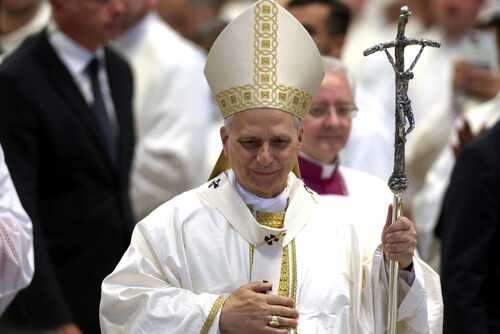
Pope Leo XIV told the world he will have surgery this week to remove a small, early-stage nodule from his lung.
Story Snapshot
- Leo said doctors found a well-localized lung nodule and advised surgery.
- The operation is scheduled at Rome’s Gemelli Hospital in the first days of the week.
- The Vatican projects about a one-week recovery after surgery.
- Officials have not disclosed the nodule’s diagnosis beyond its early detection.
The Pope’s announcement and the plan ahead
Pope Leo XIV announced the finding during the Angelus on October 11. He said doctors found a nodule in his lung at a very early stage and described it as well-localized. He stated he would have it removed based on medical advice. The Holy See Press Office said the surgery was scheduled for the first days of the week at Gemelli Hospital in Rome. Officials estimated about one week of recovery following the operation.
Vatican News framed the update as a clear, proactive step and not an emergency. The message aimed to steady the flock and set expectations. The location matters. Gemelli Hospital often handles papal care and knows the security and medical demands of a sitting pontiff. A defined plan and short projected stay signal confidence by Leo’s team. The schedule also tells pastors and pilgrims how to plan liturgies, travel, and prayer intentions in the near term.
What “nodule” means and what it does not
News headlines often skip details, but here they matter. A lung nodule is a small spot seen on imaging. Many nodules are not cancer. They can reflect scars, infections, inflammation, or benign growths. Specialists say imaging often cannot prove which it is. That uncertainty explains why surgeons sometimes remove a well-defined nodule when it is accessible and the patient is strong, then test it to know more.
Leo’s phrasing—early, localized—points to timing and control. Doctors prefer to act while a problem is small. That strategy aligns with common sense and conservative values: fix the issue before it grows, avoid drama later, and return to duty. The Vatican has not released a diagnosis beyond these descriptors. That choice respects patient privacy while giving the public the facts needed to understand the plan and the timeline.
How the Church manages a leader’s health
The Church runs on rhythm: Masses, audiences, trips, and synods. A week of recovery is brief by any standard and suggests the Vatican expects normal governance to continue. Curial offices can handle routine matters while the Pope rests. Bishops and lay faithful have already rallied in prayer, a reminder that the Church’s first response to illness is spiritual support, not speculation or fear. That culture lowers the temperature and keeps focus on duty and hope.
Pope Leo XIV will be admitted to hospital on Tuesday morning for surgery to remove a pulmonary nodule, a small growth in the lung, the Vatican has announced.https://t.co/2JCO826CqE
— The Telegraph Nigeria (@TelegraphNG) October 12, 2026
Gemelli’s history with papal medicine helps maintain stability. A known hospital, a known security plan, and a known press cadence reduce confusion. That is how institutions avoid rumor mills. Clear statements also set a floor for media coverage. The best practice is simple: report what the Pope and the Holy See confirm, avoid adding labels the doctors have not used, and wait for postoperative updates before leaping to conclusions.
What to watch for next
Three updates will matter. First, confirmation that the surgery occurred and how Leo tolerated it. Second, a brief status on breathing, pain control, and activity level, which guides return-to-work steps. Third, pathology results, which tell doctors what the nodule was and whether any follow-up is needed. Until then, the knowns are firm: an early-stage, well-localized nodule; surgery at Gemelli in the first days of the week; and an expected one-week recovery.
Sources:
missourian.com, vaticannews.va, apnews.com, bbc.co.uk, cnbc.com, nbcnews.com