

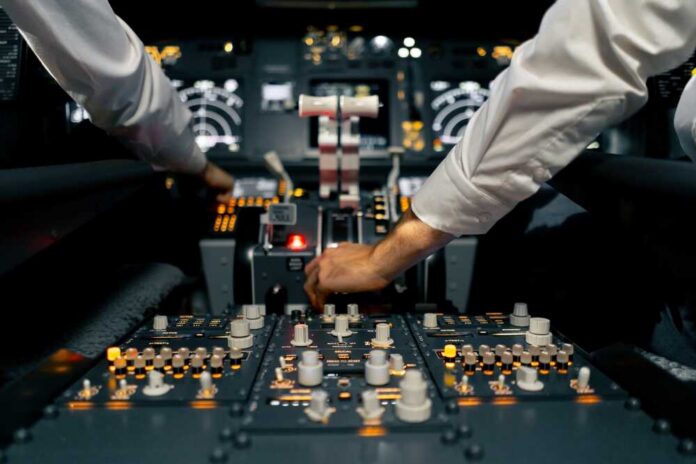
Israeli investigators say the FlyDubai co-pilot who attacked his captain likely acted alone, and that single fact reshapes how airlines must defend the cockpit.
Story Snapshot
- Israeli sources say early evidence points to a lone-wolf co-pilot with no known outside backing.
- Authorities in the United Arab Emirates labeled the midair attack a terrorist attempt.
- Two Israeli security officials told Reuters the initial assessment is “acting alone” while probes continue.
- Reports describe crew heroics and an emergency landing that averted mass casualties.
What investigators are saying so far
Israeli sources told multiple outlets the early read is clear: the FlyDubai co-pilot likely acted alone, with no known link to a group or a foreign state. CBS News reported Israeli investigators view the incident as a likely lone-wolf attack while they keep digging. Two Israeli security officials also said the initial assessment points to a solo actor, according to Reuters, which added that the investigation remains active. That framing now guides how governments and airlines weigh next steps.
Authorities in the United Arab Emirates called the cockpit assault a terrorist attempt. Prosecutors there said they are still checking if the attacker had ties to extremist groups or acted alone. That aligns with the Israeli picture but keeps the door open until digital records, interviews, and forensics are complete. The shared goal is simple: learn how a trusted insider launched an attack mid-flight and lock the door against a repeat.
How the attack was stopped
Accounts describe a sudden assault on the captain in the cockpit and a fight for control of the plane. Passengers and two off-duty pilots helped subdue the co-pilot. The aircraft diverted and landed in Tabuk, Saudi Arabia, where medical care and law enforcement met the flight. That chain of action reads like a checklist built on training and grit. It also shows why crew resource management matters when seconds decide between disaster and survival.
Reports say the suspect had been flagged for radical views in the past. Those claims sharpen the focus on hiring and vetting, and whether previous warnings reached the right desks fast enough. Even if investigators confirm a lone actor, the path that led him into a cockpit deserves a full audit. Conservative common sense says trust but verify is not enough when hundreds of lives sit behind a reinforced cockpit door.
Why “lone wolf” changes the risk map
Lone-actor terror is rare but deadly. It often blends personal grievance, ideology, and opportunity. In aviation, an insider can bypass many layers that stop outside attackers. That is why early “acting alone” assessments draw attention. They hint at a security gap that technology at the door cannot close by itself. Analysts have long warned that cockpit defenses were designed to keep intruders out more than to detect a co-pilot turning the aircraft into the weapon.
The practical fixes are not exotic. Double-verify cockpit access rules on every leg. Add random in-flight checks by senior crew. Use continuous behavior monitoring tied to fatigue, conflict, or sudden deviation from standard procedures. Share adverse findings across airlines and regulators, fast and in plain language. None of this tramples civil liberty. It protects it, by stopping one person from ending hundreds of lives in minutes.
What a prudent investigation still needs
Digital forensics on phones, cloud accounts, and messaging apps can confirm whether the plan had help or cheerleaders. Interrogation summaries from Saudi Arabia and the United Arab Emirates can settle who knew what and when. Cockpit voice and flight data recorders can map the timeline to the second. Each step helps prove or disprove coordination while giving airlines concrete failure points to fix. Officials in Israel and the Gulf say those steps are underway.
Saudi Arabia May Have Transferred the Suspect to the UAE to Remove a "Hot Potato" From Its Territory
JCFA senior researcher, Yoni Ben Menachem @BwMnhm, assesses that Saudi Arabia's decision to transfer the FlyDubai co-pilot suspected in the attempted attack to the United Arab… pic.twitter.com/89qNXdLNqU
— Jerusalem Center for Security and Foreign Affairs (@jerusalemcenter) October 4, 2026
Early conclusions from credible services carry weight, and the current view is consistent across major outlets: the co-pilot likely acted alone. Investigators will either harden that call or revise it as new evidence lands. Meanwhile, the lesson for operators does not wait on a final memo. Insider risk is not a theory. It is a checklist item. Treat it that way on every flight, every day, with systems built for humans as they are, not as we wish them to be.
Sources:
cbsnews.com, aljazeera.com, reuters.com, themedialine.org, ynetnews.com