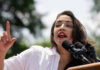

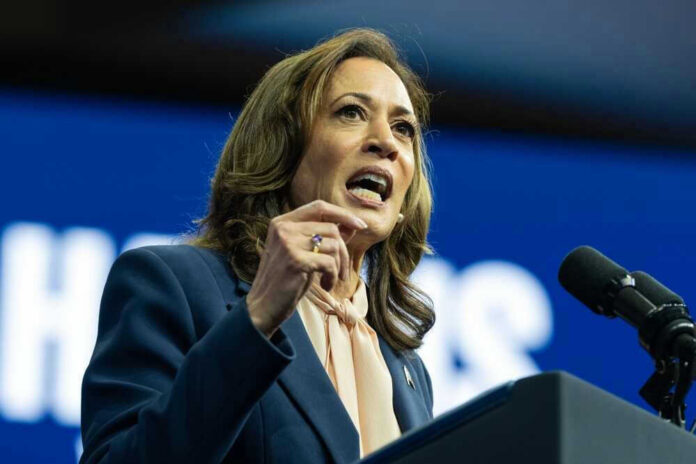
Kamala Harris’ Detroit remarks went viral not for what she said, but for how she said it.
Story Snapshot
- Harris spoke at a Detroit NAACP fireside chat that drew heavy online reaction.
- Critics said she changed her accent; clips spread fast across partisan media.
- Linguists called the shift code-switching, common in public speaking.
- The accent fight overshadowed her get-out-the-vote push and the stakes in Michigan.
What Happened In Detroit And Why It Took Off Online
Kamala Harris joined a fireside chat hosted by the Detroit Branch of the National Association for the Advancement of Colored People at Fellowship Chapel. Local coverage said she was there to back Michigan Senate candidate Abdul El-Sayed and rally voters not thrilled with their choices.
The internet storm began when clips showed Harris using phrases like “you betta thank a union member,” which critics framed as a new accent crafted for the room.
Kamala Harris rolled out her fake black accent for the NAACP
It’s so bad.
Does this mean she’s running?🤣follow @17QStorm6RV pic.twitter.com/MxTydBNRuz
— QThestorm RV🦅🇺🇲 (@17QStorm6RV) September 23, 2026
Broadcast packages and social posts amplified the “accent” frame within hours, a now-familiar loop where style eclipses substance. The event’s policy thrust—unions, turnout, and Michigan’s national weight—barely got a mention once the clips caught fire.
This is the modern rule of campaign coverage: a five-second sound becomes the entire story. Voters saw more takes about her voice than her message, which is exactly why these moments get weaponized.
What Harris Said Versus What Viewers Heard
Reporters on the ground noted Harris told the crowd elections are choices between imperfect options and urged a turnout “too big to rig,” a direct appeal to disillusioned voters. The controversy centered on delivery, not the lines.
She mixed cadence, dropped an “r” in “better,” and leaned into call-and-response beats that land in Detroit’s union halls and Black churches. Critics called it fake. Supporters said it sounded like a speaker meeting a community where it lives.
One network package framed the clip as a “new accent,” which primed audiences to see performance, not routine rhetoric. That label matters. Once viewers expect an act, every vowel sounds like theater.
The better test is consistency. In other settings, Harris uses near-identical phrasing without the same heat, suggesting the line, not a sudden reinvention, did most of the work.
Code-Switching: Common Tool Or Political Sin?
A University of Colorado linguistics commentary identified features of African American English in the Detroit clip, including the “r” reduction in “better” to “betta.” The analysis framed it as code-switching, a shift many speakers use to fit context and build rapport.
Writers at The Week used the same term and tied it to audience adaptation, not deception. That claim aligns with what most campaign pros already know: great retail politicians mirror the room.
Kamala Harris accused of fake accent at Detroit NAACP rally eventhttps://t.co/X0GjnHTgHM
— Ahsan Ali (@imsn_official) September 23, 2026
Conservative instincts value straight talk and authenticity. The question is whether adaptive style breaks trust. On the facts, the record shows Harris in a Detroit church, at a National Association for the Advancement of Colored People event, talking unions and turnout.
Mirroring cadence in that room tracks with ordinary speech practice. Calling that fakery stretches the charge. Better to judge the content she advanced—jobs, voting, and Michigan’s 2026 stakes—than a clipped vowel.
Why This Matters For Voters, Not Just Commentators
Michigan remains a battleground where small margins decide big power. Harris used the church stop to boost Abdul El-Sayed and to urge skeptical voters to show up anyway, a pragmatic pitch both parties make when enthusiasm dips.
The accent spat distracts from that aim. But it also hints at a risk for any candidate: a viral delivery moment can erase your message. Winning campaigns teach the press and the public to hear past the soundtrack to the stakes.
Sources:
foxnews.com, detroitnews.com, youtube.com, atlantablackstar.com