

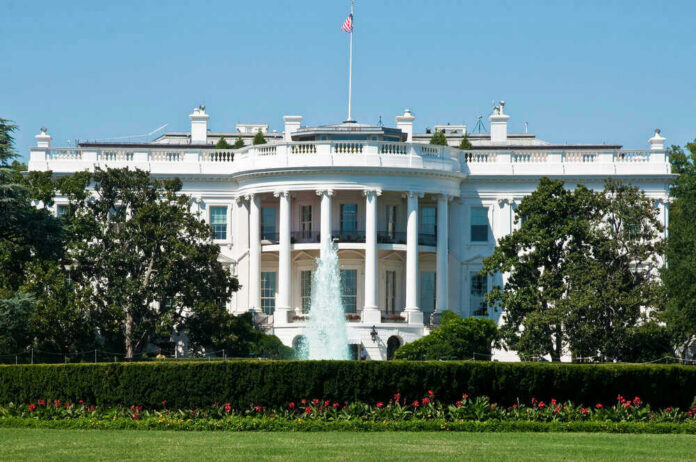
The White House barred three major newsrooms and seized their press passes, and now a federal court fight is coming fast.
At a Glance
- CNN, MS NOW, and Politico say the White House revoked access for critical coverage.
- The outlets plan an emergency lawsuit citing the First Amendment and due process.
- Reporters were denied entry and had passes taken after Trump decried “fake news”.
- Courts have ruled press access cannot be pulled arbitrarily or for viewpoint alone.
What Happened And Why It Escalated
Reporters from CNN, MS NOW, and Politico arrived at the White House and were turned away. Staff confiscated their press passes, cutting them off from briefings and pool duty during a week of major events.
The outlets said the ban followed President Trump’s public claim that their coverage was “fake news” and “fiction or lies,” which he posted a day earlier. The organizations announced they would sue to restore access and protect press rights under the Constitution.
Reporters from CNN, MS NOW and Politico have been denied access to the White House. https://t.co/qCof726o1L
— The Associated Press (@AP) September 19, 2026
The organizations said they filed for emergency relief in federal court in Washington, asking a judge to quickly reinstate access.
Their position is simple: the government cannot punish reporting it dislikes. The suit argues the ban violates the First Amendment and the Constitution’s due process guarantees.
The request aims to stop continuing harm to news gathering, including blocked pool coverage during White House travel and international meetings that need prompt, on-the-ground reporting.
The Legal Ground The Case Will Stand On
The core legal claim targets viewpoint-based retaliation. Courts have long said the government may set neutral, security-based rules, but it cannot bar journalists for their coverage.
The most-cited precedent, Sherrill v. Knight, requires fair criteria and due process once the White House opens its press facilities to reporters.
That logic also underpinned the court order restoring a CNN reporter’s access during the previous term, reinforcing that arbitrary credential pulls do not stand for long.
The due process claim matters as much as the First Amendment theory. The outlets say they received no notice, no standards, and no hearing. If the government gave no clear rule or chance to respond, a judge could view the ban as arbitrary.
Courts often require agencies to explain who broke what rule and how to fix it. When an administration skips that, judges step in to prevent ad hoc penalties that chill reporting and erode accountability.
What The White House Says It Is Doing
Trump publicly tied the ban to what he called “fake news” and “fiction or lies.” He also questioned a government subscription purchase tied to Politico and hinted more outlets could face similar limits. Those statements help explain motive but cut both ways in court.
They galvanize supporters who want tougher scrutiny on the press. They also supply the plaintiffs with direct evidence that the action punished speech based on content and viewpoint, which courts view with deep suspicion.
🇺🇸 **CNN, MSNBC and Politico sue Trump administration over White House access**
U.S. media organizations **CNN, MSNBC and Politico** have reportedly filed a lawsuit against the Trump administration after the White House revoked their press credentials.
The outlets argue that… pic.twitter.com/J18uvVqU0D
— 𝕊𝕡𝕣𝕚𝕟𝕥𝕖𝕣 𝕻𝕣𝕖𝕤𝕤 (@SprinterPress) September 21, 2026
The administration can argue it has discretion to manage space, security, and order. That is true, up to a point. But courts draw a bright line: discretion cannot become censorship. A policy needs neutral criteria, consistent use, and fair process.
If other critical outlets kept access, the government might argue this was a targeted fix for specific problems. The record reported so far shows a broad exclusion tied to criticism, which strengthens the plaintiffs’ hand.
Why This Fight Matters Beyond Today’s News Cycle
White House access battles move slower than breaking news. An emergency order could come in days, but a full decision often takes weeks. That lag can shape public perception. If the ban stays in place, coverage fragments and relies more on secondhand accounts.
That weakens on-site questioning that tests power in real time. A prompt court order would restore the balance the Constitution expects, even as the case proceeds on the merits.
If the White House shows neutral, written standards and fair process, it will have a better case. The next filings, not the rhetoric, will decide which path the law affirms.
Sources:
abcnews.com, bbc.com, cnn.com, nbcnews.com