

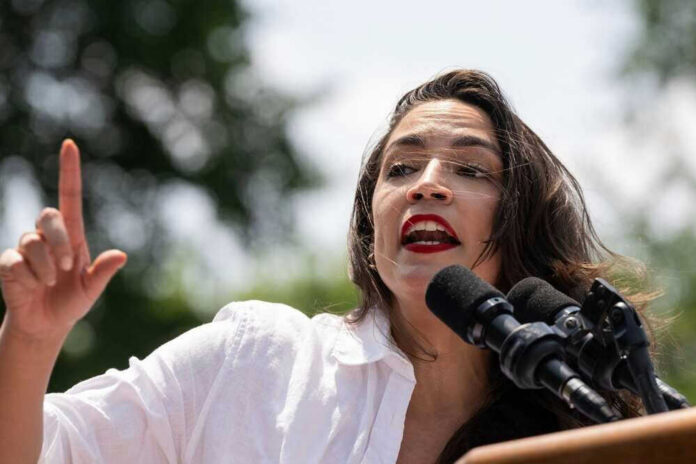
Alexandria Ocasio-Cortez says she will decide whether to run for president after the midterm elections, not before.
Quick Take
- Ocasio-Cortez told The New York Times she is weighing a 2028 decision between three paths: keep her House seat, run for Senate, or seek the White House.
- She described the coming years as a “very unique political window” and said her choice will not be shaped by “deference.”
- She told the New York Post she will make “any of those considerations after the midterms.”
- New York City Mayor Zohran Mamdani has praised her without formally endorsing a run, and a Brooklyn councilman has floated challenging Senator Chuck Schumer if she runs for president.
What Ocasio-Cortez Actually Told The Times
Ocasio-Cortez sat down for a wide-ranging interview published by The New York Times on September 22. She laid out her options plainly.
She can run for reelection to her House seat, run for the Senate seat held by Chuck Schumer, or run for president in 2028. She said the decision will wait until after the midterm elections settle the political landscape.
AOC reveals what it will take for her to seek White House or Senate https://t.co/lLO4a8LtN5 pic.twitter.com/MLrtskWpJb
— New York Post (@nypost) September 20, 2026
She also pushed back on the idea that anyone else gets to make this call for her. She said her choices won’t be decided by “deference,” a word that signals she isn’t waiting on party elders or informal seniority rules to bless a run.
She called this stretch of her career a “very unique political window,” suggesting she believes the timing and political climate favor bold moves now rather than later.
The Waiting Game She Described To The Post
Ocasio-Cortez gave New York Post similar language days earlier. She said she is watching how progressive candidates perform in the midterms before picking a lane. “I will be making any of those considerations after the midterms,” she said.
That statement lines up exactly with what she told the Times, which suggests a consistent, deliberate strategy rather than off-the-cuff speculation.
This isn’t a new theme for her. Back in February, she was asked directly about 2028 ambitions at the Munich Security Conference and did not deny them, even as she dodged specifics.
In August, she told ABC News she had not ruled out a presidential run while also discussing her decision to freeze her eggs. The pattern is consistent: keep the door open, commit to nothing, let the midterms decide the shape of 2028.
Democratic Allies Are Already Positioning Around Her
New York Post reported that Brooklyn Councilman Chi Ossé, if the Democratic Socialists of America get their way, would challenge Schumer for his Senate seat specifically if Ocasio-Cortez runs for president instead. That detail matters.
It shows some corners of the party’s left flank are already planning around a scenario where she skips the Senate race entirely and goes straight for the White House.
Mamdani, New York City’s mayor, has walked a careful line. Politico reported he declined to formally endorse a potential Ocasio-Cortez campaign, calling it too early to weigh in on a hypothetical.
Yet he’s also called her an “inspiration” amid the swirling 2028 buzz, according to USA Today. New York Post separately reported that Democratic insiders see Mamdani’s own primary sweep as a confidence boost that could push Ocasio-Cortez toward running.
Why This Kind Of Ambiguity Works For Politicians
Ocasio-Cortez’s refusal to commit isn’t accidental. Academic research on candidate behavior shows that ambiguity often helps rather than hurts a politician’s standing with voters, because it keeps multiple coalitions hopeful rather than alienating any single group early. Staying vague lets her raise money, build a coalition, and avoid boxing herself in before she has to.
News outlets have their own incentive to keep the story alive. Coverage that focuses on political timing, positioning, and who’s up or down tends to draw more attention than policy-heavy reporting, a dynamic researchers have long labeled “horse-race” journalism.
That doesn’t make the reporting wrong. It does explain why every hedge and half-answer from Ocasio-Cortez becomes its own headline.
For conservatives watching this unfold, the real story isn’t the suspense, it’s that a self-described democratic socialist is being treated as a plausible top-of-ticket contender by a major party still searching for a coherent alternative to President Trump’s agenda.
Sources:
yahoo.com, nytimes.com, usatoday.com, politico.com, nypost.com, asset.library.wisc.edu