
The Federal Communications Commission has moved to block new foreign-made humanoid robots, and the reason is bigger than trade: Washington says these machines could become tools for spying, sabotage, and supply-chain risk.
Quick Take
- The Federal Communications Commission added foreign-made humanoid robots, quadrupeds, and connected power inverters to its Covered List on national-security grounds.
- Officials said the devices could create supply-chain vulnerabilities and cybersecurity risks for critical infrastructure.
- The rule applies only to new or not-yet-authorized models, not to every robot already in use.
- The decision fits a wider U.S. effort to keep high-risk Chinese technology out of sensitive systems.
What the Ban Covers
The action came through the Federal Communications Commission’s equipment-authorization system, not as a one-off announcement.
The agency said the targeted products belong on its Covered List because they pose an unacceptable risk to the national security of the United States. That list already serves as a gatekeeper for gear the government considers too risky for the American market.
US MOVES to BAN Chinese HUMANOID ROBOTS
‘NATIONAL SECURITY THREATS’ — CNBC pic.twitter.com/f1IM7H1iPg
— RT (@RT_com) July 28, 2026
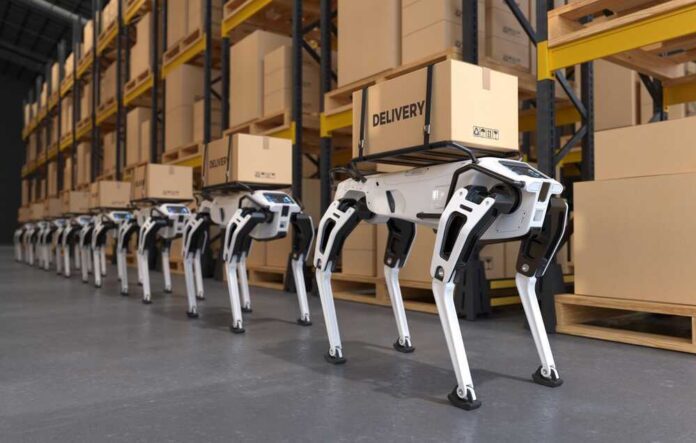
Reports say the ban reaches new imports of humanoid robots, quadruped robot dogs, and connected power inverters. The inverters matter because they link batteries, solar systems, and data centers to the grid.
In the FCC’s view, that makes the whole package part of the same vulnerability problem: connected hardware with too much reach and too many ways in.
Why Officials Say the Risk Is Real
Federal officials argued that advanced robotic devices collect data that malicious actors could use to surveil Americans, help foreign intelligence services, or remotely commandeer the robots. That is the heart of the case. These are not simple toys or isolated machines.
They are networked devices with sensors, cameras, software updates, and remote links that can be turned into attack paths if the wrong actor gets inside.
The government also tied the decision to supply-chain fear. Brendan Carr said the goal was to secure America’s critical supply chains and avoid depending on foreign technology at vulnerable points in the economy.
Reuters reported that the FCC said the devices could disrupt economic and national security and threaten critical infrastructure. That language signals a prevention strategy, not a cleanup after a known disaster.
Why the Scope Matters
The rule is narrower than a total market shutdown. Multiple reports say it applies to models not yet released or not yet authorized, while leaving existing approved products untouched for now.
That detail matters because it shows the government is trying to close the door before more devices enter the pipeline. It is a forward-looking move built around risk management, not a recall of everything already sold.
EVENT: The FCC added Chinese-made humanoid robots, robot dogs, and power inverters to its national-security equipment ban list, blocking imports of new models not yet authorized for sale.
— Noah by SAN (@noahintel) July 30, 2026
That narrow scope also explains why the policy may feel more like a strategic blockade than an emergency alarm. If officials believed current devices posed an immediate nationwide danger, they could have chosen a broader step.
Instead, they used the authorization process to stop future exposure. In practical terms, that means the fight is over who gets into the American market next, and under what rules.
The Bigger Pattern Behind the Decision
This is not the first time U.S. regulators have treated Chinese-linked hardware as a security problem. Reporting places the robot move in the same line of action that hit telecommunications gear and other connected equipment before it.
That history matters because it shows a clear pattern: once Washington decides a device category could expose data or control systems, it often responds before a public breach forces its hand.
Chinese officials and state media have answered with accusations of discrimination and protectionism, and that response is predictable in a fight this large. Still, the public reporting here gives the FCC’s case more weight than the rebuttal.
The agency described a specific threat model, linked it to supply-chain and cybersecurity concerns, and limited the rule to future authorizations. That is a serious policy record, even if the full technical annex has not been made public.
What Remains Unclear
The reporting does not provide the full technical dossier behind the FCC decision. It also does not show a published cost-benefit analysis comparing security gains with higher prices, slower innovation, or lost market access.
The answer may be some of both. What is clear is that Washington now treats foreign-made humanoid robots as a sensitive category, not a novelty market. For manufacturers, that means the American door is narrowing fast.
For everyone else, it means the next big fight over artificial intelligence and robotics may be decided long before the first machine ever rolls onto a factory floor.
Sources:
cbsnews.com, nbcnews.com, theguardian.com, washingtonpost.com, aljazeera.com, forbes.com, bbc.co.uk, nytimes.com, reuters.com