

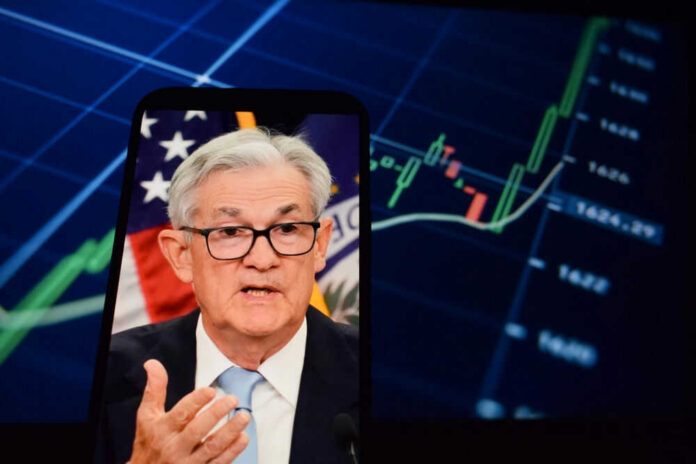
The 30-year Treasury is not just moving; it is voting on the economy’s next chapter.
At a Glance
- The 30-year Treasury yield pushed above 5 percent and reached the highest level since 2007.
- Market coverage tied the surge to inflation fears, oil-price shocks, and worries about the Federal Reserve’s room to respond.
- Long yields at this level can reflect more than inflation, including term premium, supply pressure, and investor positioning.
- The key question is not whether the yield rose, but what the rise actually means for inflation, growth, and policy.
The Yield Level That Changed the Conversation
The 30-year Treasury yield climbed to 5.17 percent on May 19, 2026, and market coverage described it as the highest level since before the financial crisis [1][2]. That matters because the long bond is where investors place their quietest, most durable bets about inflation, growth, and government credibility. When that yield breaks a psychological ceiling, traders do not just react to a number. They start asking whether the bond market is warning about a larger regime shift.
That warning did not come from a vacuum. Contemporary commentary linked the selloff to inflation pressure, including higher consumer and producer prices, and to oil-market stress tied to Middle East risk [1]. Bloomberg coverage in the supplied material also framed the move as part of a broader global bond selloff, with investors worried that higher energy prices and geopolitical strain could keep inflation sticky. For readers with common sense, the message is straightforward: when energy gets noisy, bond traders get defensive.
Why 5 Percent Matters More Than It Should
A 5 percent 30-year yield does not automatically mean runaway inflation, but it does change behavior. Mortgage pricing, corporate borrowing, and retirement-income math all feel the strain. The market is effectively saying that locking money away for three decades now deserves a higher reward. Treasury data show the 30-year benchmark near 5.12 percent on May 15, while Trading Economics placed it at 5.17 percent on May 19, confirming that the move was not a one-day fluke [2][3].
That difference between “a high yield” and “a meaningful signal” is where the real argument lives. The yield level alone does not prove that inflation is roaring back. It does, however, show that investors want more compensation for duration risk, inflation uncertainty, or both. That distinction matters. The hard accounting here is simple: the bond market is demanding a bigger cushion before it lends for 30 years.
Inflation Fear Is Only One Part of the Story
The strongest inflation reading in the supplied material comes from market commentary, not from a fresh official inflation release. That is enough to justify concern, but not enough to close the case. Long yields can rise because inflation expectations rise, because the Federal Reserve may stay tighter for longer, or because investors want a larger term premium for taking duration risk. FRED and Treasury data establish the level of the yield, but they do not break down the cause [2][3].
U. S. Treasury auction 🇺🇸 yielded 5.046% on $25 billion in 30-year bonds, the highest close above 5% since August 2007
The Treasury Department's sale drew bids reflecting investor demands amid prevailing rate environments, with the awarded yield surpassing recent benchmarks and… https://t.co/Yrgg45DhEF
— U.S.A.I. 🇺🇸 (@researchUSAI) May 14, 2026
That limitation is exactly why this story stays interesting after the headline fades. One camp sees the move as a vote of no confidence in Treasuries and a sign that inflation is not done [1]. Another sees a market absorbing fiscal supply, geopolitical stress, and technical selling without proving a new inflation wave. The data supplied here support the first concern, but they do not eliminate the second. A serious reading keeps both in view instead of mistaking one market price for a full diagnosis.
What the Auction and the Rate Move Suggest Together
The Treasury auction described in the supplied material complicates the panic narrative. CNBC reported strong demand for a $22 billion 30-year bond sale, with a B+ demand rating and a small dealer allocation [1]. That suggests the market was still willing to buy long duration even at elevated yields. In plain English, buyers did not run away from Treasuries; they simply required more yield to show up. That is a warning sign, but not a collapse of confidence.
The smarter reading is that bond traders are repricing risk rather than declaring disaster. If inflation stays sticky, the long end can stay under pressure. If oil cools, fiscal anxiety eases, and growth slows, the yield can retreat just as quickly. That is why this episode deserves attention. It is not merely about whether the 30-year yield crossed 5 percent. It is about whether that crossing becomes the market’s first draft of a much bigger story.
Sources:
[1] Web – United States 30 Year Bond Yield – Quote – Chart – Trading Economics
[2] Web – Market Yield on U.S. Treasury Securities at 30-Year Constant …
[3] Web – Daily Treasury Rates | U.S. Department of the Treasury