
U.S. forces sank a stealthy drug-running boat in the Eastern Pacific, and two traffickers did not survive.
Story Snapshot
- U.S. Southern Command ordered a lethal strike on August 23 against a low-profile vessel.
- The boat operated on known narcotics routes in the Eastern Pacific, according to the command.
- Two people were killed in the attack, the first publicly announced strike in weeks.
- The action fits a broader campaign against maritime narcotics networks.
What U.S. Southern Command Says Happened
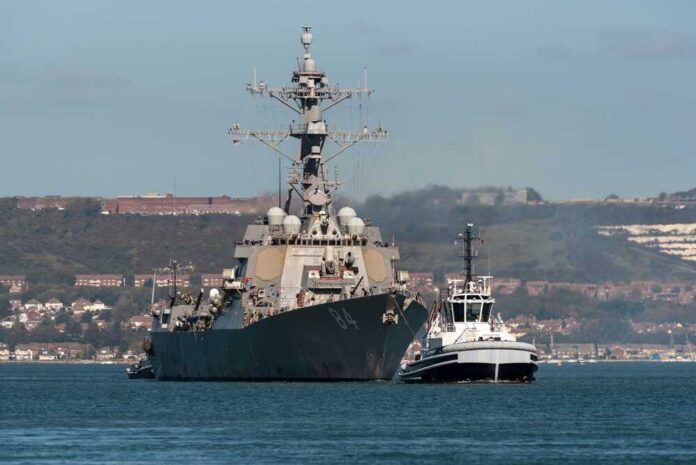
U.S. Southern Command reported that Joint Task Force Western Hemisphere executed a lethal kinetic strike on August 23. The target was a low-profile vessel, the kind cartels use to slip under radar and avoid patrols, moving along established drug-trafficking routes in the Eastern Pacific.
The command said intelligence confirmed the vessel’s role in narcotics movement before the strike. The mission’s stated aim was to disrupt trafficking networks that move cocaine loads north by sea to transshipment points.
Reuters reported two fatalities from the operation, which the military announced after a quiet period with no publicized strikes for weeks. The strike aligns with earlier actions this year that focused on similar boats.
Those boats run low in the water, travel at night, and make detection hard for standard patrol aircraft. The military has framed these missions as direct hits on cartels that push drugs through maritime corridors to feed land routes.
"This operation is a clear and decisive reminder that SOUTHCOM is taking the fight directly to the cartels."
On August 23, under #SOUTHCOM Commander Gen. Francis L. Donovan’s direction, Joint Task Force Western Hemisphere executed a lethal kinetic strike on a low-profile vessel… pic.twitter.com/aIw1qn36gd
— U.S. Southern Command (@Southcom) August 24, 2026
Why The Eastern Pacific Matters To Cartels
Cartels rely on the Eastern Pacific because distance and open water give them room to hide. Smugglers use low-profile craft and semi-submersibles to evade radar and visual spotting. These boats carry heavy loads, often hundreds of miles off the coast, then hand off to faster craft nearer to shore.
U.S. forces, working with partners, watch these lanes, cue surveillance, and strike when they judge a clear trafficking link. That cycle is why this sea space draws repeat operations.
Narcotics traffic has shifted at sea as pressure rises on overland routes. The maritime leg moves bulk cocaine far from normal law enforcement eyes. Military tools can reach into that space when partner navies lack range or when speed is vital.
The August 23 strike shows that U.S. planners view these boats not as random craft but as parts of a machine that funds gangs, fuels violence, and drives addiction at home. Hitting a node can ripple through the supply chain.
How This Fits A Larger Campaign
NPR’s review places the strike inside a months-long pattern that blends law enforcement goals with military methods at sea. The administration has told Congress it treats cartel actors as unlawful combatants, which shapes targeting policy and the choice to use lethal force against boats on the high seas.
These missions aim to raise costs for cartels, degrade logistics, and deter copycats who think the ocean is a shield. U.S. leaders argue that decisive action at sea protects American communities from cartel reach.
US Strike on Alleged Drug Boat Kills Two@LibertarianInst
US Southern Command announced it conducted a strike on a vessel in the Eastern Pacific Ocean and killed two people suspected of trafficking narcotics.
“Joint Task Force Western Hemisphere executed a lethal kinetic… pic.twitter.com/Qhh6GKDXQQ
— Kyle Anzalone (@KyleAnzalone_) August 25, 2026
United Nations officials and rights groups have criticized the approach and warned about legality. They argue that repeated lethal strikes in policing-like scenarios risk breaching human rights law and maritime rules.
That view does not change what happened on August 23, but it shows the policy debate will continue as each strike adds to the record. As with prior incidents, the military reported the core facts and results; external reviews will probe the legal frame over time.
What To Watch Next
Future operations will likely hinge on rapid intelligence and faster kill-chains against boats that can vanish in hours. Expect more coordination with regional partners to close gaps near shore. Expect more attention on how commanders define imminent threat and hostile intent at sea.
For many Americans, one standard matters most: does this keep poison off our streets? If strikes cut supply and shake cartel logistics, public support will hold. If not, pressure will grow for a new playbook.