Waymo’s driverless robotaxis failed spectacularly during San Francisco’s weekend blackouts, stopping dead in traffic and creating gridlock chaos while Tesla’s human-supervised vehicles continued operating normally.
Story Highlights
Waymo autonomous vehicles stalled in streets during Saturday power outage affecting 130,000 customers
Tesla robotaxis with human drivers remained operational, highlighting safety advantage of supervised systems
MIT researcher warns cities aren’t ready for mass deployment of driverless vehicles
Two-thirds of Americans already fear autonomous vehicles according to recent AAA survey
Autonomous Vehicle Technology Fails Basic Infrastructure Test
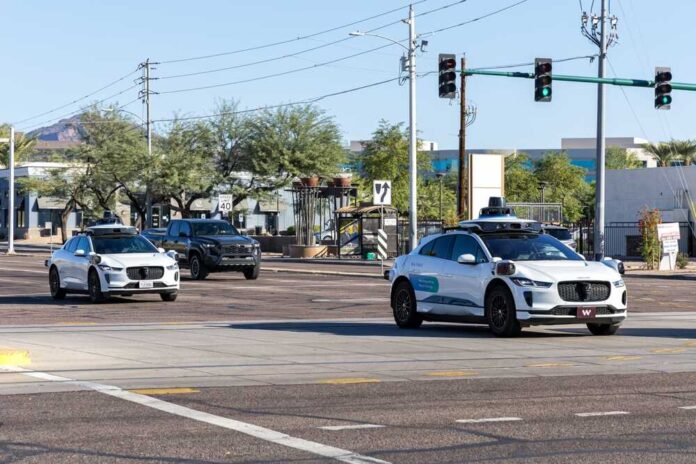
Waymo’s much-hyped driverless robotaxis ground to a halt Saturday afternoon when a Pacific Gas and Electric substation fire knocked out power to 130,000 San Francisco customers. Videos circulating on social media showed multiple Waymo vehicles stopped dead in traffic across the city. San Francisco resident Matt Schoolfield witnessed at least three autonomous vehicles blocking streets between 6 p.m. and 9:45 p.m., telling reporters “They were just stopping in the middle of the street.”
Bad look for Waymo. Lots of reports out of SF where the power outage caused its robotaxis to stop in traffic, causing jams.
On the other side, the Tesla robotaxi fleet (& personal FSD users) continued the service without hiccups.
The technology breakdown exposed fundamental flaws in fully autonomous systems that American families depend on for transportation. While Waymo claims its vehicles treat non-functional signals as four-way stops, the widespread outage overwhelmed the system’s ability to process intersections safely. This forced the company to pause operations entirely Saturday evening, abandoning the promise of reliable driverless transportation when citizens needed alternatives most during the infrastructure crisis.
Tesla’s Human-Supervised Approach Proves Superior During Crisis
Tesla CEO Elon Musk highlighted a crucial distinction during the chaos, posting on X that “Tesla Robotaxis were unaffected by the SF power outage.” Unlike Waymo’s fully autonomous approach, Tesla’s ride-hailing service requires human drivers behind the wheel at all times using supervised Full Self-Driving technology. This human oversight proved essential when basic infrastructure failed, allowing Tesla vehicles to navigate the crisis while Waymo’s fleet became traffic obstacles.
California regulations require Tesla to maintain human safety supervisors in all autonomous vehicle operations, a requirement that conservative safety advocates have long supported. The contrast between Tesla’s operational vehicles and Waymo’s stalled fleet validates concerns about rushing unproven technology onto public roads without adequate human backup systems. This incident demonstrates why regulatory caution protects both innovation and public safety.
Expert Analysis Confirms Conservative Concerns About Autonomous Vehicle Risks
MIT Center for Transportation researcher Bryan Reimer concluded the Waymo failure reveals “something in the design and development of this technology was missed that clearly illustrates it was not the robust solution many would like to believe it is.” His assessment aligns with widespread American skepticism about autonomous vehicles, with recent American Automobile Association surveys showing two-thirds of drivers fear the technology.
Reimer emphasized that power outages are “entirely predictable” events that properly designed systems should handle. His recommendation for mixing human and machine intelligence reflects conservative principles favoring proven solutions over experimental technology that could endanger families. The researcher also suggested holding autonomous vehicle developers accountable for “chaos gridlock” the same way human drivers face responsibility for their actions during emergencies.