

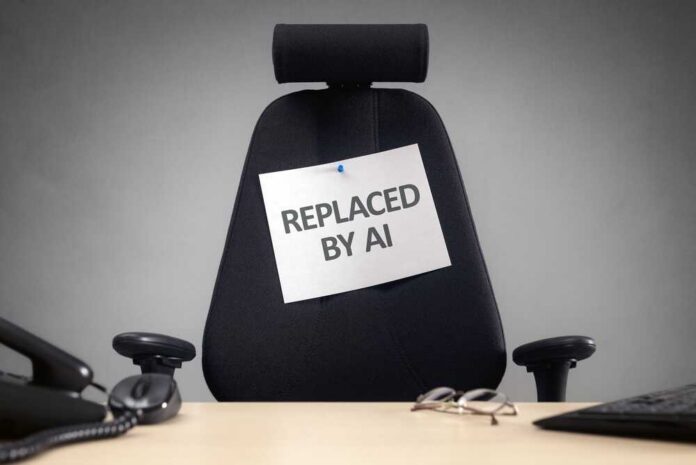
Meta’s looming layoffs reveal a cold truth about the artificial intelligence gold rush: the future is being funded by your neighbor’s pink slip.
Story Snapshot
- Meta plans to cut around 10% of its global workforce, or roughly 8,000 jobs, starting May 20.
- Leaders say the cuts will “run the company more efficiently” and help fund massive artificial intelligence spending.[2][3]
- More layoffs later in the year remain firmly on the table, keeping employees on edge.[1][3]
- The restructuring shows how artificial intelligence is reshaping not just products, but who still has a seat inside big tech.[1][3]
Meta’s May 20 layoff wave and the price of chasing artificial intelligence
Meta told employees it will lay off around 10% of the company on May 20, hitting roughly 8,000 workers worldwide and closing about 6,000 open roles.[2][3] This is not a surgical trim; it is a blunt reset.
An internal memo from chief people officer Janelle Gale framed the cuts as a way to “run the company more efficiently” while freeing up money for other investments, widely understood to be the company’s aggressive artificial intelligence build-out.[2] The message is clear: artificial intelligence gets funded; headcount gets cut.
Meta layoffs starting this week stress harsh AI reality inside Zuckerberg’s company https://t.co/SWrpR4NyFm
— CNBC (@CNBC) May 18, 2026
These layoffs do not land in a vacuum. Industry reports describe Meta spending at levels that would have sounded absurd a few years ago, with capital expenditures projected between about 125 billion and 145 billion dollars this year, much of that aimed at artificial intelligence infrastructure and data centers.[3]
Investors cheer discipline and focus, but workers read the same numbers differently. When billions pour into chips and servers while thousands of colleagues pack their desks, “efficiency” starts to sound like a sanitized word for sacrifice.
How Meta is selling “efficiency” while bracing for more cuts
Gale’s memo and subsequent internal comments walk a careful line between reassurance and warning. Employees will reportedly receive at least 16 weeks of base pay plus an additional two weeks for every year of service, along with extended health coverage for up to 18 months under COBRA in the United States.[2][3]
That is a relatively generous package by corporate standards and it matters to families facing a sudden income shock. Yet in the same breath, leadership refuses to promise the cuts will stop here.[1][3]
During internal discussions, Gale reportedly told staff she could not guarantee there would be no additional layoffs later in the year and that teams would “continue to evolve as needed.”[3]
From a common-sense perspective, that statement at least treats employees like adults; it avoids the sugarcoated “one and done” fiction that too many corporations fall back on. But it also means every employee who survives May 20 will still live in a state of low-grade anxiety, wondering if the next reorganization meeting is really a countdown clock.
Artificial intelligence as both scapegoat and lifeboat inside Meta
Publicly, chief executive Mark Zuckerberg has insisted that artificial intelligence is not the main cause of the layoffs, arguing that automation helps smaller teams work more efficiently rather than directly eliminating roles.[3] That explanation tries to separate “business discipline” from “robots took your job.”
Yet reporting around Meta’s strategy, including anonymous discussion threads where employees describe being asked to train systems that may replace large parts of their work, paints a more uncomfortable picture. Artificial intelligence may not be the only reason, but it is clearly the direction of travel.
HOOT: @Meta plans to cut about 8,000 jobs, roughly 10% of its global workforce, with layoffs starting around May 20. Company says the reductions will fund between $125 billion and $145 billion in AI data center spending, despite Q1 revenue of $56.31B, up 33%. pic.twitter.com/H8en7NBrl3
— OwlyPost (@OwlyPosting) May 17, 2026
The hard truth is that artificial intelligence inside big tech now functions as both scapegoat and lifeboat. For workers whose skills align with Meta’s new “applied artificial intelligence” focus, this transition is a career jackpot, with demand for machine learning talent outpacing supply.[3]
For everyone else—operations, support, legacy product teams—the same trend becomes a justification for consolidation, outsourcing, or outright elimination. When leadership talks about “redeploying” employees into artificial intelligence projects, the subtext is simple: adapt quickly, or become part of the savings.
What this artificial intelligence pivot reveals about power, risk, and ordinary workers
Meta’s move fits a familiar cycle in technology. When growth is hot, companies overhire; when investor patience wears thin or new technology demands huge capital, management cuts staff to signal discipline.[1][3] This time, the catalyst is the artificial intelligence arms race. That does not make the decision inherently immoral.
A company has a responsibility to stay competitive, and wasting shareholder capital on bloated payrolls is not wise stewardship. But the pattern exposes who actually bears the risk in modern capitalism.
Shareholders enjoy the upside of artificial intelligence-fueled optimism. Executives collect performance bonuses for “leaning into” the future. Workers, meanwhile, absorb the shock of each strategic pivot—especially those who did nothing wrong except work on the last “big bet” that fell out of fashion.[1][3]
Critics inside Meta argue that these layoffs reflect years of overexpansion and misjudged priorities, particularly around the metaverse, now quietly downsized.[1] Leadership should be accountable when grand visions fail, not just the rank and file who carried them out.
What comes after the pink slips: a harsher labor market shaped by artificial intelligence
Reports suggest Meta is not alone. Other major technology firms, including Amazon and Oracle, have made large cuts while simultaneously pouring money into artificial intelligence and cloud infrastructure.[1][3] The pattern hints at a tougher long-term labor market for middle-skill white-collar work.
Automation does not need to wipe out entire professions to hurt; it only needs to let companies do the same work with fewer people. That dynamic weakens individual bargaining power and turns once-stable careers into a series of high-stakes musical chairs.
For workers over forty, this is the uncomfortable takeaway: the “safe” desk jobs that once looked immune to automation are now squarely in play. Meta’s May 20 layoffs are not just another Silicon Valley headline; they are an early chapter in how artificial intelligence reorders who prospers and who gets displaced in the modern economy.
The most practical response pairs old-fashioned prudence—living below your means, avoiding debt—with a cold-eyed willingness to reskill before a corporate memo forces the issue.
Sources:
[1] YouTube – Meta Layoffs May Hit Up to 8,000 Roles, More Job Cuts …
[2] Web – Meta Plans to Layoff 10% of Its Entire Staff in May – Business Insider
[3] Web – Meta to cut 8,000 jobs on May 20, and CEO Mark Zuckerberg is …