
Two arrests, a lockdown, and a calm White House perimeter restored in under an hour.
Story Snapshot
- Two separate incidents hit the Lafayette Park side of the White House.
- A driver crashed onto the sidewalk; a second person jumped a barricade.
- Secret Service arrested both and briefly locked down the complex.
- No public evidence of coordination; both remain under investigation.
Back-to-back incidents test a hardened perimeter
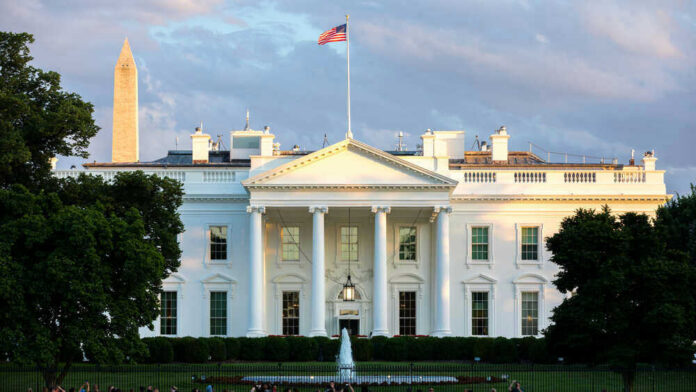
The United States Secret Service said a vehicle jumped the curb and crashed onto the sidewalk along Lafayette Park shortly before 10 a.m. on November 9. Officers arrested the driver, who the agency said fought them before they subdued him. Around the same time, another person jumped a barricade near the park’s northwest corner. Agents arrested that person as well. The White House complex entered a brief lockdown as teams cleared the area and checked the vehicle.
A vehicle crashed onto the sidewalk surrounding Lafayette Park near the White House in Washington, D.C., prompting a swift response from the US Secret Service. Officers arrested the driver, while a second person was detained after jumping a barricade near the presidential… pic.twitter.com/xcceAuUfrZ
— APT News (@APT__News) November 9, 2026
Reporters in the press area described a quick sweep, road closures, and a tight cordon north of the White House. Law enforcement searched the car and reopened nearby zones after they assessed the scene and removed the suspects. Federal responders treated the two incidents as separate events. Officials did not claim coordination or name a motive. Both cases moved into the standard investigative track for threats or intrusions near the executive mansion.
What the facts say, and what they do not
The Secret Service statement established the core timeline: crash first, arrest, then a near-simultaneous barricade jump and arrest. That is the evidentiary backbone. The agency’s language about a combative driver supports why force moved fast to detain and clear the sidewalk. Coverage from on-scene outlets confirmed the temporary lockdown and later lift after the vehicle search and perimeter checks, which is typical when a car ends up inside a protected buffer.
Some readers will ask if this was a coordinated attack. Public facts do not show that. Quick detentions, no announced weapons, and a standard sweep pattern point to routine but serious protocol, not a complex plot. That aligns with common sense and conservative instincts about security: act first, over-communicate later. The White House is a target-rich symbol, and speed beats speculation. Assertions beyond the agency’s statement deserve caution until charges or affidavits surface.
The playbook that keeps the front gate quiet
Lafayette Park and the north fence line see more incidents than most realize. The park’s openness, heavy foot traffic, and sightline to the North Portico create a fast escalator from odd behavior to hard stop. Since the 1990s, tighter controls on nearby roads and robust barriers shaped a simple rule: the perimeter must hold even when someone acts out. A brief lockdown and two quick arrests match that rule, as seen in past curb strikes and fence jumps.
Security works best when boring wins. Here, boring meant checkpoints, bollards, and practiced muscle memory. Officers closed space, removed suspects, searched the vehicle, and reset the zone. That is why the president’s schedule rarely shifts for long during these scares. Good security is not dramatic. It is fast, layered, and dull by design. Citizens should expect this level of response every time a car hops a curb or a person tests a fence line near the seat of power.
What to watch next
Charges and affidavits will answer the next round of questions. Investigators will look at impairment, mental health, protest intent, and prior warnings. Traffic cameras, park surveillance, and body cameras will set the minute-by-minute record. If facts later show coordination, officials will say so. If not, this goes in the thick file of one-offs that still demand a full-court press, because that press is what stops the rare one that is not a one-off.
Sources:
pjmedia.com, reuters.com, telegraph.co.uk, washingtonsun.com, usnews.com