
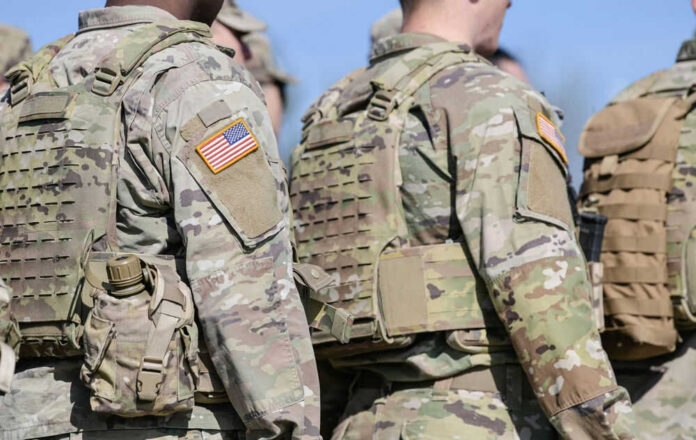
A string of military base freezers warmed food instead of chilling it, and Pentagon cyber teams moved fast.
Story Snapshot
- At least six U.S. commissaries saw freezer failures in late August, including one that heated food.
- Pentagon investigators and Army Criminal Investigation Division cyber units opened a coordinated probe.
- French shops faced similar hacks that raised fridge temperatures via internet-connected controllers.
- Officials have not publicly named a culprit; the probe focuses on how and whether remote access was used.
What Happened And Why It Matters
Multiple U.S. military commissaries reported freezer malfunctions over several days in late August. Public posts from affected bases pointed to spoiled goods and closures while staff cleared shelves. Fort Huachuca in Arizona said a freezer “went into defrost mode where it heated up all the food” on August 26, a detail that suggests active temperature change, not just a blackout. The Pentagon began treating the cluster as a suspected cyber event due to timing, behavior, and risk to food supply continuity.
The Department of Defense engaged specialized teams rather than only facilities staff. U.S. Cyber Command coordinated with federal partners, and the Army Criminal Investigation Division’s Cyber Field Office took point on evidence and leads across bases. The Army Criminal Investigation Division also coordinated with French law enforcement after reports abroad showed similar techniques. Officials framed the response as a protection-of-forces issue: food safety, troop readiness, and supply chain resilience.
How A Freezer Becomes A Weapon
Attackers who reach building or store control systems can change setpoints and modes without touching a classified network. That is the operational technology problem: small boxes manage real-world functions and sometimes sit on the open internet. France recently saw commercial fridges pushed into defrost or unsafe temperatures through remote commands, ruining stock at scale. Security researchers tied those incidents to compromises of widely used refrigeration controllers. The same class of risk can threaten any connected cold chain.
Past cases show how small control gaps can trigger big physical effects. Sewage pumps, pipeline valves, and electric grid gear have all been manipulated by remote access, leading to messy, real-world damage. These are not science-fiction plots; they underline a basic rule. If a device that moves heat, fluid, or power is online, it must be treated like a front door to the building. That mindset belongs in cafeterias and commissaries, not just in power plants.
What Investigators Are Likely Checking First
Logs from refrigeration controllers and any remote management portals can show who changed what, and when. Network records can reveal vendor connections, maintenance sessions, or unknown logins. Investigators will check whether one contractor account touched many sites, whether default credentials were left in place, and whether the same firmware and settings spanned all affected stores. A clean chain of custody for images and logs will be critical if cases move to court or sanctions.
Response playbooks from the Cybersecurity and Infrastructure Security Agency stress basic moves that stop most of these attacks. Remove default passwords. Lock down remote access with strict allow-lists and multifactor. Keep engineering software on hand so staff can rebuild devices fast after a wipe. Segment networks so a vendor tool cannot hop into building controls. These steps sound boring, but they decide whether a freezer is a box or a backdoor.
What This Means For Readiness And Common Sense
Food safety is not just a health rule; it underpins morale and mission. If bad actors can warm meat cases on base, they can also try to nudge boiler setpoints, close fuel valves, or flood sensors with noise. Conservative common sense says secure what you connect, measure what you defend, and publish lessons learned fast. The Pentagon’s choice to put cyber and criminal units on this shows respect for that creed, and it sets the right tone for vendors and base managers.
What To Watch Next
Expect a tally of affected commissaries, dates, and losses, plus any shared vendors or devices. Watch for technical indicators that link the U.S. incidents to the French pattern, or that rule it out. Look for new procurement rules that require locked-down remote access and on-site recovery kits for controls. One official sentence will carry the most weight: who changed the temperatures, by what path, and from which system. That answer will shape fixes across every base kitchen.
Sources:
dailymail.com, people.com, defenseone.com, independent.co.uk, militarytimes.com, yahoo.com