
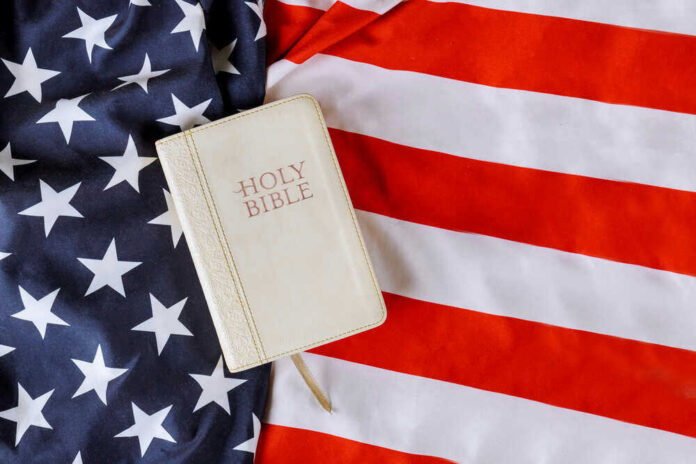
In a stunning turn of events, federal workers just received the green light to openly display Bibles, pray in groups, and speak about their faith at work.
At a Glance
- The Trump administration orders federal agencies to robustly protect religious expression in the workplace.
- New OPM memo explicitly allows displays of religious symbols, group prayer, and faith discussions among employees.
- Federal agencies must review and update internal policies to enforce these protections.
- Faith-based groups cheer the move, while critics warn of potential legal battles over church-state boundaries.
Trump Administration Restores Religious Rights for Federal Workers
The recent memorandum from the Office of Personnel Management (OPM) is nothing short of a bombshell for anyone who values religious freedom and constitutional rights.
With the stroke of a pen and the full weight of the Trump administration behind it, federal agencies are now required to actively safeguard the right of employees to express their faith at work. After years of seeing religious liberty eroded by bureaucratic overreach and restrictive policies, this directive signals a shift: the rights guaranteed by the First Amendment are back in the spotlight, not as a footnote, but as a priority.
“For ordinary Catholics… these commitments are not mere policy,” said Kelsey Reinhardt, president of CatholicVote.
“Living our faith in public… has always been part of the American promise.”@catholickelseyhttps://t.co/ikXT1oRzmM
— CatholicVote (@CatholicVote) July 28, 2025
OPM Director Scott Kupor, the man at the helm of this initiative, made it clear: “Federal employees should never have to choose between their faith and their career.” The memo doesn’t mince words. It outlines, in plain English, that workers are free to display Bibles, crucifixes, mezuzahs, and other religious items on their desks.
They can pray together during breaks, invite coworkers to religious events, and even talk about their beliefs in conversations—on or off the clock—without fearing reprisal. For years, faith-minded Americans have watched as public expressions of belief were stifled or outright banned in the name of “neutrality.” This is a welcome course correction.
Agencies Ordered to Overhaul Internal Policies
Federal agencies are now under strict instructions to review and update their internal policies to comply with the new mandate. This isn’t just lip service or another empty government promise—it’s a top-down directive backed by executive orders and reinforced by explicit, practical examples.
The July 16, 2025, guidance on religious accommodation set the stage, but this latest memo goes further, consolidating previous rules and making clear that agencies must “robustly protect and enforce” every employee’s right to religious expression. No more hiding behind vague HR policies or bureaucratic doublespeak.
For federal employees who have felt pressured to keep quiet about their beliefs or hide their faith-based identity, this is a breath of fresh air. The memo comes with a timeline—agencies are to act now, not later.
And with the Trump administration’s track record, there’s little doubt the White House means business. The message: America’s founding values are not up for negotiation, especially not in the halls of government.
Support and Opposition: The Debate Over Religious Liberty and Neutrality
Faith-based organizations and religious liberty advocates have applauded the move, calling it a long-overdue correction to years of government hostility or indifference toward people of faith.
For conservative Americans, it’s a validation of what they’ve sensed for years: that religious rights have been sidelined, and that a return to constitutional principles was needed. OPM’s guidance doesn’t just reaffirm the law; it puts it into practice with concrete protections.
But not everyone is cheering. Civil liberties groups and some workplace diversity consultants are already raising concerns that these expanded protections could blur the line between government neutrality and religious endorsement.
Critics warn that non-religious employees or members of minority faiths could feel pressured or excluded, and legal experts predict the policy will face challenges in court.
The memo’s broad language—while music to the ears of religious employees—will test the boundaries of the Establishment Clause, especially if agencies are perceived as favoring one faith over another. The battle between religious freedom and government neutrality, it seems, is far from over.
What Comes Next: Implementation, Precedents, and Potential Challenges
With agencies now expected to overhaul their policies and practices, attention turns to how these new protections will be implemented on the ground.
Will supervisors embrace the change, or will old habits die hard? Will the federal government set a new standard that state, local, and even private employers follow, or will legal and social challenges stall progress and sow confusion?
While supporters are hopeful that the policy will empower religious employees and restore a culture of respect for faith in government, skeptics warn that the coming months could bring lawsuits, workplace disputes, and renewed debates over the proper role of religion in public life.
One thing is clear: the Trump administration has drawn a line in the sand. The days of federal workers hiding their faith are over, at least on paper. Whether this bold new policy delivers on its promise—or ends up mired in controversy—remains to be seen.
But for Americans frustrated by years of leftist overreach and bureaucratic nonsense, this is a victory for common sense and constitutional rights.