

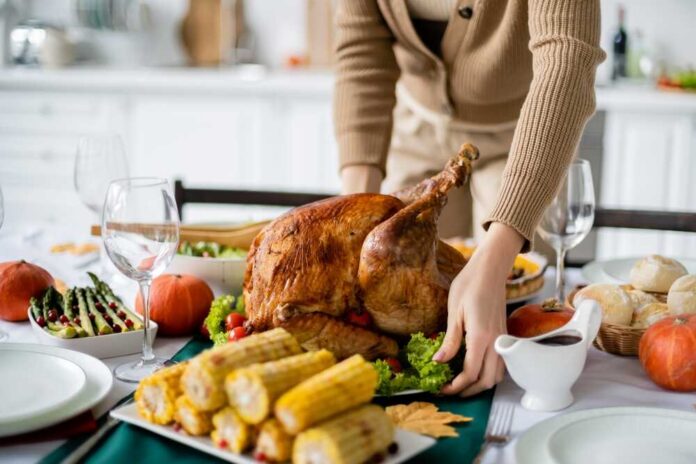
Thanksgiving turkeys will cost more this year, and the reason starts in the cornfields, not the corporate boardroom.
Quick Take
- Family-owned DiPaola Turkey Farms raised its Thanksgiving turkey price by 30 cents a pound this year.
- Owner Artie DiPaola blames corn and soybean feed costs, which climbed 10 to 12 percent.
- Nationwide wholesale turkey prices are up 12 percent this year, Fox Business reports.
- Feed-driven turkey price spikes have hit small farms before, most notably during the 2008 commodity surge.
A Family Farm’s Tough Call on Pricing
Artie DiPaola runs a turkey farm in Hamilton, New Jersey, selling to loyal customers who come back every November. This year he had to raise prices by 30 cents a pound. He described the decision as painful, something no farmer wants to do to families he has served for years. But the math left him little choice.
DiPaola pointed straight at his feed bill. Turkeys eat corn and soybeans, and both got more expensive fast. “That’s up 10 to 12 percent,” he told Fox Business, explaining that feed works like fuel for livestock. When the cost of that fuel rises, the cost of raising the bird rises right along with it.
The Numbers Behind the Squeeze
DiPaola’s farm is not an outlier. Wholesale turkey prices across the country have jumped 12 percent this year, according to Fox Business reporting. Government tracking backs up the trend at the grain level too, showing corn prices moving higher across multiple months this year compared to the year before. For a product that depends almost entirely on grain to grow, that kind of swing hits a farmer’s bottom line hard.
Industry forecasters paint an even starker picture over a longer stretch. Wholesale turkey prices were projected to hit $1.76 per pound in 2026, a 30 percent jump from the prior year and a stunning 88 percent above 2024 levels, according to Farm Bureau analysis of U.S. Department of Agriculture data. Prices are expected to ease some in 2027 as production expands, but this Thanksgiving falls squarely in the expensive stretch.
This Isn’t the First Time Feed Costs Hit Farmers Hard
Turkey farmers have faced this exact squeeze before. During the 2006 to 2008 commodity run-up, corn prices rocketed from about $2 a bushel to $5, while soybean prices more than doubled. Feed made up roughly two-thirds of the total cost of raising a turkey back then, according to a Federal Reserve Bank of Minneapolis review of the industry. The current spike follows a familiar script rather than breaking new ground.
That history matters because it shows feed costs are not a convenient excuse invented for this holiday season. They are the single biggest line item turkey farmers manage every year, good times and bad. When grain markets swing, family farms like DiPaola’s absorb the shock first, long before it ever reaches a supermarket shelf or a Thanksgiving table.
Thanksgiving shoppers face higher turkey prices as family farms struggle with rising costs https://t.co/UCjGH1Ebos
— FOX Business (@FoxBusiness) November 12, 2026
Why Farmers, Not Just Shoppers, Feel the Pinch
Shoppers paying more at checkout should understand where that money actually goes. Farm economists note that farmers typically keep only a small slice of every food dollar consumers spend, with the vast majority absorbed by processing, packaging, transportation, and retail markups. In 2023, the farm share was estimated at just 15.9 cents of every dollar, with the rest going to the broader supply chain.
That split means a 30-cent-per-pound increase at a family farm is not padding a profit margin. It reflects a producer trying to stay afloat while grain costs climb faster than the price they can charge. For conservatives who value self-reliant small businesses over distant corporate supply chains, that distinction is worth remembering at the dinner table this year.
Shoppers will still find turkeys this Thanksgiving, but the price tag tells a real story about what it takes to raise one. Family farms like DiPaola’s are not padding profits. They are passing along costs set by grain markets far beyond their control, trying to keep a decades-old tradition affordable for the families who have trusted them for years.
Sources:
foxbusiness.com, capitalpress.com, ag.purdue.edu