
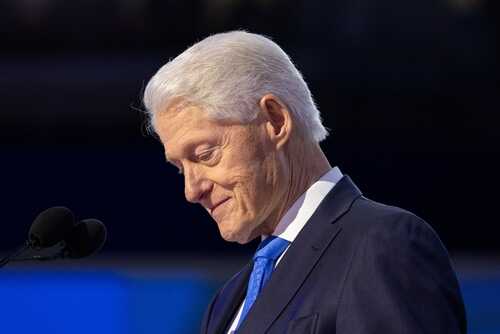
Bill Clinton used a single cutting line to turn Trump’s marquee projects into a question about leadership priorities.
At a Glance
- Clinton mocked Trump’s triumphal arch and Kennedy Center name fight as trivial distractions.
- Trump cast the arch as a national security site with drones and snipers, at the military’s request.
- A federal judge blocked efforts to rename the Kennedy Center without Congress.
- The clash shows how symbols and naming steer real power and attention.
Clinton’s Jab: “Hard to Make Up,” And Meant To Sting
Bill Clinton opened the Clinton Global Initiative in New York by mocking two Trump priorities: a Washington triumphal arch and the push to put Trump’s name on the Kennedy Center.
He called it “hard to make up” and said the White House was “majoring in the minors,” signaling a view that showy battles are crowding out core governance.
The remarks were among his sharper public critiques of Trump this term and landed because they framed a values test, not just a joke.
"Some days I can hardly believe what is happening in this country that I love so much."
Bill Clinton takes direct aim at President Trump, accusing those in power of creating "one set of rules for themselves and another set for everyone else."
The former president goes further,… pic.twitter.com/PnB0VmuBOd
— Fox News (@FoxNews) September 22, 2026
Trump’s Case: Security First, Spectacle Second
Trump described the arch as a “top grade” military complex at the request of the United States military. He said it would house and rapidly deploy large numbers of drones, and station snipers on the roof and plaza.
He tied the design to national security needs, signaling function over flair even as the monument’s scale guarantees attention. Supporters like Doug Burgum praised it as fitting the capital’s global stature and honoring Arlington National Cemetery across the river.
The administration also acknowledged the site will create “adverse effects” on views and the setting but argued those impacts “cannot be fully avoided” because the location is central to the project’s purpose.
That statement accepted tradeoffs in the open. It framed the arch as infrastructure with costs, not just art with applause lines. The message to skeptics was clear: some security footprints are visible by design in a dangerous world.
The Kennedy Center Fight: Law, Limits, And Legacy
A federal judge ordered the John F. Kennedy Center for the Performing Arts to remove Trump’s name from its facade and blocked related steps, finding the institution could not rename itself without Congress.
The ruling pointed back to the statute that designates the complex as the national memorial to President Kennedy. The legal bottom line was simple: branding federal cultural assets is not a presidential hobby; it runs through law, not likes or headlines.
For readers who value limited government and respect for institutions, this ruling fits common sense. Congress named the memorial by law. Changing that needs Congress. The bench did not opine on taste or politics. It enforced the rulebook.
That clarity undercuts claims that critics used “process” to stall progress. The process is the point with public trust items. If the White House wants a different name, make the case to lawmakers and voters first.
Why The Symbols Matter: Agenda Setting Is Power
Fights over arches and names are not fluff. Political science research shows presidents set what media and Congress focus on by framing and repetition. When the White House spotlights a monument, the spotlight moves off other matters.
When a rival spotlights that choice, the cost of that attention move becomes the story. Clinton’s quip worked because it asked whether the time spent matches the country’s needs right now—security, debt, borders, and family budgets.
On the merits, Trump’s security rationale deserves a fair hearing. If the military made a strong request, document it and show the mission case. Publish the risk assessment, cost, and measurable gains.
On the Kennedy Center, the court already spoke. Follow the law, not a branding impulse. The path is clear: build what truly protects Americans, honor memorials as Congress directed, and keep the presidency focused on results, not ornaments.
Sources:
abcnews.com, thehill.com, www-cdn.abcnews.com, bbc.com, politico.com, www1.ku.de, en.wikipedia.org