

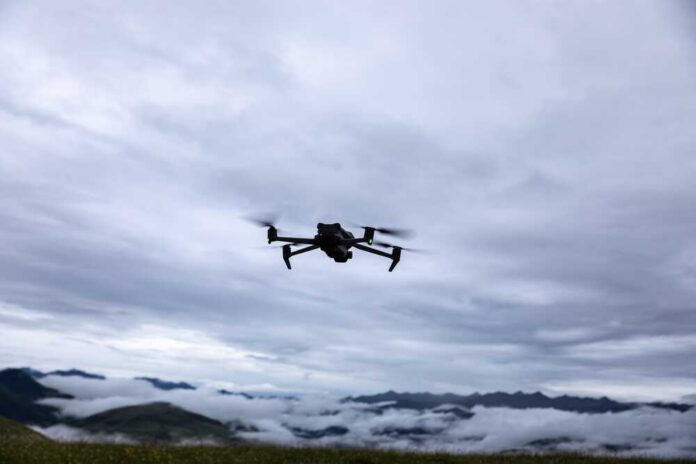
Mexico warned Ukraine that cartel-linked volunteers were seeking battlefield drone training, and Kyiv moved to investigate.
Story Snapshot
- Mexico’s intelligence service alerted Ukraine about cartel-linked drone trainees.
- Ukrainian security services opened probes into Spanish-speaking volunteers.
- Named suspects reportedly used false documents to join training pipelines.
- Cartel drone attacks in Mexico have surged in number and skill.
Mexican Alert Triggers Ukrainian Scrutiny
Mexico’s National Intelligence Center sent a confidential alert to Ukraine’s security service in early summer 2025. The message warned that some Spanish-speaking “volunteers” in Ukraine sought first-person-view drone training for cartel use back home.
Ukraine’s security service and military intelligence then opened investigations into several Spanish-speaking recruits tied to foreign volunteer units. The Insider reported that Ukraine focused on units attached to the International Legion and flagged potential infiltration vectors and training hubs.
Defense-focused outlets echoed the alert and probe. The War Zone detailed claims that cartel-linked operatives tried to embed with training groups where small teams learn to build, arm, and fly explosive drones at low cost. Kyiv Post and other outlets published parallel accounts, giving the warning wider reach.
The reporting described a pragmatic cartel goal: skip slow trial and error at home by sending operatives to the world’s most advanced live lab for cheap attack drones.
Alleged Operatives And Tradecraft
Reported case notes pointed to specific figures and methods. One summary named a man known as “Aguila Siete,” portrayed as a former Mexican special forces member who entered Ukraine under a false Salvadoran identity and trained at a private facility in Lviv.
The same account said three former Colombian guerrillas used forged Panamanian documents to complete drone training. These alleged trainees sought skills in frame assembly, radio links, and warhead mounting consistent with front-line tactics.
The rapidly accelerating use of drones among Latin American drug cartels will significantly complicate the Trump administration’s campaign to halt the flow of illicit narcotics into the U.S., according to some officials. https://t.co/WM81slskxI
— The Washington Post (@washingtonpost) September 22, 2026
Ukraine’s security services described a four-step screening system involving border checks, databases, and counterintelligence interviews. Officials acknowledged that some determined operatives can still slip through during wartime surges.
The reported probes targeted both the identity-fraud problem and the training pipeline risk, where a small number of skilled instructors can rapidly multiply new drone teams if screening fails even once.
Cartel Drone Growth And Why The Timing Matters
Cartel drone use has expanded fast, and it now includes surveillance, intimidation, and explosive strikes. Spanish outlet El País chronicled a leap in capability across multiple groups, with tactics that mirror battlefield methods: lofted improvised munitions, swarm attempts, and low-altitude runs against soft targets.
Defense coverage tied this rise to lessons observed in Ukraine, where cheap parts and clever software let small crews hit with precision while keeping operators safe and hard to track.
Latin American drug cartels are recruiting veterans of the Russia-Ukraine war to expand their drone capabilities, raising concerns about whether U.S. and Mexican authorities are prepared to counter the threat, according to a new report.
— Bob Hafer 🍊 (@rehafer) September 22, 2026
Analysts in Defense News framed the Ukraine training claim as part of a broader shift. Cartels want skills they can scale: rapid build cycles, standardized rigs, better signals links, and simple but deadly warheads.
Those gains threaten border communities and strain local police who lack jamming gear and air defenses. That risk argues for tighter foreign-fighter vetting abroad and for U.S.-Mexico cooperation on drone countermeasures at home.
What U.S. Stakeholders Are Watching
U.S. security voices warn that cartel drones now challenge cities along smuggling routes and pressure rural areas where law enforcement is thin. Policy analysts urge faster fielding of counter-drone tools, tighter export controls on critical links and software, and hard penalties for straw buyers.
That playbook aligns with conservative priorities: protect communities, harden borders, and hold traffickers and their enablers to account. The strategic question is speed. Cartels iterate fast; policy must move faster.
One caution remains. Much of the public reporting comes through intelligence summaries and press accounts that describe investigations and named suspects without attached court records.
That does not change the pattern that worries officials: cartels seek the cheapest path to a deadlier toolbox, and the Ukraine war offers exactly that kind of classroom. The prudent response is to assume intent, close the training gaps, and meet the drone threat with tools, teamwork, and tougher screening.
Sources:
militarnyi.com, twz.com, theins.press, atlanticcouncil.org, defensenews.com, kyivpost.com, english.elpais.com