
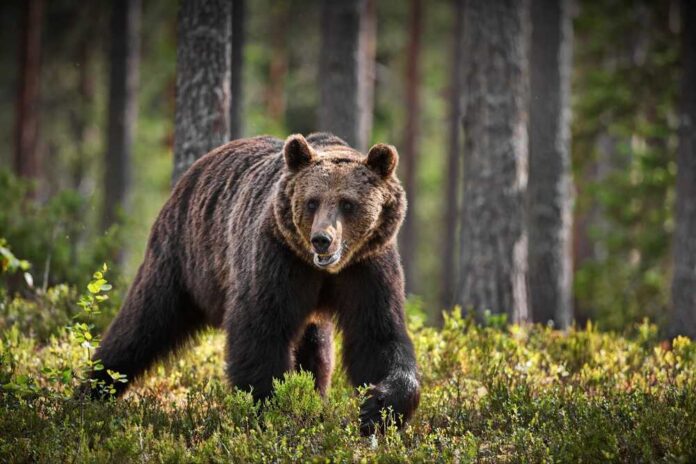
A mother grizzly with cubs bluff-charged a solo runner on the Rockwall Trail near Numa Pass, and the park’s own warning backs it up.
Story Snapshot
- Parks Canada warned of a defensive female grizzly with cubs in the exact corridor.
- The encounter happened near Numa Pass around 9:30 a.m. on August 25, 2026.
- Officials confirmed a solo hiker was bluff-charged by the adult female.
- The runner later said he grabbed his phone instead of his bear spray and owned up to the mistake.
What Happened On The Rockwall
Parks Canada posted a bear warning for the Floe Lake, Numa Pass corridor on August 26. The notice described a female grizzly with a cub showing aggressive defensive behavior in that area.
Local reporting placed the encounter the day before, at about 9:30 a.m., roughly 500 meters south of Numa Pass on the Rockwall Trail in Kootenay National Park. Officials told reporters that a solo hiker was bluff-charged by the adult female, matching the runner’s account.
Keith Kerr later told television and print outlets that he was running when he came face-to-face with a mother grizzly and her cubs. He said the moment felt like the end and admitted he made a key error. He reached for his phone instead of bear spray.
He called that choice “100% my responsibility,” which fits what wildlife officers preach about personal readiness in bear country. Some summaries say the event lasted about a minute and involved several bluff charges.
Why The Bear Charged Without Hitting
Wildlife agencies consider fast, short rushes by a bear with cubs to be classic defensive behavior. A female grizzly that thinks her cubs are at risk often tries to scare, not maul. The wording of the Parks Canada bulletin points to that frame and mirrors long-standing guidance.
Bluff charges are common in these tense, close-range surprises, and they end without contact most of the time. Research and agency guides define a charge that stops short as a known pattern rather than a mystery attack.
Reports say the bear closed the gap to only a few steps before stopping. Distances in these moments feel elastic because fear bends time and space. But the behavior lines up with what officers see. The bear shows agitation, lowers its head, or bounds forward, then halts.
The Trail Status And The Morning Timeline
Trail condition pages around that week help pin the scene. Rockwall segments were open, while the Floe Lake Trail and Numa Pass carried a bear warning dated August 26. That matches the area and timing in the reports and the official alert.
It suggests rangers saw a pattern of mother-and-cub use in that corridor, not a one-off stress point. Hikers moving through meadows near the pass would be most likely to surprise a bear at close range.
The time stamp matters. Morning travel often overlaps with peak bear foraging, especially during berry season. The advisory language from Parks Canada notes increased bear activity in those periods, which raises the odds of a surprise at a bend, crest, or brushy edge.
A runner covers ground fast and can land inside a sow’s comfort zone before either side has time to react. That is how defensive charges get triggered in seconds.
What The Runner Did Right And Wrong
Kerr’s honesty gives the most useful safety lesson of the story. He carried bear spray but did not draw it when the heat was on. That detail is common in near-miss files. The tool does not help if it is in a pack or if panic prompts the hand to reach for a phone.
The fix is simple and tough: keep spray on a chest or belt holster, practice the draw, and shout clear commands while backing away at an angle. Then leave the area and warn others.
Runners and solo hikers can stack the odds in their favor. Make noise before blind turns. Slow down in berry patches and meadows. Scan for cubs and always treat them as a stop sign. Give the family group as much room as the terrain allows.
Hold your ground if a bluff charge comes, then move out when the bear veers or stops. The pattern here is not rare or exotic. It is the predictable outcome of surprise inside a mother’s circle of defense.
‘Thought this was going to be it for me’: Alberta hiker recounts grizzly showdown https://t.co/F192XAxTC0
— CTV News Calgary (@CTVCalgary) August 29, 2026
The Straight Facts And The Bottom Line
The park’s bulletin placed a defensive female grizzly with a cub in the exact Floe Lake and Numa Pass corridor at the right time. Local reporting fixed the encounter near Numa Pass around 9:30 a.m. and quoted officials confirming a bluff charge of a solo hiker.
Broadcast coverage tied the firsthand voice to Kerr and captured his plain-spoken self-critique on gear readiness. The facts point to a textbook defensive bluff by a sow with cubs, quickly over once the human backed off.
Sources:
foxnews.com, parks.canada.ca, rmoutlook.com, globalsummitguide.com, unofficialnetworks.com, greatdividetrail.com