
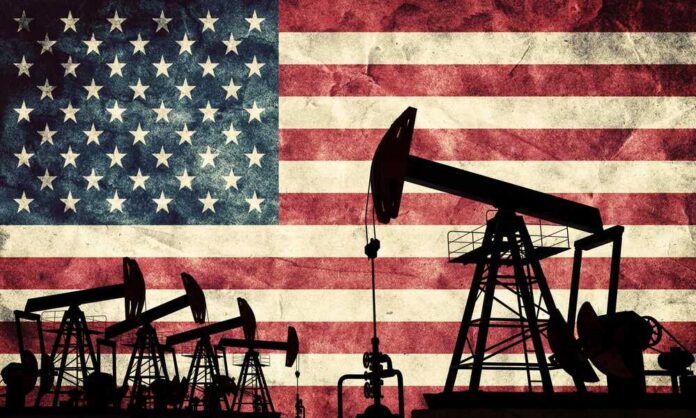
President Trump says the United States just locked in majority control of more than 65 billion barrels of Venezuelan oil, and he says it did not cost American taxpayers a single dollar.
Story Snapshot
- President Trump announced on Truth Social that the U.S. entered a deal with Venezuela for majority control of over 65 billion barrels of proven oil reserves.
- Trump credited Secretary of State Marco Rubio, Defense Secretary Pete Hegseth, and Venezuelan official Delcy Rodriguez with brokering the agreement alongside private business.
- Trump called it “the biggest oil deal in world history” and said it comes at no cost to American taxpayers.
- Venezuela’s constitution reserves ownership of hydrocarbons to the state, meaning “control” likely means a joint venture structure rather than outright ownership.
Trump Calls It The Biggest Oil Deal In World History
President Trump broke the news himself on Friday, posting on Truth Social that the United States had “just entered into an Agreement with the Country of Venezuela” on what he described as the biggest oil deal in world history.
He said the agreement gives American interests majority control of more than 65 billion barrels of proven reserves, doubling known U.S. oil holdings overnight.
Trump says US has entered deal with Venezuela to take control of 65 billion barrels of oil reserves https://t.co/LZiLr2ysCY
— Boston 25 News (@boston25) August 29, 2026
Trump made a point of stressing the price tag to American families. He said the arrangement comes “at no cost to” U.S. taxpayers, a detail multiple outlets confirmed matched his public statement word for word.
Secretary of State Marco Rubio backed the announcement, calling it “a huge win for both the American and Venezuelan people.”
Rubio, Hegseth, And Rodriguez Named As Deal Brokers
Trump said the deal came together “at my direction,” with Rubio and Defense Secretary Pete Hegseth working directly with Delcy Rodriguez, a former vice president under Nicolas Maduro who took on a leadership role after Maduro’s capture.
Private American businesses were also part of the negotiations, and reports point to a potential $100 billion private investment tied to the agreement.
Rodriguez announced her own side of the deal on Saturday, and Venezuela’s interim president said the U.S. energy arrangement would run for 25 years. That timeline signals both sides expect a long-term partnership, not a short-term political headline meant to fade by the next news cycle.
How 65 Billion Barrels Stacks Up Against What America Already Has
Sixty-five billion barrels is a staggering number. It would more than double current U.S. proven oil reserves, giving American energy companies a dramatically larger footprint in global crude markets.
Reuters reported the groundwork for this arrangement had been building for days, with Trump administration officials working through Thursday to secure long-term access to Venezuelan crude specifically to help lower the cost of oil imports for American consumers.
Energy analysts caution that gas prices at the pump likely will not drop right away, since new production and export logistics take time to unfold even after paperwork is signed. That is a fair, practical caveat, not a reason to doubt that the agreement itself was reached.
Why “Control” Does Not Mean Outright Ownership
Venezuela’s constitution reserves ownership of hydrocarbons to the republic itself. Article 302 gives the state the right to manage the petroleum industry, and Article 303 requires that shares in the national oil company stay in government hands, with limited room for strategic associations and joint ventures. That legal structure has not changed just because Trump announced a new deal.
This matters because “majority control” almost certainly describes a joint venture or licensed partnership model, not a deed transfer of Venezuelan land or subsurface rights to American companies.
Legal experts who study Venezuela’s hydrocarbons framework have long noted that headline claims about foreign “control” typically describe contractual access under the umbrella of continued state ownership.
Sanctions Waivers Have Quietly Shaped Access For Years
Long before this announcement, the U.S. Treasury Department had already been issuing selective sanctions waivers letting Western companies like Chevron operate in Venezuela’s oil sector while blocking Chinese, Russian, and Iranian competitors from the same access.
Chevron itself was already working to expand its Venezuela oil projects around the same time as Trump’s announcement, according to Reuters reporting.
That backdrop suggests this deal builds on an existing sanctions-and-waivers relationship rather than starting from zero. Americans who want energy independence and want rival nations like China and Russia locked out of Venezuelan crude should see this as a strategic win worth watching closely as details unfold in the coming months.
Trump just secured a deal for 65 billion barrels of Venezuelan oil.
He says it will refill America’s Strategic Petroleum Reserve.
Experts: Don’t expect cheaper gas anytime soon.
Biggest oil deal ever or just another headline?#Venezuela #OilDeal pic.twitter.com/C7b02CmhrB
— Anna Zeller (@Az621421) August 31, 2026
The bottom line is straightforward. President Trump announced a major energy agreement with Venezuela, named the officials who negotiated it, and put a number on the table: more than 65 billion barrels, majority U.S. control, and no direct cost to taxpayers.
The legal fine print about Venezuelan state ownership will shape how that control actually works in practice.
Sources:
cnbc.com, abcnews.com, nbcnews.com, youtube.com, reuters.com, practiceguides.chambers.com, jdsupra.com, venezuelanalysis.com