

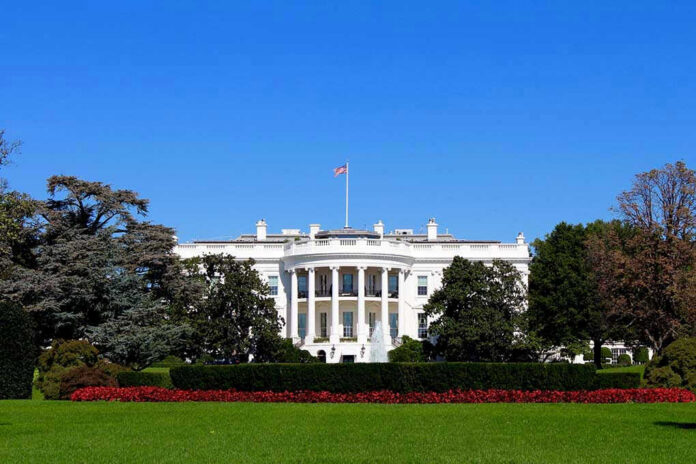
The White House is preemptively lowering expectations for job growth numbers, attributing anemic job creation to illegal immigrants leaving the country while attempting to spin economic weakness as a policy victory.
Story Snapshot
- White House adviser Kevin Hassett warns Americans to expect smaller monthly job growth figures, citing departures of illegal immigrants and declining labor force participation
- January jobs report is expected to show only 70,000 jobs added after December’s dismal 50,000 gain, while layoffs have doubled compared to last year
- Unemployment remains steady at 4.4% as productivity surges, creating a disconnect between GDP growth and actual job creation for American workers
- Young workers face unemployment above 10%, while job growth concentrates narrowly in the health and education sectors
Administration’s Pre-Emptive Spin on Weak Job Numbers
Kevin Hassett, director of the National Economic Council, told CNBC on February 9, 2026, that Americans should prepare for job growth figures lower than historical norms in upcoming Labor Department reports. Hassett framed the anticipated weakness as resulting from what he called an “unusual set of circumstances,” including population decline from illegal immigrants leaving the country, a shrinking labor force, and surging productivity.
The Labor Department’s delayed January jobs report, expected to show approximately 70,000 jobs added, is due Wednesday. Hassett urged the public not to panic over numbers that would have triggered alarm in previous economic cycles.
Economic Reality Behind the Rhetoric
The job market has cooled dramatically throughout 2025, with unemployment climbing from 4.0% to 4.4% and job growth projected as the weakest outside a recession in decades. December 2025 saw nonfarm payrolls rise by a meager 50,000 jobs.
Private sector data from ADP shows only 22,000 jobs added in January 2026, while Challenger, Gray and Christmas reported 108,000 layoffs announced during the same month—double the figure from January 2025. This represents a troubling acceleration in job losses that contradicts the administration’s optimistic framing of productivity gains, masking what appears to be genuine economic distress for working Americans.
https://twitter.com/Mollyploofkins/status/2020865323277128081
Young Workers and Families Bear the Brunt
The pain from this economic slowdown is not being distributed evenly across American society. Workers aged 16 to 24 face unemployment rates exceeding 10%, while long-term unemployment has reached levels not seen since before the 2009 financial crisis.
Job growth has narrowed almost exclusively to the health and education sectors, leaving workers in manufacturing and other industries vulnerable to the combined effects of tariffs and immigration crackdowns. Meanwhile, the 2025 Trump tax cuts have been implemented unevenly, with large refunds skewing toward wealthy households and blue states, while lower-income families see minimal relief from the affordability crisis straining their budgets.
Productivity Gains Offer Cold Comfort to Job Seekers
The administration’s emphasis on productivity growth as a silver lining reveals a fundamental disconnect between Washington’s economic narrative and the lived experience of American families. Joe Brusuelas of RSM US captured this tension perfectly, noting that firms “doing more with less” might please economists and Wall Street, but creates political hell for leaders and genuine hardship for workers seeking employment.
The Federal Reserve’s surveys confirm rising debt payment worries among households and deteriorating expectations for wage growth and new job opportunities. This productivity-driven growth model concentrates benefits among shareholders and highly-paid professionals while leaving ordinary workers behind—hardly the broad-based prosperity that conservative principles of economic opportunity demand.
Political Implications and Economic Uncertainty
President Trump faces economic approval ratings down 14 points on jobs and the economy, according to Economist/YouGov polling, forcing a strategic pivot toward affordability messaging amid GOP election losses.
The administration’s attempt to spin weak job numbers as evidence of successful immigration enforcement may resonate with the base, but it does little to address the material concerns of families struggling with inflation that has climbed from 2.2% to 2.8% while job security deteriorates.
Economic forecasters at Stanford’s SIEPR project modest job growth continuing through 2026, with unemployment stable around 4.4%, suggesting neither boom nor recession but rather a prolonged period of underwhelming performance that tests voters’ patience.
Sources:
Now That That’s All Out of the Way: A 2026 Economic Preview – Roosevelt Institute
White House Adviser Hassett Expects Smaller Jobs Numbers – WKZO
Job Openings Plummet, Warning Sign for Trump Economy – Politico
White House Sets Lower Job Growth Expectations, Fed Grapples with Same Issue – Reuters/TradingView
U.S. Economy in 2026: What to Watch – Stanford SIEPR