

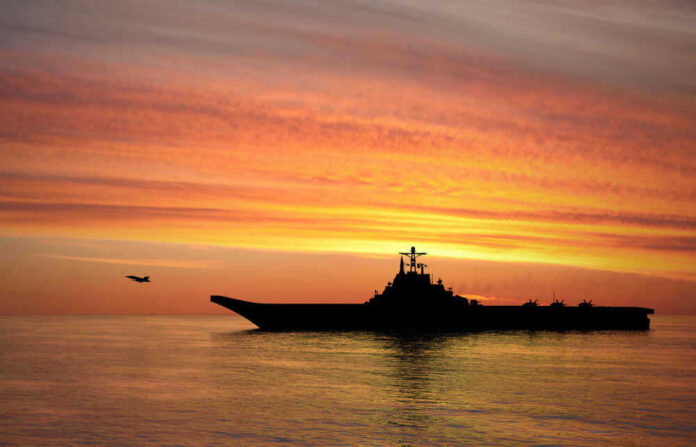
A Navy destroyer sat helpless in the South China Sea for four straight days, its lights out, its toilets dead, and its engines silent.
Quick Take
- The USS Benfold lost all power on July 24 after its generators failed, the Navy confirmed.
- Sailors went four days without air conditioning, toilets, hot food, or the ability to steer the ship.
- No crew members were hurt, and the destroyer was towed to Subic Bay in the Philippines for repairs.
- The cause is still under investigation, and it’s the second Navy power failure in the Indo-Pacific this year.
What Happened Aboard the USS Benfold
The USS Benfold, an Arleigh Burke-class guided-missile destroyer, was sailing with the USS George Washington Carrier Strike Group when its generators gave out on July 24.
Seventh Fleet spokesman Commander Matthew Comer called it an “engineering casualty” involving the ship’s generators, which caused a total power loss. The Navy did not reveal the outage publicly until mid-August, weeks after the crew had already returned to normal operations.
A power outage aboard a U.S. Navy destroyer in the South China Sea last month deprived the crew of drinking water, hot meals, functioning toilets and air conditioning for four days. pic.twitter.com/ZEEptraDl5
— Breaking911 (@Breaking911) August 19, 2026
Losing generator power on a warship means losing almost everything. Without electricity, the Benfold could not run its air conditioning, toilets, potable water systems, or galley.
It also lost the ability to move under its own power, leaving nearly 300 sailors stranded and unable to maneuver in contested waters. Other ships in the strike group had to deliver food and supplies while engineers worked around the clock to restore power.
No Injuries, But Four Rough Days At Sea
Comer said no sailors were hurt during the ordeal and praised the crew for showing “resilience, grit, professionalism and unwavering steadiness” while stuck in sweltering heat with no working plumbing.
The destroyer was eventually towed to Subic Bay in the Philippines, where repair crews finished the job in August. The Navy has not yet released a root cause, and the investigation into what exactly failed inside those generators is still open.
A Pattern Emerging Across The Fleet
This is not an isolated case. In May, the USS Higgins, another Arleigh Burke-class destroyer, lost power and propulsion for several hours in the same region after what the Navy again labeled an “engineering casualty,” this one tied to an electrical fire.
That incident knocked out the ship’s ability to defend itself for hours while nearly 300 sailors aboard waited in the dark. Two similar breakdowns within months raises fair questions about upkeep across the destroyer fleet.
“Engineering casualty” is the Navy’s catch-all term for equipment failures. It does not by itself explain whether the Benfold’s generators failed from old age, poor maintenance scheduling, a design flaw, or a mechanical fluke. The Navy has not said which of those factors, if any, played a role, and the investigation remains ongoing.
After a complete loss of power on the USS Benfold, sailors on board went four days with limited drinking water, and no working toilets or air conditioning.
https://t.co/S1qbQP6gpU— Central Oregon Daily News (@CODaily) August 19, 2026
The bigger picture matters here. The Congressional Budget Office estimates Arleigh Burke-class destroyers will spend up to 27 percent of their entire service lives tied up in maintenance and overhauls.
A 2020 Naval Institute review found dozens of destroyers have returned to port with damaged propulsion shafts over the years, and a Defense Department audit tied four separate Arleigh Burke incidents to the deaths of 17 sailors. The Benfold’s outage did not turn deadly, but it lands inside a fleet already stretched thin on maintenance time and aging hardware.
Why This Matters For National Readiness
A destroyer without power in the South China Sea is not just an inconvenience for the crew. It is a warship that cannot fight, cannot flee, and cannot even talk to the rest of the fleet properly, sitting in one of the most contested waterways on earth.
China has grown increasingly assertive in those waters, and a four-day blackout on a frontline American destroyer is exactly the kind of vulnerability that should worry military planners and taxpayers alike.
Congress and Navy leadership owe the public a clear answer on what broke, why it broke, and how many other ships in the fleet carry the same risk. Sailors performed under brutal conditions with no complaints on record, and that discipline deserves recognition.
But discipline from the crew cannot substitute for a maintenance system that keeps ships like the Benfold powered up and combat ready in the first place.
Sources:
cbsnews.com, stripes.com, en.wikipedia.org, youtube.com, facebook.com, timesnownews.com, usni.org, timesofindia.indiatimes.com