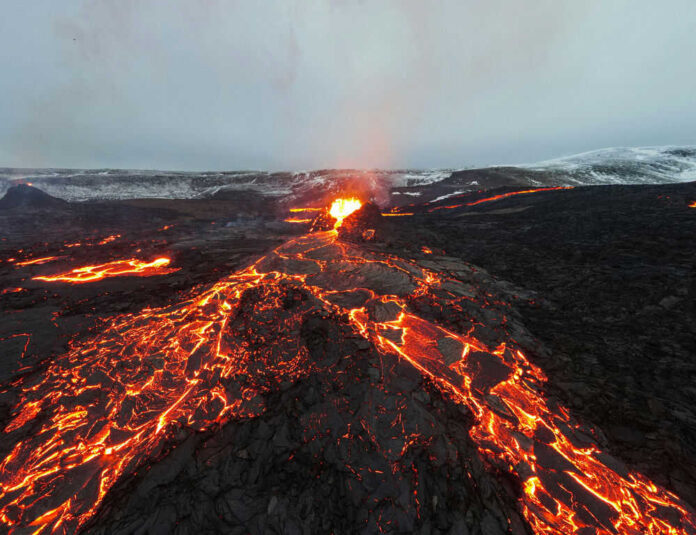
Hawaii’s Kilauea volcano has captivated the world with its fiery displays, but what lies beneath the surface of this epic spectacle?
Story Snapshot
- Kilauea’s eruptions since December 2024 have been among the most visually striking in decades.
- The eruptions hold deep cultural significance for Native Hawaiians.
- Scientific monitoring by the USGS is crucial to understanding these eruptions.
- Increased park visitation highlights global interest in volcanic activity.
Epicenter of Eruption and Culture
Kilauea, one of the world’s most active volcanoes, has been erupting episodically since December 2024. Located in Hawaii Volcanoes National Park, Kilauea is more than just a geological marvel; it’s a cultural icon. The summit, Halemaʻumaʻu crater, is traditionally revered as the home of Pele, the Hawaiian volcano goddess. This cultural reverence is as much a part of the eruption narrative as the towering lava fountains themselves, which have reached up to 1,200 feet.
Such eruptions are not merely natural events; they are significant cultural phenomena. Native Hawaiian practitioners engage in rituals and ceremonies that honor Pele and the land she shapes. This intersection of science and tradition draws a diverse audience to the park, with April 2025 seeing a 49% increase in visitation compared to the previous year. This surge in visitors highlights not only the global fascination with volcanic activity but also the crucial role of cultural heritage in interpreting these natural events.
Scientific Vigilance and Public Safety
The USGS Hawaiian Volcano Observatory plays a pivotal role in monitoring Kilauea’s activity, providing real-time data that is essential for public safety and scientific advancement. The ongoing eruptions are closely watched for signs of escalation or cessation. The current pattern of eruptions, characterized by episodic fountaining, is reminiscent of historic events such as those in 1959 and 1983. These patterns offer invaluable insights into volcanic behavior, informing both the scientific community and public preparedness strategies.
Despite the allure of witnessing such natural spectacles, safety remains a paramount concern. The National Park Service emphasizes the importance of adhering to marked trails and heeding safety warnings due to hazards like unstable ground and volcanic gases. As Kilauea continues its episodic eruptions, the balance between granting public access and ensuring safety becomes increasingly crucial.
Economic and Environmental Impacts
Kilauea’s eruptions have far-reaching implications beyond the immediate spectacle. The influx of tourists boosts the local economy, benefiting businesses and the tourism sector. However, this increased visitation also places a strain on park infrastructure and local services, necessitating careful management to maintain a balance between economic gain and resource preservation.
Environmentally, the eruptions contribute to changes in the landscape, with new land formations altering the crater’s topography. Air quality concerns from volcanic gases and ash are a persistent issue for local residents and wildlife. These environmental and economic dynamics underscore the complexity of managing a natural wonder that is both a hazard and a cultural treasure.
Future Prospects and Cultural Legacy
As Kilauea continues its dramatic display, the anticipation of future eruptions looms large. Episode 31, expected between August 18–22, signals ongoing volcanic activity. Scientists remain vigilant, using advanced monitoring techniques to forecast potential developments. This vigilance is not only about predicting eruptions but also about enhancing our understanding of volcanic processes that have shaped the Hawaiian landscape for centuries.
The eruptions reinforce the cultural identity of Native Hawaiians, who view the land-building process as both a spiritual and physical act. This cultural perspective offers a profound understanding of the eruptions, emphasizing their role in the ongoing narrative of life and land in Hawaii. As we continue to watch Kilauea’s fiery performances, the blend of science, culture, and natural wonder paints a vivid picture of a volcano that is much more than just a geological phenomenon.
Sources: