

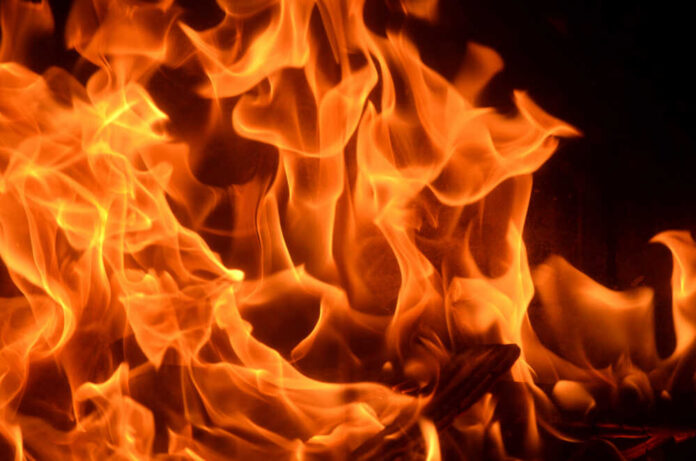
The summer Western Europe expected to spend sipping wine and watching sunsets instead turned into a mass midnight escape from fire, smoke, and collapsing plans.
Story Snapshot
- More than 200,000 people in France and Spain were forced from their homes by fast-moving wildfires.
- Flames pushed to the doorstep of Bordeaux and toward Madrid as governments declared emergencies and called in troops and aircraft.
- Evacuees slept in exhibition halls, cars, and boats as rescue crews shifted from saving forests to saving lives.
- Competing numbers mask a simple truth: this was one of the largest peacetime displacements in modern Western Europe.
When a wine capital turns into an evacuation hub
Bordeaux sells itself as a postcard: stone streets, quiet rivers, and vineyards that promise calm with every bottle. That image cracked when fires in the Gironde and Landes regions forced roughly 200,000 people to flee, turning a Bordeaux exhibition center into a shelter for about 7,000 evacuees living under a brown sky. French outlets described tens of thousands more leaving nearby towns as the flames moved to within a few miles of the city’s edge.
Wildfires in Spain are completely out of control. More than 300.000 people across Spain and France have been evacuated.
Heroic firefighters are fighting day and night to prevent it from spreading further.
Thank you for your immense service. pic.twitter.com/EmH4t5JHq8
— France Safety Travel (@francesafetytra) July 26, 2026
Residents who once worried about wine prices suddenly worried about wind direction. Firefighters on the ground warned that the blaze could jump roads and firebreaks as gusts shifted, whipping embers across dry pine forests.
France deployed more than a thousand firefighters, plus soldiers and aircraft, to hold the line around the city and along the Atlantic coast campsites that had filled with summer tourists. Calm order, not panic, defined the response, but the stakes were obvious: keep the fire out of a major city.
Spain’s national emergency and the march toward Madrid
While France fought to shield its wine capital, Spain stared down fires creeping toward its political one. The Spanish government declared a national emergency over blazes near Madrid and Ávila, later extending it to Toledo as fire fronts merged and spread.
Military emergency units led ground efforts as combined fires displaced or confined about 60,000 people in the central region, with at least 30,000 ordered to evacuate from threatened areas near the capital.
Authorities scrambled to keep roads open long enough for people to get out while not trapping them in moving fire zones. Helicopters, planes, and military convoys became a common sight along once-quiet rural highways. For many families, the “state of emergency” label was not a media buzzword.
It meant throwing belongings into a car in minutes, leaving livestock behind, and trusting that central planners in Madrid would balance safety, property, and local knowledge better than distant bureaucracies often do.
Boats, ghost towns, and the human cost behind the numbers
Across both countries, the wildfires did not just burn forests; they scrambled the rhythm of daily life. Near coastal towns by the Cap Ferret peninsula, hundreds of tourists and residents escaped by boat as flames cut off roads and smoke made driving dangerous.
Video from the region showed lines of people boarding vessels with pets and small bags, while thick smoke turned midday into an orange dusk. In other clips, Bordeaux itself looked like a ghost town, with shuttered cafes and empty tram lines under a haze.
🚨 BREAKING: 360,000+ evacuated as wildfires rage across France and Spain. 42,000 ha burned in Gironde alone – worst since WWII. Flames advancing toward Bordeaux wine region. Spain declares national emergency. $WEATHER $EURO #Wildfires #ClimateEmergency
— GlobalFlash (@GlobalFlash_Cam) July 27, 2026
Evacuation figures bounced from 160,000 to more than 300,000 across outlets, a reminder that breaking news rarely gives tidy spreadsheets.
But across that noise, a clear pattern emerges: hundreds of thousands displaced, thousands of homes and structures threatened or damaged, and a level of mobilization that pulled in military aircraft from Italy, Greece, Croatia, Portugal, the Czech Republic, and Slovakia under European Union help schemes.
For the people sleeping on cots or in back seats, the exact count mattered less than one fact: they were suddenly refugees inside their own borders.
Hard questions about preparedness, priorities, and common sense
These fires raise blunt questions that go beyond climate slogans and partisan spin. National leaders in both France and Spain leaned heavily on central declarations, emergency powers, and foreign help, while local crews and volunteers did much of the dangerous work at the fire line.
From a common-sense lens, people are right to ask whether decades of land-use rules, fuel buildup in forests, and slow infrastructure upgrades helped turn routine summer fires into region-wide crises.
Reports from the scene describe “monster” fires generating their own weather and fire “whirlwinds” that made standard tactics less effective. But those same reports also show how much had to be improvised in real time: last-minute road closures, rapid conversions of exhibition halls into mass shelters, and first-time use of large military transport planes to drop retardant.
Those details support a simple conclusion: frontline responders stepped up heroically, but governments spent years talking about climate and far less time fixing the basics—forest management, evacuation planning, and resilient local infrastructure.
What this moment tells us about Europe’s future fire seasons
European and United Nations agencies now admit that France has logged record burned area over recent summers, and Spain faces similar trends.
More people live, vacation, and invest in what used to be low-density forest or farmland, pushing homes, campsites, and power lines into zones that firefighters already knew were risky. When dry fuel, strong winds, and heat arrive together, any spark—natural or man-made—can turn into another Gironde or Madrid scenario.
The lesson for readers far from Bordeaux or Madrid is not to panic about headlines, but to demand adult-level planning. That starts with honest numbers, even if they change hour by hour, and with policies that put life and property protection ahead of fashionable talking points.
Controlled burns, tougher building rules in high-risk areas, and clear, practiced evacuation routes are not dramatic, but they save lives. As France and Spain learned in a hard way, the time to argue about them is not when 200,000 people are already packed into cars, boats, and smoky exhibition halls.
Sources:
youtube.com, nbcnews.com, wsj.com, whmi.com, abcnews.com, straitstimes.com, smh.com.au, bbc.com, usnews.com, barrons.com, efe.com