

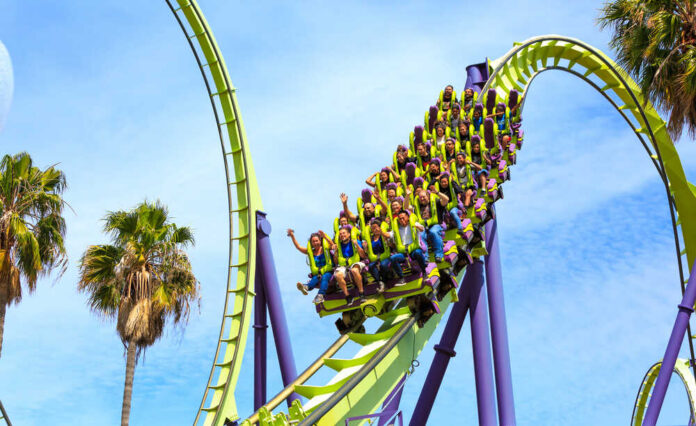
Six Flags Great Adventure is tearing down one legend and betting big that Bakunawa’s spinning, upside-down launch will rewrite the record books and your idea of what a roller coaster can be.
Story Snapshot
- Bakunawa is a new floorless, free-spinning launch coaster planned for Six Flags Great Adventure in 2027.
- Six Flags says it will break six world records, including fastest and tallest spinning coaster and a first-of-its-kind upside-down launch.
- The coaster will stand 382 feet tall, hit 100 miles per hour, and replace the retired Kingda Ka tower.
- The records are park claims for now, but they show how theme parks race for bragging rights in the age of giga coasters.
Six records, one monster coaster
Six Flags Great Adventure did not just announce another coaster; it promised a six-record monster with a mythic name. Bakunawa, named after a dragon-like sea serpent from Philippine stories, was unveiled as a free-spinning, floorless launch coaster that will “hold six world records” when it opens in the 2027 season.
According to the park, this single ride will be the world’s fastest and tallest spinning coaster, feature the fastest and longest stall inversion, and debut both the first floorless spinning coaster and the first upside-down launch.
Six Flags Great Adventure opened Bakunawa, a record breaking roller coaster that promises a breathtaking ride for thrill seekers. See the photos! Click the link below to see all of the photos ⬇️
📸 Brian Johnston/Asbury Park Press https://t.co/apXJKy3uQ2 pic.twitter.com/6Bi2B2YOen
— USA TODAY (@USATODAY) July 29, 2026
Those claims are not just marketing fluff on one poster; they appear across the park’s own “New in 2027” page, major news outlets, enthusiast sites, and social clips.
USA Today describes Bakunawa as a free-spinning, floorless coaster that will reach 382 feet and 100 miles per hour while spinning riders upright, sideways, and inverted through the air.
Theme Park Tribune repeats the same six-record list and notes that Bakunawa will replace Kingda Ka’s role as the park’s headline tower, but this time with spinning trains and triple launches rather than a single hydraulic blast.
How the ride is supposed to work
Bakunawa’s layout is designed to earn those records in a very specific way. The park and enthusiast coverage describe a triple launch system using linear synchronous motors, with each launch raising the stakes. The first launch fires riders out of the station from zero to sixty miles per hour.
The second hits while riders are upside down, pushing them from sixty to eighty in what is billed as the world’s longest stall inversion and the first ever upside-down launch. The final launch drives the train to its full hundred miles per hour as it climbs a 382-foot spire and carves into a sharp bank.
On paper, that combination makes Bakunawa part of the “giga coaster” class, the informal label for rides over 300 feet tall. One roller coaster ranking list already places the project’s 382-foot height behind Falcons Flight in Saudi Arabia and Top Thrill 2 at Cedar Point, making it the third-tallest coaster in the world even before you factor in the spinning trains.
Six Flags leans into that status, calling Bakunawa the fastest and tallest spinning launch coaster and emphasizing that the trains are floorless, free-spinning, and designed so that “no two rides are alike.”
The six records and what they really mean
The six claimed world records sound dramatic, but they each rest on a different kind of bragging right. The fastest spinning coaster claim hangs on the hundred-mile-per-hour top speed with a train that can rotate freely around its axis.
The tallest spinning coaster record rests on the 382-foot height, which clearly tops other spinning launches on the market. The “fastest inversion” is listed at eighty miles per hour, tied to that second launch through the upside-down stall.
The more unusual records are the “longest stall inversion,” the “first floorless spinning coaster,” and the “first upside-down launch.” These hinge less on raw numbers and more on definitions. How long does a stall inversion have to last to count, and how many earlier rides come close?
What counts as “floorless” when other coasters already leave your legs dangling? These are the kinds of details that ride engineers and record keepers usually hash out quietly, but parks turn into bold, simple taglines. That gap between engineering nuance and marketing copy is where smart, skeptical readers need to keep their eyes open.
Marketing claims versus certified records
Here is the important catch: every public mention of Bakunawa’s six records describes them as claims made “according to Six Flags,” not as trophies already signed off by a neutral referee.
The coaster remains under construction, scheduled to open in 2027, so no independent body has measured its actual operating speed or height in the real world yet.
There is no evidence that Guinness World Records or any professional ride-certifying group has issued formal documentation for these categories at this stage.
Its official! Bakunawa is coming to Six Flags Great Adventure in 2027
Claimed World Records:
-World's tallest spinning coaster(382ft)
-World's fastest spinning coaster(100mph)
-World's first upside-down launch (accelerating from 60 to 80 mph while inverted)
– World's fastest… pic.twitter.com/rTye0ExuRY— Coasters and Brews 🍻 (@coastersnbrews) July 28, 2026
This pattern fits a long tradition in the theme park world. Parks often announce “world’s first” or “world’s tallest” years before a ride opens, banking on buzz to sell passes and shape the story. Independent verification usually comes later, if at all, once the ride is built and running.
That does not mean Bakunawa will fail to live up to the numbers. It does mean the six-record package should be treated as ambitious goals backed by engineering plans, not yet as courtroom-level facts.
Why Bakunawa matters in the coaster arms race
Bakunawa’s story lands at a moment when parks are fighting a quiet arms race over height, speed, and novelty. Falcons Flight, at Six Flags Qiddiya City in Saudi Arabia, already hits over 150 miles per hour and more than 500 feet of height.
Cedar Point’s Top Thrill 2 still looms at 420 feet. By dropping Kingda Ka’s old tower and replacing it with a spinning, floorless, triple-launch coaster that still climbs above 380 feet, Great Adventure signals that raw numbers are no longer enough. The new game is mixing towering height with strange, disorienting motions that keep jaded adults and thrill-hungry teens lining up for repeat rides.
Sources:
people.com, nj.com, usatoday.com, themeparktribune.com, parkrovers.com, youtube.com