
President Trump has announced his support for designating Antifa as a domestic terrorist organization following the shocking assassination of conservative leader Charlie Kirk by a sniper at Utah Valley University.
Story Highlights
- Charlie Kirk, founder of Turning Point USA, was killed by sniper Tyler Robinson during a public speaking event in Utah.
- President Trump calls for Antifa to be designated as a domestic terrorist organization in response to the assassination.
- Investigation ongoing into Robinson’s motives and potential connections to left-wing radical groups.
- Trump suggests using RICO statutes against those funding or organizing political violence.
Political Assassination Rocks Conservative Movement
Charlie Kirk, the prominent conservative activist and founder of Turning Point USA, was gunned down by a sniper while delivering remarks at Utah Valley University in Orem.
The brazen daylight assassination sent shockwaves through the conservative community and reignited concerns about escalating political violence targeting right-wing figures.
Utah Governor Spencer Cox immediately characterized the killing as a “political assassination,” highlighting the targeted nature of this devastating attack on free speech.
Law enforcement quickly launched a comprehensive manhunt that resulted in the arrest of Tyler Robinson, who has been charged with aggravated murder in connection with Kirk’s death.
Robinson reportedly confessed to the killing, though investigators continue examining his background and potential radicalization.
The swift arrest brought some measure of justice, but questions remain about whether Robinson acted alone or received support from organized left-wing groups.
Trump Demands Action Against Antifa Networks
During a White House press conference, President Trump directly linked Kirk’s assassination to broader patterns of left-wing extremism and called for decisive federal action.
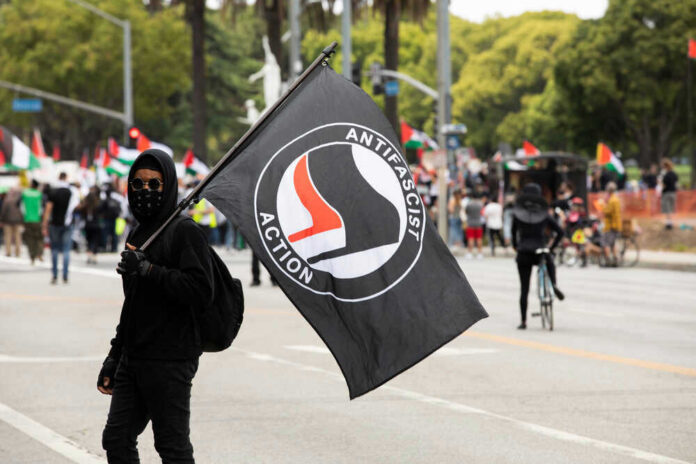
“It’s something I would do, yeah… Antifa is terrible,” Trump stated when asked about designating the movement as a domestic terrorist organization.
The President’s remarks reflect growing frustration among conservatives who believe previous administrations failed to adequately address the threat posed by radical left-wing activists.
Trump went beyond rhetorical condemnation by suggesting the use of federal RICO statutes against individuals and organizations that fund or coordinate political violence.
This represents a significant escalation in the administration’s approach to combating domestic extremism, particularly targeting the financial networks that may support radical activities.
Senator Bill Cassidy immediately endorsed Trump’s position, stating, “The President is right to recognize the destructive role of Antifa by designating them domestic terrorists.”
Legal Challenges and Constitutional Questions
The proposed designation faces substantial legal hurdles, as current federal law lacks clear mechanisms for labeling domestic groups as terrorist organizations.
Unlike foreign terrorist organizations, which can be designated under existing statutes, domestic groups enjoy certain constitutional protections that complicate such classifications.
Legal experts note that Antifa’s decentralized structure, with no formal leadership or membership rolls, makes it particularly difficult to target through traditional anti-terrorism frameworks.
Civil liberties advocates warn that expanding terrorism designations to domestic groups could infringe upon First Amendment rights and create dangerous precedents for criminalizing political dissent.
However, conservatives argue that Kirk’s assassination demonstrates the urgent need for stronger tools to combat organized political violence. The challenge lies in balancing legitimate security concerns with constitutional protections that form the bedrock of American democracy.
Broader Implications for American Security
Kirk’s assassination represents more than an isolated act of violence; it signals a dangerous escalation in political targeting that threatens the foundations of democratic discourse.
The incident occurred amid heightened polarization and previous violent confrontations between left-wing and right-wing activists at political events nationwide.
This pattern of escalating violence demands serious attention from law enforcement and policymakers committed to preserving peaceful political engagement.
The investigation into Robinson’s background and potential connections to organized groups will likely determine the trajectory of federal response.
If evidence emerges linking the assassination to coordinated left-wing networks, it could provide the justification needed for expanded counter-terrorism measures.
Conversely, if Robinson acted as a lone wolf, it may complicate efforts to target broader organizational structures while still demanding accountability for those who promote violent rhetoric against conservatives.
Sources:
BNO News – Trump says he would support designating Antifa as a domestic terrorist organization
U.S. Senate – Cassidy statement on Trump designating Antifa as domestic terrorists
White House – Designating Cartels and Other Organizations as Foreign Terrorist Organizations