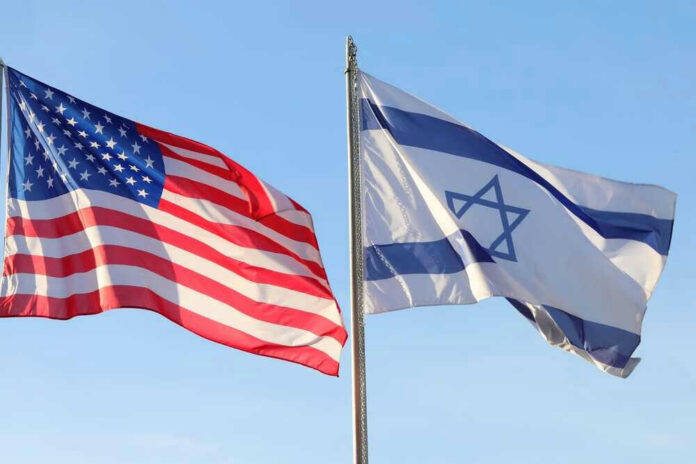
President Trump’s blunt rebuke of Benjamin Netanyahu over Lebanon and Iran talks exposes a growing rift over how far America should go to rein in an ally without sacrificing U.S. security or strength.
Story Snapshot
- Trump confirmed he called Netanyahu “crazy” over Israeli strikes that he believed threatened sensitive Iran peace talks.[1]
- Reports say Trump demanded Israel halt planned operations near Beirut, warning they could wreck negotiations and widen the war.[2]
- Netanyahu publicly downplayed the clash as a “tactical” disagreement, insisting overall alignment with Washington.
- The episode shows how anonymous diplomatic leaks and partisan media spin can quickly harden competing narratives around U.S.–Israel policy.[2]
Trump Confirms the Call and Explains His Frustration
President Donald Trump has now publicly acknowledged that he called Israeli Prime Minister Benjamin Netanyahu “crazy” during a tense call over Israel’s military actions in Lebanon and their impact on Iran peace talks.[1]
In a conversation with the New York Post’s “Pod Force One,” Trump said he was “a little bit perturbed” that Israel’s continued fighting with Hezbollah in Lebanon was complicating ongoing negotiations with Tehran.[1]
He framed the clash not as a break with Israel, but as tough talk to protect a fragile diplomatic opening that he believes still exists.[1]
Axios previously reported, citing two sources familiar with the call, that Trump told Netanyahu, “You’re f****** crazy” and warned he could be in prison without American backing.
According to that account, Trump objected to a planned Israeli retaliatory strike near Beirut and “put the brakes on” the operation out of concern it would dangerously widen the conflict and derail U.S.-led talks with Iran.
Subsequent broadcast coverage repeated these details, underscoring that the account is based on anonymous officials rather than a public transcript.[2]
Israel’s Lebanon Actions and the Iran Talks Crossroads
Reports indicate the call came as Israel considered intensified operations in and around Beirut in response to Hezbollah activity in southern Lebanon.[2]
Trump allies describe him as focused on preventing a wider regional war that could drag U.S. forces deeper into the conflict while wrecking a potential agreement with Iran.[1][2]
Tehran had signaled it would suspend peace talks unless attacks in Gaza and Lebanon were curbed, putting extra pressure on Washington to restrain all sides while preserving Israel’s security.[2]
'A LITTLE BIT PERTURBED': President Trump confirmed a report that he criticized Israeli Prime Minister Benjamin Netanyahu as “crazy” in a Monday phone call because Israel’s fighting with Hezbollah in Lebanon was holding back peace talks with Iran. MORE: https://t.co/6GC2a66Y9y pic.twitter.com/C8uRs4OgtQ
— NEWSMAX (@NEWSMAX) June 3, 2026
Trump has maintained that, despite Iranian statements about suspending talks, Tehran “has not left the negotiating table” and that a deal remains possible.[1]
Commentators following the negotiations say discussions have centered on reopening oil transit arrangements and unfreezing some Iranian funds, while keeping major sanctions in place as leverage for later nuclear talks.[1]
From this perspective, that approach resembles Trump’s prior “maximum pressure” strategy: keep economic screws tight while using limited diplomatic concessions to secure American interests without another endless war.
Netanyahu’s Response and the Fight Over the Narrative
Netanyahu and his supporters have pushed back on the idea that Israel is sabotaging diplomacy, arguing that military moves in Lebanon are necessary responses to Hezbollah threats, not reckless escalations.
In broadcast comments summarized in recent coverage, Netanyahu characterized the dispute with Trump as a matter of “tactical disagreements,” stressing that he and the president still share the same broad strategic goals regarding Iran and regional security.
That framing seeks to reassure Israelis and Americans that the alliance remains strong even when tempers flare in private.
Trump Unleashed: "Bibi, Are You Effing Crazy?!"
Trump just sat down with Miranda Devine, and this was NOT a normal political interview.
He confirmed he cursed out Netanyahu because, according to reports, Israel's actions in Lebanon were escalating the conflict and threatening…
— Parallel Polis in Exile 🇺🇸 (@Polis_in_Exile) June 4, 2026
This entire controversy follows a familiar pattern in coverage of United States–Israel and Iran policy.[2] A private leader-to-leader call is first described by unnamed officials “familiar with the call,” then amplified across outlets and social media before any official transcript emerges.[2]
Analysts warn that repeated re-reporting can create a sense of corroboration even when nearly every story still traces back to the same anonymous leak.[2]
For those wary of the foreign policy establishment and partisan media, that pattern is a reminder to separate verified facts from narrative-building.
Sources:
[1] Web – Trump acknowledges calling Netanyahu ‘crazy’ and says Israel is …
[2] YouTube – Trump’s EXPLOSIVE phone call with Netanyahu as he admits to …