

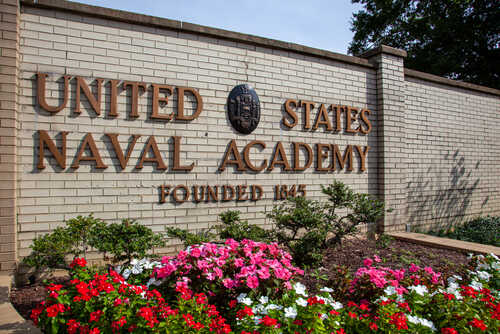
The U.S. Naval Academy fired Commandant of Midshipmen Capt. Gilbert Clark Jr., after less than six months on the job, is continuing Defense Secretary Pete Hegseth’s sweeping overhaul of military leadership under President Trump’s administration.
Story Snapshot
- Naval Academy fires commandant Gilbert Clark Jr. after just five months, citing “loss of confidence.”
- Third significant leadership change at Annapolis in 2025 as the Trump administration reshapes military hierarchy.
- Defense Secretary Hegseth removes multiple top female military leaders, including the first woman to serve on the Joint Chiefs.
- Captain Austin Jackson has been appointed as an interim replacement while the academy maintains accountability standards.
Swift Dismissal Follows Pattern of Leadership Changes
The Naval Academy terminated Capt. Gilbert Clark Jr., after determining he could not effectively lead the brigade of midshipmen. Superintendent Lt. Gen. Michael Borgschulte decided to remove Clark, who had served for only five months since assuming the role in June.
The academy cited maintaining “highest standards for leaders” as justification for the abrupt dismissal, though specific details about Clark’s performance failures remain undisclosed.
Capt. Austin Jackson, currently serving as deputy commandant of midshipmen, will step in as interim commandant while the academy searches for a permanent replacement.
The Navy frequently uses “loss of confidence” as standard grounds for removing senior officers, though the rapid timeline suggests significant concerns about Clark’s leadership capabilities. This swift action demonstrates the military’s commitment to maintaining rigorous standards, particularly at institutions responsible for training future naval officers.
Capt. Gilbert Clark Jr. was relieved from his duties “due to a loss of confidence" in his ability to lead the Brigade of Midshipmen, the school said. https://t.co/J4K9ufiF18
— Military Times (@MilitaryTimes) November 24, 2025
Annapolis Experiences Unprecedented Leadership Turnover
Clark’s dismissal represents the third major leadership change at the Naval Academy in 2025, creating unprecedented instability at the prestigious institution.
Clark originally replaced Capt. Walter H. Allman, a former Navy SEAL who departed earlier this year. The constant rotation of commandants raises questions about leadership selection processes and institutional challenges facing the academy during this transitional period under new defense leadership.
Superintendent Lt. Gen. Michael Borgschulte began his tenure in August, succeeding Navy Vice Adm. Yvette M. Davids, who served as the academy’s first female superintendent.
David was reassigned by the Pentagon in July after serving since early 2024, well short of the typical three-year superintendent tenure. This pattern of shortened assignments suggests broader systemic changes occurring throughout military educational institutions under the current administration’s restructuring efforts.
Hegseth’s Military Overhaul Continues Across Services
Defense Secretary Pete Hegseth has orchestrated extensive leadership changes throughout the military since President Trump returned to office, with the Naval Academy situation reflecting broader organizational restructuring.
Hegseth removed Joint Chiefs of Staff Air Force Gen. C.Q. Brown Jr. and fired Chief of Naval Operations Adm. Lisa M. Franchetti, who made history as the first woman to serve on the Joint Chiefs of Staff. President Trump also dismissed Adm. Linda Fagan, the first female U.S. Coast Guard commandant.
These personnel decisions align with conservative expectations for military leadership, emphasizing readiness and traditional standards rather than progressive social initiatives.
The systematic replacement of senior officers suggests the administration prioritizes operational effectiveness and accountability over diversity milestones that characterized previous leadership selections.
This approach resonates with Americans who believe that military institutions should prioritize merit-based advancement and combat readiness over politically motivated appointments that may compromise national security objectives.