

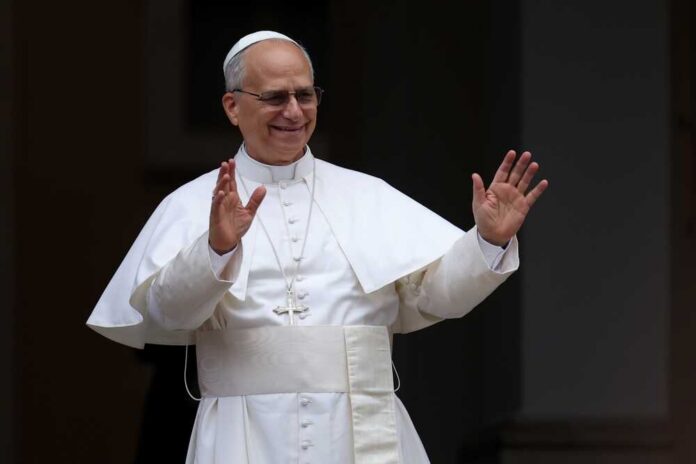
Pope Leo XIV issued his most forceful demand yet for peace in the Middle East conflict, directly confronting the leaders of Iran, Israel, and the United States as thousands of civilians continue to die in a war that shows no signs of ending.
Story Snapshot
- Pope Leo XIV directly addressed leaders responsible for the Iran-Israel-U.S. conflict on March 15, 2026, marking a significant escalation in Vatican rhetoric
- Thousands of civilians have been killed in the three-week conflict, with attacks documented on schools, hospitals, and residential areas
- The pontiff condemned “atrocious violence” and demanded an immediate ceasefire and dialogue, warning that violence cannot bring lasting peace
- Lebanon faces intensified Israel-Hezbollah clashes, creating what the Pope described as a crisis requiring urgent long-term solutions
Vatican Shifts to Direct Confrontation
Pope Leo XIV abandoned diplomatic niceties during his March 15 Angelus prayer at St. Peter’s Square, directly confronting the leaders driving the Middle East conflict.
The pontiff’s demand was unequivocal: “Let there be a ceasefire. Let paths of dialogue be reopened.” This represents the strongest papal statement since the conflict erupted three weeks earlier, signaling the Vatican’s frustration with traditional diplomatic channels.
By naming those responsible rather than issuing generalized peace appeals, the Pope adopted a confrontational approach that underscores the severity of the humanitarian catastrophe unfolding across the region.
Pope escalates call for ceasefire in Iran by addressing those responsible for the war https://t.co/u73m0bQmbi
— ABC13 Houston (@abc13houston) March 15, 2026
Civilian Casualties Mount Amid Regional Destabilization
The conflict involving Iran, Israel, and the United States has claimed thousands of civilian lives, with documented attacks targeting schools, hospitals, and residential neighborhoods. The Pope condemned this “atrocious violence” while expressing prayerful solidarity with families who have lost loved ones.
Lebanon has emerged as a particular flashpoint, where intensified clashes between Israeli forces and Iran-backed Hezbollah militants compound an already dire situation.
The displacement of civilians and destruction of critical infrastructure reflect a regional crisis that threatens stability far beyond the immediate combat zones, raising concerns about long-term humanitarian consequences.
Moral Authority Challenges Military Leadership
The Pope’s assertion that “violence will never bring the justice, stability and peace that people are waiting for” directly challenges the military strategies employed by all three combatant nations.
His appeal addresses “all women and men of goodwill,” attempting to mobilize international moral pressure on leaders who have shown limited willingness to negotiate.
The Vatican’s escalated rhetoric suggests concern that diplomatic back-channels have failed to produce meaningful progress toward de-escalation.
For Americans who value peace through strength, the question remains whether moral appeals can influence adversaries like Iran who have demonstrated consistent hostility toward Western interests and regional stability.
Lebanese Crisis Demands International Response
Pope Leo XIV specifically highlighted Lebanon’s deteriorating situation, calling for dialogue to support Lebanese authorities in implementing long-lasting solutions.
The Israel-Hezbollah clashes have placed enormous strain on Lebanon’s fragile government and infrastructure, threatening to destabilize a nation already struggling with political and economic challenges.
The Pope’s focus on Lebanon reflects an understanding that proxy conflicts involving Iran-backed militant groups can spread instability throughout the Middle East.
While the call for dialogue resonates with those seeking peaceful resolution, conservative Americans recognize that Hezbollah’s decades-long commitment to Israel’s destruction makes simple diplomatic solutions unlikely without addressing Iran’s broader regional ambitions and support for terrorism.
The Vatican’s direct confrontation of conflict leadership marks a significant diplomatic shift, though whether moral authority can compel military powers to change course remains uncertain.
As civilian casualties continue mounting and regional stability deteriorates, the effectiveness of the Pope’s appeal will depend on whether the leaders of Iran, Israel, and the United States prioritize humanitarian concerns over strategic military objectives in this complex and deadly conflict.
Sources:
Pope Leo appeal for ceasefire and dialogue in Middle East – Vatican News
Pope Leo condemns atrocious violence – The Catholic Observer