Oil jumped past $90 because a fight over the world’s narrowest energy choke point just got real.
Story Snapshot
- U.S. forces hit two Iranian launchers on Larak Island after spotting a looming mine threat, Central Command said.
- Central Command called it a limited defensive strike to protect ships and trade through the Strait of Hormuz.
- Brent crude spiked more than 3% above $90 on fears of disrupted flows through Hormuz.
- Iran’s Revolutionary Guard vowed payback and claimed casualties, without giving a firm toll.
The strike that moved markets above $90
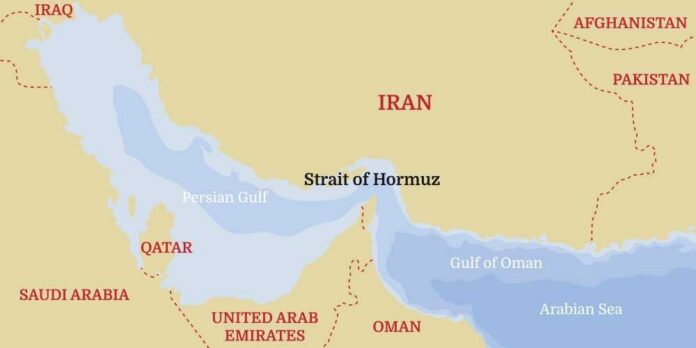
U.S. Central Command said American forces struck two Iranian launchers on Larak Island after watching Islamic Revolutionary Guard Corps units prepare rockets fitted with sea mines aimed at the Strait of Hormuz.
The command framed the action as “limited” and “precise” against an imminent threat to civilian mariners and commercial shipping.
This was the first known U.S. hit on Iran in weeks. The message was narrow by design: stop a specific danger, keep the oil moving, and avoid a bigger war.
Oil traders did not wait for footnotes. Brent crude jumped more than 3% and pushed through $90 a barrel within hours of the strike and the official statements. Futures move on risk, not courtroom proof. A mine threat in Hormuz always adds a premium.
One-fifth of global energy flows rides past that pinch point in normal times, so any hint of disruption changes prices fast. That instant market verdict tells you what shippers, insurers, and refiners fear most: blocked lanes and slow cargo.
Hormuz: a narrow pass with oversized power
The Strait of Hormuz is a few miles wide at its tightest turn yet carries a big share of the world’s daily energy. That math gives small moves giant leverage. Even a short scare forces ships to wait, reroute, or demand hazard pay.
Central Command also said it had recently cleared sea mines from key shipping routes in the strait, underscoring the daily grind behind the headlines. When mines enter the story, costs rise. Mines are cheap, sneaky, and fast to deploy. Clearing them is slow, risky, and expensive.
American officials stressed the strike’s scope and timing. They described a time-sensitive window, an imminent threat, and a legal aim tied to protecting navigation, not punishing Iran.
That framing aligns with common sense and American goals of defending trade, deterring aggression, and keeping force limited and targeted.
It also signals to allies and to oil markets that the United States intends to keep sea lanes open without sliding into open-ended conflict. That balance is hard in practice but essential in a world hungry for energy.
Iran’s claims and the unanswered questions
Iran’s Revolutionary Guard said the U.S. strike killed and wounded fighters and civilians and vowed to answer and punish the attacker.
Iran’s foreign ministry called the strike a violation of sovereignty and later framed its own attacks on U.S. positions as self-defense, according to regional outlets.
These are assertions, and reporters flagged that Iran did not provide a firm casualty count. The claims are serious, but they do not by themselves overturn the U.S. account of an imminent mining threat.
Crude oil prices have risen above $90 per barrel after the United States and Iran resumed military strikes over the Strait of Hormuz, reviving concerns about disruptions to global oil supplies through the strategic waterway. https://t.co/97lMzRe9RG pic.twitter.com/OWiWHfCGJY
— Nairametrics (@Nairametrics) August 31, 2026
Some details remain behind the curtain. The exact basis for the “imminent” call has not been made public. That gap invites debate.
Yet the core facts that moved markets are not in dispute: U.S. forces struck, the target sat at Hormuz’s door, and oil jumped above $90 within hours. Traders price risk, not perfect clarity. The strait’s history explains why.
What smart readers should watch next
Independent satellite images could confirm damage at Larak and reveal launcher debris patterns. Maritime insurers may adjust premia and routing guidance, a clear tell on perceived risk. Central Command could declassify parts of the intelligence packet to shore up its imminent-threat case.
If ship transits hold steady and premiums fade, the price spike may bleed off. If threats multiply or mine-clearing ramps up again, the market will keep the fear bid alive. The difference shows up at the pump.
Policy should stay focused on three basics. Keep sea lanes open with visible escorts and rapid mine countermeasures. Share enough evidence to sustain deterrence and public trust without tipping sources and methods.
Punish actual attacks, not signals, while keeping responses narrow and fast. That is the practical line: protect commerce, avoid mission creep, and speak in facts. In Hormuz, every hour of certainty beats a week of rumor. The last window to act is usually the shortest one.
Sources:
politico.com, reuters.com, time.com