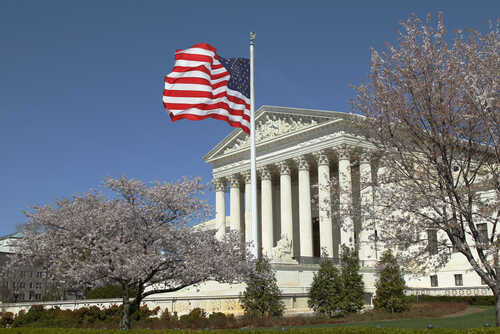
With the Supreme Court’s green light yesterday, President Donald Trump’s administration has the ultimate approval to unleash a sweeping crackdown on NIH woke research grants, slamming the brakes on DEI and gender ideology funding.
Story Snapshot
- The Supreme Court permits the Trump administration to revoke NIH grants tied to DEI and gender ideology, halting billions in research funding.
- Thousands of scientific projects are frozen, as 80% of the NIH budget is suspended and universities brace for prolonged uncertainty.
- Supporters hail the move as a stand against politicized science; critics warn of lasting damage to US research and innovation.
Supreme Court Clears Path for Trump’s NIH Grant Crackdown
The Supreme Court delivered a 5–4 decision allowing the Trump administration to revoke and suspend National Institutes of Health (NIH) grants that reference diversity, equity, inclusion (DEI), health equity, and gender ideology.
The ruling follows a series of executive orders issued immediately after President Trump’s inauguration, which ordered the termination of “equity-related” grants within 60 days.
The administration argued that federal dollars should not fund research deemed inconsistent with its policy priorities, particularly those promoting “woke” agendas or undermining constitutional values.
The NIH, under new leadership, has responded by freezing 80% of its $47-billion budget, abruptly suspending grant reviews, meetings, and travel across the country.
This unprecedented move left thousands of scientists, universities, and research staff scrambling, as ongoing and planned projects were brought to a halt.
Major institutions, including Harvard, filed lawsuits challenging the administration’s actions, arguing that academic freedom and scientific autonomy were under attack.
Federal judges have since issued preliminary injunctions, with one court labeling the NIH’s approach “arbitrary and capricious,” but the administration has pressed forward with its appeal, vowing to fight the legal battles to the end.
Rationale and Conservative Backing for the Funding Overhaul
President Trump and his allies contend that the NIH, under prior administrations, became a vehicle for leftist ideology at taxpayer expense.
They claim that research into DEI, health equity, and gender identity eroded constitutional principles, prioritized ideology over results, and wasted billions on projects disconnected from the nation’s core priorities.
The administration’s swift action is framed as a necessary correction—restoring common sense, protecting the integrity of science, and ensuring that federal research serves the American people, not fringe agendas.
Supporters argue this move is a long-overdue defense against government overreach and politicized science that undermines traditional values and fiscal discipline.
The administration’s critics, including advocacy groups and university leaders, allege that the government’s intervention is ideologically motivated, discriminatory, and damaging to the nation’s global leadership in biomedical research.
They warn of a chilling effect on scientific inquiry, lost opportunities for innovation, and harm to marginalized communities whose health needs were the focus of many cancelled grants.
As lawsuits advance, the judiciary is becoming the arena for a high-stakes battle over the limits of executive power and the future direction of American science.
Billion-Dollar Disruption: The Human and Economic Toll
The scope of the NIH crackdown is staggering: over $3 billion in NIH grants and another $1 billion from the National Science Foundation have been canceled, with 80% of the NIH budget remaining frozen.
Thousands of research projects have come to a standstill, ranging from cancer therapies to public health initiatives, and early-career researchers are facing career-threatening disruptions.
Universities report immediate layoffs and canceled contracts, and the ripple effects are felt in biotech, pharmaceutical, and healthcare sectors.
The administration’s refusal to fund universities linked to DEI programs has triggered additional lawsuits, with Harvard leading the charge. Court-ordered temporary restorations have offered little stability, as the legal wrangling continues and funding for many projects remains in limbo.
Federal officials warn that if the NIH fails to spend already-awarded funds quickly, billions may be clawed back to the Treasury, imperiling even the most established research initiatives. Industry experts describe the situation as “devastating,” especially for young scientists whose careers depend on stable support.
The administration, however, maintains that these sacrifices are necessary to root out waste and restore neutrality in research spending, drawing praise from those who see the NIH overhaul as a defense of individual liberty, limited government, and constitutional values.
Constitution, Science, and the Road Ahead
As the legal showdown continues, the fate of American biomedical science hangs in the balance. The Trump administration’s actions have sparked a national debate over the boundaries of executive authority, the role of government in funding research, and the preservation of constitutional values in the face of what many see as relentless ideological encroachment.
For conservative Americans frustrated by years of runaway spending and politicized science, the crackdown on NIH grants is viewed as a hard-fought victory—a reassertion of common sense and American principles amid a landscape increasingly dominated by leftist agendas.
Whether the courts will ultimately uphold these changes remains uncertain, but one thing is clear: the battle over the soul of American science has only just begun.
Supreme Court Allows Trump Admin to Revoke DEI-Related NIH Grants https://t.co/Xr8CAOsK2G
— David Burks; 데이비드 벅스; デビッド・バークス; 大卫·伯克斯 (@dburksmlsfd) August 22, 2025
While researchers and institutions brace for further disruption, many conservatives see the administration’s resolve as a long-awaited stand for accountability, transparency, and values that put America first.
The months ahead will reveal whether this new direction for federal research funding can withstand legal scrutiny—and whether American science will emerge stronger, or more divided, in the aftermath.
Sources:
Trump Assault on Federal Research Funding
NIH suspends grant reviews and freezes 80% of budget
Trump’s First 100 Days: Science, Health, NIH, CDC, FDA, HHS
Odds of Winning NIH Grants Plummet as New Funding Policy and Spending Delays Bite
Overview of President Trump’s Executive Actions on Global Health