
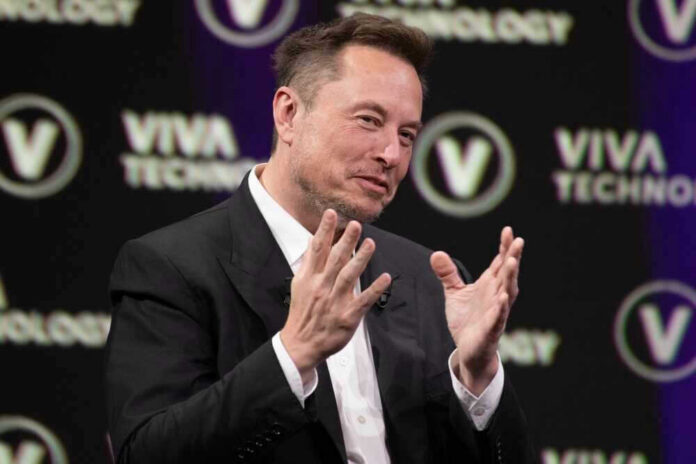
Elon Musk is about to test whether a nine-figure war chest can remake a midterm election map before voters ever walk into a polling place.
Story Snapshot
- Musk is reviving his America PAC to drive Republican turnout with a massive field and media push.
- Reports say he has authorized between $100 million and $120 million for the 2026 midterms.
- The operation will target key Senate and House races in at least eight battleground states.
- This effort could make Musk one of the most powerful private players in American elections.
Musk’s return to big-league campaign politics
Elon Musk is jumping back into national politics with a scale that would dwarf most party operations. Axios first reported that he is “jumping into the midterms with a huge investment” by resuscitating America PAC, a super political action committee that had gone mostly quiet after the 2024 election.
That group previously spent more than $260 million helping elect President Trump two years ago, putting Musk in the top tier of Republican funders. Now, instead of staying on the sidelines, he is turning the machine back on for 2026.
America PAC is not a hobby project; it is built to move real votes. According to those reports, the PAC’s new mission is clear: boost Republican turnout in a midterm year when base voters often stay home. The plan centers on old-school blocking and tackling—door-knocking, direct mail, and phone calls—paired with high-volume digital ads.
This kind of mix is standard in modern campaigns, but almost no private donor builds an entire turnout operation around it. Musk is trying to do just that and bolt it onto the wider Republican campaign apparatus.
The scale of the investment and where the money goes
The New York Times reporting, echoed by Forbes, says Musk has authorized America PAC to spend between $100 million and $120 million on a midterm field program aimed at electing Republican candidates. That level of spending would put the PAC on par with the biggest national party committees, but with fewer strings and more freedom.
Sources say the PAC’s initial focus will be Senate races in Alaska, Iowa, Maine, Michigan, and Ohio, with possible expansion into North Carolina and Texas. Several House contests are also expected to see heavy involvement.
MUSK REVIVES AMERICA PAC WITH MASSIVE MIDTERM PUSH TO PROTECT GOP MAJORITY
Elon Musk is reviving his dormant America PAC, which spent more than $260 million backing Trump in 2024, to launch a major GOTV operation ahead of November's midterms #WashingtonEye pic.twitter.com/dFLIl5EGtB
— Washington Eye (@washington_EY) July 31, 2026
Reuters reports that America PAC itself confirmed it plans to play a “major role” in turning out conservative voters, though it declined to give a firm spending figure.
The group described a multistate turnout drive featuring paid canvassers, large digital campaigns, and direct mail aimed at right-leaning voters who rarely show up for midterms.
ABC News adds that America PAC intends to coordinate with other Republican groups, syncing its door-knocking and messaging with official party efforts rather than freelancing on its own. That kind of coordination, within legal limits, can stretch each dollar further.
How this fits into the broader big-money battlefield
Musk’s move lands in a midterm cycle already flooded with billionaire money. Fortune reports that American billionaires have poured more than $433 million into the 2026 midterms, with nearly 80 percent of those dollars backing Republicans.
Pro-Trump super PAC MAGA Inc. leads the pack, followed by America PAC and traditional Republican committees like Senate Leadership Fund. In that world, Musk is not the only rich player, but he is unusual because his money comes with an entire ground game attached.
America PAC’s earlier filings show how that money can translate into muscle. Recent reports cited by NBC News describe tens of millions spent on canvassing, field operations, and incentive programs designed to get people to sign petitions and stay engaged with elections.
That kind of sustained contact can change habits: voters who are nudged into one election often become regular voters.
The conservative case and the pushback narratives
Musk’s plan lines up with basic American conservative values. He is using his own money, not taxpayer dollars, to support candidates who promise lower regulation, stronger borders, and more energy independence.
He is building private tools to reach voters instead of demanding more government control over speech or campaigns. That fits a free-market vision of politics: if you care about the country, put your own resources on the line and let voters decide.
Critics on the left frame the same facts very differently. Some argue this is “billionaire interference,” and claim that a single tech mogul should not wield so much influence over who runs Congress.
Others attack America PAC as a kind of Trojan horse for corporate interests tied to SpaceX and Tesla, suggesting his campaign spending is linked to government contracts.
Those claims resonate with people who distrust wealth and worry about elite capture of politics. But they clash with realities: under current law, anyone can support candidates as long as they follow campaign finance rules, and Musk is operating inside that framework.
What this means for November and beyond
The real test of Musk’s operation will come in November. Money alone does not guarantee victory, but it changes the ground game. Republicans in tight states will gain more door-knocks, more data-driven outreach, and more paid staff than they would have had otherwise.
Democrats must now match that with donor networks of their own or lean harder on unions and activist groups to close the gap. If Musk’s midterm bet pays off, other conservative donors may copy his turnout-first model.
If his candidates lose, the story shifts: the Republican base and skeptical independents will have shrugged off one of the biggest private spending pushes in recent memory.
Either way, this experiment exposes the heart of modern American politics. Elections now turn on who can build the most efficient machine to find, persuade, and turn out voters.
Musk is betting that a focused, conservative, privately funded machine can keep Congress in Republican hands. In a free country, that kind of bet is not just allowed; it is exactly how the system is supposed to work.
Sources:
abcnews.com, axios.com, nytimes.com, reuters.com, usatoday.com, chosun.com, fortune.com