A federal judge hit pause on the Big Bend border project, and the real fight is now about who gets to decide what “security need” looks like in one of America’s wildest places.
Story Snapshot
- A federal court temporarily blocked border-barrier work across the Big Bend Sector.
- Department of Homeland Security used waiver power to skip dozens of environmental laws.
- Critics say Big Bend lacks the “high illegal entry” threshold required for waivers.
- Customs and Border Protection says security and land stewardship can both be protected.
What the injunction actually stops
The judge’s order froze ground disturbance and construction tied to five projects across the Big Bend Sector. The case landed in court after advocacy groups and landowners challenged the Department of Homeland Security’s decision to waive environmental, cultural, and historic-preservation laws. The court did not decide the final merits. It granted a temporary halt so the legal questions can be tested. The order covers barrier segments and related road work pending a fuller hearing.
The lawsuit centers on the reach of waiver authority and where it applies. Plaintiffs argue the Big Bend stretch does not meet the law’s standard for “areas of high illegal entry.” They also say bulldozing, roads, and barriers could damage fragile desert, river corridors, and cultural sites, including church grounds and tribal resources. The filing lists risks from flooding to harm for wildlife migration. The court found the claims serious enough to justify a pause.
Why the administration moved ahead
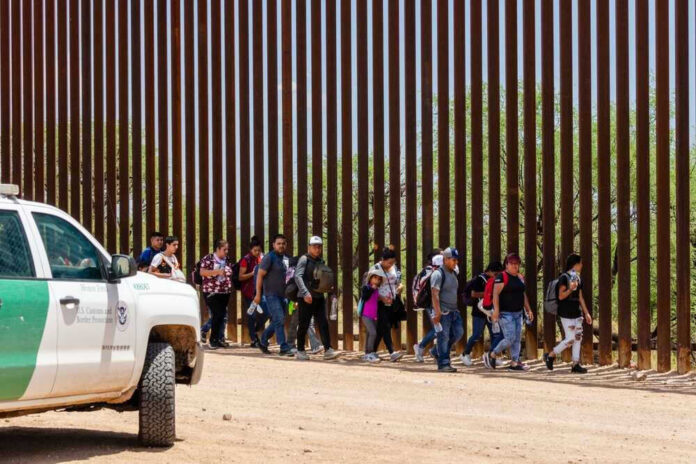
The Department of Homeland Security issued formal waivers to speed work between Big Bend and Lake Amistad, invoking a statute that allows the secretary to set aside many environmental and public-health rules for border projects. That step signaled a deliberate use of Congress’ delegated power, not an improvised effort. The government framed the plan as a package: barriers, roads, staging areas, lighting, cameras, and sensors to close gaps and support patrol access in remote country.
Customs and Border Protection said it had the legal authority and a duty to secure the entire border while preserving Big Bend’s unique landscape. Officials described the work as part of a larger execution plan funded by Congress, with some elements still in planning phases. They pointed to a mix of steel, vehicle barriers, and technology, tuned to terrain and operations. That message aimed to answer claims that a “wall only” approach would scar the park and do little for security.
The sharpest point of dispute
The statutory trigger is the crux. Plaintiffs say Big Bend lacks the sustained illegal entry needed to justify waivers. Reports note that the sector covers hundreds of miles yet sees a small share of border encounters compared with higher-crossing sectors. That argument hits the heart of necessity: If crossings are sparse and terrain is punishing, why add heavy infrastructure? The court’s temporary block keeps that question front and center for now.
Supporters of the project counter that remote gaps invite smuggling, and that roads, sensors, and limited barriers can redirect traffic to where agents can respond. That approach aligns with common-sense border control: deny easy paths, improve access, and use tech to see farther. The absence of a public, segment-level study weakens the government’s case in the court of opinion, but Congress gave this authority, and past courts have upheld its broad use elsewhere.
Environmental, cultural, and flooding risks
Local groups and national conservation advocates warned that construction could harm river dynamics, desert habitats, and archaeological resources. A municipal development district flagged “deadly” flood risk if levee work went forward without required engineering reviews and coordination. Native American groups cited threats to religious practice and sacred sites. These claims do not automatically defeat waiver authority, but they raise stakes the judge could weigh when balancing public interests.
Judge temporarily blocks Trump’s border wall in Big Bend region of Texas, citing likelihood of ‘irreparable harm’ and ‘public interest’ https://t.co/vXvYmD7L7Z
— Arnaud Mercier – #Entrepreneur #Versailles (@arnaudmercier) October 4, 2026
Common sense says border security and stewardship can both matter. Courts often look for evidence that agencies matched tools to threats and did not ignore serious harms. The government’s strongest lane is to document specific smuggling patterns, explain why roads and limited barriers beat tech-only options in this terrain, and show credible mitigation plans. Opponents will press the low-crossing narrative and the breadth of waivers as signs of agency overreach rather than necessity.
What to watch next
Expect the judge to drill into two files: the waiver record and any operational analysis for the exact miles at issue. A clear, data-backed link between the project’s mix of barriers, roads, and sensors and measured gains in interdiction would help the government. Detailed flooding models, cultural-site surveys, and mitigation plans would narrow risks. If the record stays thin, the pause could stretch, and the scope could shrink toward technology-heavy fixes with fewer permanent structures.
Sources:
nbcnews.com, enr.com, npr.org, time.com, apnews.com, texastribune.org, bigbendsentinel.com, latimes.com, thetexan.news, dallasexpress.com, pbs.org, npca.org