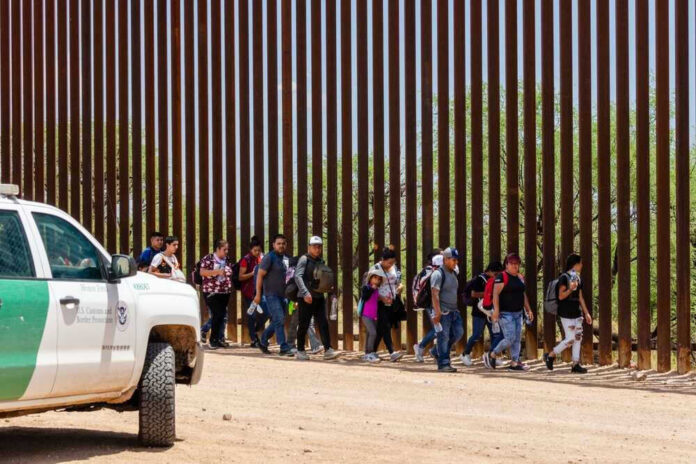
A Honduran-led caravan called “Faith and Hope” is marching through Mexico toward the U.S. southern border, and officials on both sides are watching.
Story Snapshot
- The group left San Pedro Sula, Honduras, on September 20 and crossed into Mexico days later.
- The caravan grew from a few hundred to more than 600 as it moved through Chiapas.
- U.S. and Mexican authorities are tracking the group as it heads north.
- Past caravans have swelled into the thousands, shaping policy debates and public pressure.
What Happened And Where It Stands Now
Organizers and local reports say the “Faith and Hope” caravan departed San Pedro Sula, Honduras, on September 20. The group crossed Guatemala and entered Mexico through the Rodolfo Robles bridge in Chiapas four days later. Early counts placed the caravan at several hundred people.
As the march advanced through southern Mexico, the number rose to more than 600, with migrants from Honduras joined by others along the route. U.S. Border Patrol and the Department of Homeland Security are tracking the caravan as it moves north.
🚨Alert: Invasion Coming!! Thousands of illegal aliens march from Honduras through Mexico towards the US southern border, in hopes of entering the United States illegally!! Reports are coming out from southern Mexico!! pic.twitter.com/vNkQCei2Nb
— US Homeland Security News (@defense_civil25) September 27, 2026
Estimates for similar caravans can vary widely. Organizers in past events have claimed several thousand on the move, while counts on the ground can be lower. Media tallies during other large caravans cited figures rising from five thousand to seven thousand as more people linked up on the road.
That swing matters because size changes the strain on shelters, local police, and border posts. It also raises the political stakes as leaders weigh enforcement, aid, and deterrence messages.
Routes, Motives, And The Chiapas Bottleneck
The route follows a familiar arc: Honduras to Guatemala, across the Suchiate River into Mexico’s Chiapas state, then north toward Tapachula and beyond. Tapachula has become a holding zone where migrants wait for papers or court hearings, sometimes for months.
Researchers describe the city as a chokepoint where slow case backlogs and limited jobs trap people in place. Those delays push some to form caravans for safety in numbers and to restart movement after long stalls.
Cost, crime, and confusion drive group travel. Many migrants arrive after crossing tough terrain and dangerous corridors in Central America. Traveling in large groups can reduce the risk of robbery and extortion and cut transport costs.
Caravans also offer visibility, which can pressure authorities to process documents faster. But that visibility draws police, checkpoints, and political heat. It becomes a rolling contest between people seeking speed and systems built to slow things down.
How Mexico And The United States Are Responding
Mexican authorities tend to track caravans from Chiapas northward, sometimes guiding, sometimes dispersing, and often processing papers in batches.
The United States relies on layered steps: monitoring, coordination with Mexico, and border enforcement once groups approach ports of entry or remote crossings.
During large surges in recent years, U.S. Border Patrol reported apprehensions in the hundreds of thousands per month, a scale that drives calls for stronger deterrence and faster removals.
#News A migrant caravan of about 400 migrants is marching through Mexico on their way to the United States.
They left San Pedro Sula, Honduras, on Sept. 20 and are now in Tapachula, Chiapas, Mexico.#honduras
The caravan is reportedly being funded American NGOs that operate out… pic.twitter.com/5MjsSwldco
— Christina Aguayo (@ChristinaNewstv) September 29, 2026
Americans will see two clear tests here: control and clarity. First, control means enforcing the law at the line and between the ports. Processing claims fast and removing those without a legal right to stay sends a bright signal. Second, clarity means public, plain rules that stay the same week to week.
Scale, Risk, And What Comes Next
Headcounts can shift fast. A few hundred at the start can double in days as stranded families join up in Chiapas. Prior caravans grew as word spread along the route and on social media, jumping from five thousand to seven thousand, according to some organizers.
At the same time, pressure from police, fatigue, and offers of temporary permits can split large groups into smaller ones. That splintering eases headlines but still sends many to the border in waves over several weeks.
Officials will watch for three signs. First, whether the caravan can secure buses or must walk, which changes pace and policing needs. Second, whether Mexico offers mass processing that convinces people to stop or turn to lawful options there.
Third, whether criminal groups insert themselves to sell rides or routes, which can turn a public march into a riskier shadow journey. Each path leads to a different impact at the U.S. line over the next two to four weeks.
What Smart Policy Would Do Now
Border policy works best when it is simple, speedy, and steady. Simple rules help would-be migrants know the odds. Speedy screening blocks repeat crossings and clears meritorious claims. Steady practice avoids policy whiplash that fuels rumors and caravans.
Coordination with Mexico should focus on real-time screening in Chiapas, quick returns for those without protection claims, and safe alternatives in Mexico for those who qualify. That mix aligns with the rule of law and with basic fairness to communities on the border.
Sources:
foxnews.com, kratko.news, newsweek.com, arise.tv, bbc.co.uk, tandfonline.com, bakerinstitute.org, dtm.iom.int