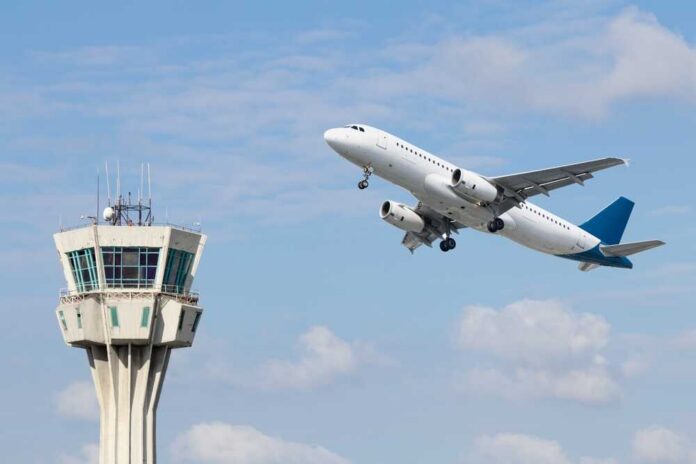
One rogue glitch choked the skies over Britain and left more than a thousand flights on the floor.
Story Snapshot
- Air traffic control reported a technical failure, not a security incident.
- More than 1,000 flights were canceled as traffic was throttled to keep skies safe.
- Major hubs, including Heathrow and Gatwick, saw delays and strict flow limits.
- Manual fallback and slow recovery showed safety worked, but capacity cratered.
What Happened: A System Stumble, Then A Nationwide Squeeze
National Air Traffic Services said a technical issue forced limits on departures across major United Kingdom airports, including Heathrow, Gatwick, Manchester, and Stansted.
The agency said engineers were on site and working the problem, while airports warned of delays and cancellations as they slowed the stream of aircraft for safety.
Airlines trimmed schedules and held aircraft, which pushed knock-on delays into later waves and stranded travelers nationwide. Officials framed the event as a system failure, not malicious activity.
Federal-style flow control is normal when systems degrade. Controllers reduce the number of planes they can handle at once. That preserves safety buffers and buys time to fix the core fault.
Industry reporting described the disruption as a failure in flight-data processing, the plumbing that reads and routes flight plans.
When that pipeline jams, the system shifts to manual input, which is slower and slashes throughput until automation returns. The result looks like an outage to passengers, but traffic still moves—just not much.
Scale And Impact: Big Numbers, Predictable Mechanics
Airlines and airports reported more than 1,000 cancellations and many more delays as schedules unraveled. Peak hubs took the hardest hit because they stack tight arrival and departure banks that depend on high-capacity flow.
When capacity fell, those banks blew apart, crews ran out of duty time, and aircraft missed their next legs. That ripple effect doubled back on regional airports by evening. News accounts and industry trackers showed totals in the thousands in prior analog events of this type.
1,055 Flights cancelled after UK air traffic control glitch.
"It's just an absolute nightmare down there," healthcare worker Josie Donoghue said of Gatwick after leaving the airport, having had to disembark her flight to Ireland after three hours stuck on the runway… pic.twitter.com/VSPRzTgIo2
— AFP News Agency (@AFP) September 9, 2026
Authorities emphasized safety first, which fits the record from past incidents. In the 2023 failure, regulators later tied the chaos to a rare flight-plan data combination that tripped the automated processor.
The United Kingdom Civil Aviation Authority reviewed that event and concluded no cyber-attack caused the disruption. The story then, like now, centered on complex software and rare data paths colliding with real-world volume. The lesson repeats: safety holds, schedules crack.
Why It Happens: Software, Edge Cases, And Human Backup
Modern air traffic control runs on layers of automation that digest flight plans, radar returns, and routes. Rare data patterns can still stump a parser or overflow a safety check. When that happens, controllers drop to a slower manual mode to keep aircraft separated.
Reports from the field explain why recovery takes hours even after a fix. Airports must re-sequence departures, airlines must rebuild crew pairings, and passengers must be rebooked into scarce seats. Capacity returns in steps, not all at once.
Chaos continues across UK airports as airlines struggle to recover from a major air traffic control failure.
Around 2,000 flights have now been cancelled across Tuesday and Wednesday, leaving hundreds of thousands of passengers affected and aircraft and crews stranded in the…
— Naveed Khan (@i_Naveediqbal) September 9, 2026
The read on this is simple: build resilient systems, drill the manual backup, and tell the public the plain truth. Technical transparency after these events matters more than spin.
The 2023 review laid out root cause and fixes in clear terms, which helped rebuild trust and guide upgrades. That same clarity should follow here.
If a software edge case or data format triggered the slowdown, publish it, patch it, and harden the guardrails so one odd flight plan cannot sideline a continent’s busiest air corridor again.
What Travelers Should Do Next: Practical Moves That Work
Travelers should treat air traffic control failures like weather: plan for spillover. Rebook early, not at the airport curb. Use airline apps to hold seats while phone agents or social channels confirm. If you must fly same day, target flights early in the schedule while recovery builds.
Keep receipts for meals and hotels; compensation rules vary by carrier and cause, but documentation boosts your case. Most of all, assume the ripple lasts a day or two after the screens turn green again.
Bottom Line: Safe By Design, But Capacity Is Fragile
National Air Traffic Services kept safety intact by cutting volume and working the fault. That design choice is right and responsible. The cost is visible on the boards: hundreds to thousands of flights vaporized, with families and business travelers paying with time.
The fix is not wishful. It is engineering, redundancy, and frank reporting. Build systems that fail small. Share facts fast. Keep the planes well apart even on a bad day—and keep the nation moving the day after.
Sources:
thegatewaypundit.com, bbc.com, aljazeera.com, airhelp.com, flightglobal.com, bbc.co.uk