

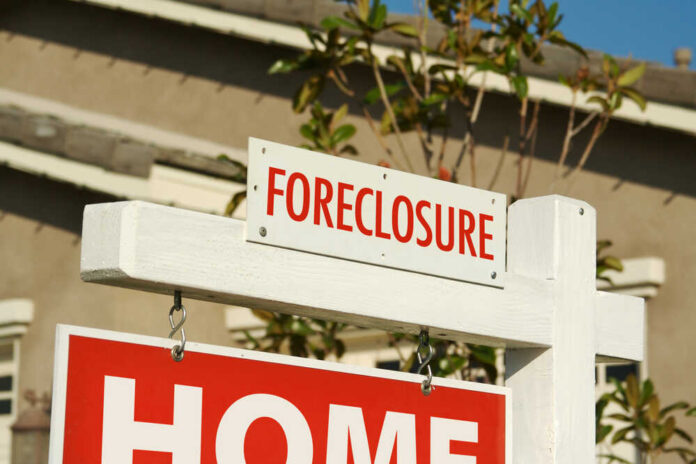
Foreclosure auctions surged 48% in the final quarter of 2025, hitting a 69-month high and signaling a seismic shift in America’s post-pandemic housing stability that most homeowners never saw coming.
Story Snapshot
- Foreclosure properties brought to auction jumped 48% year-over-year in Q4 2025, the highest level since March 2020
- March 2026 data shows foreclosure filings climbed 28% annually, marking the 13th consecutive month of year-over-year increases
- VA loans experienced a staggering 428% surge in auction activity as pandemic-era moratoriums expired
- Florida, Texas, and South Carolina lead the nation with triple-digit auction increases, while distressed property equity continues eroding
- Despite the sharp uptick, current foreclosure rates remain 87% below the 2010 financial crisis peak
The Six-Year High Nobody Expected
Safeguard Properties dropped a bombshell in late January 2026 when its quarterly report revealed that foreclosure auction volume had rocketed to levels unseen since early 2020.
The 48% year-over-year increase affected 42 states, with bank-owned property auctions reaching a 22-quarter high. Texas saw a 92% spike, but Florida stole the spotlight with a jaw-dropping 176% surge.
This wasn’t just statistical noise—it represented the largest quarterly jump since Q3 2022, when markets briefly convulsed before settling down.
U.S. foreclosures have jumped 26% since last quarter as they reach the highest quarterly total since 2020. pic.twitter.com/svrNC6Qyfa
— National Chronicle (@NCNewsOnX) May 5, 2026
The numbers tell a story of two Americas. While overall 2025 foreclosure filings totaled 367,460 properties—still 25% below 2019 levels and miles from the 2.9 million catastrophe of 2010—the auction data revealed something darker brewing beneath the surface.
Roll rates to auction climbed to 26.6%, up 24% annually, indicating that more distressed properties were completing the foreclosure process rather than receiving last-minute rescues.
Rob Barber, CEO of ATTOM Data Solutions, calls this “gradual normalization,” but homeowners facing auction dates might use harsher language.
When Government Protections Vanish
The pandemic’s safety nets created an artificial calm that’s now evaporating with brutal efficiency. VA loans, shielded by extended forbearance programs through 2024, exploded 428% at auction once protections expired.
FHA loans weren’t far behind at 56% growth, while even GSE-backed mortgages climbed 33%. These weren’t subprime disasters or speculative flippers getting burned—these were government-insured loans to veterans and moderate-income families who played by the rules but got caught when economic reality reasserted itself.
March 2026 delivered the latest gut punch: 45,921 foreclosure filings nationwide, up 28% from the previous year and 18% from February alone. The national foreclosure rate now stands at one in every 3,131 housing units.
South Carolina, Indiana, Florida, Illinois, and New Jersey occupy the unwanted top five spots, with South Carolina leading the pack. Bank repossessions surged 42% annually to 5,229 properties in March, suggesting lenders are pushing distressed assets through to completion rather than negotiating workout agreements.
The Equity Erosion Crisis
Safeguard’s analysis exposed a troubling pattern: distressed properties are hemorrhaging equity. Vacant bank-owned properties comprised 54% of auction inventory, indicating homeowners walked away rather than fought foreclosure—a stark contrast to the underwater mortgage epidemic of 2008-2012.
This time, rising insurance premiums, property tax hikes, and inflation-driven maintenance costs are bleeding equity from properties faster than appreciation can replace it. When homeowners can’t afford to stay, even with equity in their homes, something fundamental has broken.
The geographic concentration reveals economic fragility in Sun Belt states that boomed during the pandemic migration. Florida’s 176% auction surge correlates with skyrocketing property insurance costs following hurricane seasons and carrier withdrawals from the state.
Texas’s 92% jump coincides with property tax increases tied to inflated assessments. These aren’t coastal elite problems—they’re hitting middle-class homeowners in states that championed affordability and property rights, creating a crisis of conservative governance that demands solutions beyond simply letting markets work.
Normalization or Warning Sign
ATTOM’s Barber maintains the increases reflect “continuing gradual normalization” after historically low pandemic-era levels, noting most homeowners remain stable.
The data support cautious optimism: current activity represents just 61% of Q1 2020 auction levels and remains dramatically below pre-2010 crisis peaks.
The foreclosure rate of 0.26% of all properties in 2025 pales compared to 2010’s 2.23% disaster. By historical standards, we’re nowhere near catastrophe territory.
Foreclosures hit highest level in 6 years as insurance, property tax costs squeeze homeowners – Fox Business https://t.co/MEUoeXEkVS
— Method8inc.com/ (@Method8Corp) May 5, 2026
Yet 13 consecutive months of year-over-year increases, accelerating from 14% in February 2026 to 28% in March, suggest momentum building rather than plateauing.
Foreclosure starts climbed 21% annually in March, indicating fresh distress entering the pipeline. The question isn’t whether we’ve returned to 2010 crisis levels—we clearly haven’t—but whether the trajectory points toward sustainable normalization or the early stages of something uglier.
With housing costs still elevated, insurance markets destabilizing in key states, and economic uncertainty persisting, the answer remains uncomfortably unclear for millions of homeowners watching their neighbors’ properties hit the auction block.
Sources:
ATTOM – Foreclosure Rates by State
SoFi – Foreclosure Rates for 50 States
NJBIA – Foreclosure Activity Increases in 2025
Safeguard Properties – Foreclosure Auction Volume Increases 48% to Nearly 6-Year High in Q4 2025
Realtor.com – Foreclosure Rates Filings January 2026
Statista – Foreclosure Rate USA