

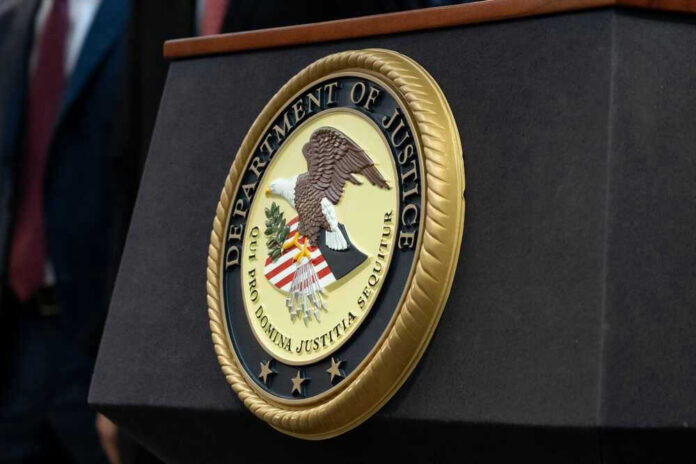
In a shocking development, a federal judge rebuked the Department of Justice’s (DOJ) bid to unseal Ghislaine Maxwell’s grand jury records.
Story Snapshot
- The court denied DOJ’s motion to unseal Maxwell grand jury transcripts, calling its premise “demonstrably false.”
- The judge found no recognized “special circumstance” to pierce grand jury secrecy.
- The opinion said unsealing would not reveal consequential new information about Epstein or Maxwell.
- The ruling reinforces strict limits on politically charged transparency bids.
Judge’s Ruling Rejects DOJ’s Legal Basis
U.S. District Judge Paul A. Engelmayer rejected the Trump administration DOJ’s motion to unseal grand jury transcripts in the Maxwell case after reviewing materials in camera and issuing a 31-page opinion.
He concluded the government’s central premise was “demonstrably false” and that unsealing would not provide meaningful new information about Epstein, Maxwell, or the government’s probe. The decision emphasizes that the general public interest does not meet the high bar for breaching grand jury secrecy under Rule 6(e).
The court underscored that grand jury secrecy protects investigations, witness privacy, and the rule of law, and requires a recognized exception backed by precedent.
According to coverage, the DOJ cited no case law treating circumstances like Maxwell’s as a “special circumstance” warranting release.
The judge’s language amounts to an unusually sharp rebuke, signaling that attempts to satisfy political demand for disclosures cannot substitute for the particularized legal need required to open sealed grand jury records.
Context: Why Grand Jury Records Stay Sealed
Federal Rule of Criminal Procedure 6(e) codifies the long-standing principle that grand jury proceedings remain secret absent narrowly drawn exceptions.
Courts have insisted on a strong, case-specific justification—often termed a “particularized need”—to prevent reputational harm, protect witnesses, and preserve investigatory integrity.
The Maxwell matter sits in the Southern District of New York, a venue known for high-profile prosecutions where judges routinely guard these secrecy interests unless a clear, legally recognized exception is shown.
Ghislaine Maxwell, a longtime Jeffrey Epstein associate, is serving a 20-year sentence for sex trafficking and related offenses stemming from Epstein’s abuse network; Epstein died by suicide in jail in 2019 while facing federal charges.
Recent reporting indicates rising public pressure to release Epstein-related materials collided with judicial caution. The court concluded the requested unsealing would not add consequential information and declined to take the “exceptional step” without precedent. Any next step would be appellate review, though initial coverage reported no appeal filed yet.
Political Backdrop and Conservative Takeaways
Late July saw administration statements indicating no further Epstein-file disclosures were appropriate, followed by the DOJ’s move to unseal Maxwell grand jury transcripts. After ordering an in camera submission, the court issued its denial on August 11, 2025.
For constitutional conservatives, two takeaways matter: first, the judiciary insulated legal standards from political crosswinds; second, the opinion warns agencies that transparency arguments must rest on law, not optics. The ruling prevents ad hoc exposure of secret proceedings that could chill witnesses or politicize prosecutions.
The decision also constrains future attempts—by any administration—to leverage courts for narrative management around high-profile cases.
Transparency advocates may continue pressing for more disclosure in matters of intense public interest, but this opinion reaffirms that interest alone is insufficient.
For readers wary of government overreach and mission creep, the ruling’s fidelity to procedure protects due process and consistent application of rules rather than discretionary, situational releases that could erode fairness and privacy.
What’s Next: Legal and Practical Implications
In the short term, the Maxwell grand jury materials remain sealed, and the status quo holds for victims, witnesses, and investigators. Long term, the opinion will likely be cited as authority against politically framed unsealing bids that do not articulate a recognized exception and a particularized need.
Journalists and watchdogs face continued barriers to grand jury records, while litigators across the ideological spectrum gain a clear marker that reinforces the high threshold needed to pierce secrecy. If DOJ appeals, the same standards will guide review.
"Judge declines to unseal grand jury material in Ghislaine Maxwell case" – CBS News #SmartNews https://t.co/SqTJoFraFR
— Katherine (@Katheri7073770) August 11, 2025
For readers focused on constitutional guardrails, this case illustrates separation of powers functioning as intended: judges evaluate evidence and law rather than public outcry.
While many Americans want more sunlight on the Epstein-Maxwell saga, the court signaled that durable transparency must come through lawful channels—legislative reforms to grand jury rules or declassification processes, not through stretching doctrine in a single, politically salient case. The opinion draws a bright line that protects both liberty and legal consistency.
Sources:
Judge declines to unseal grand jury material in Ghislaine Maxwell case