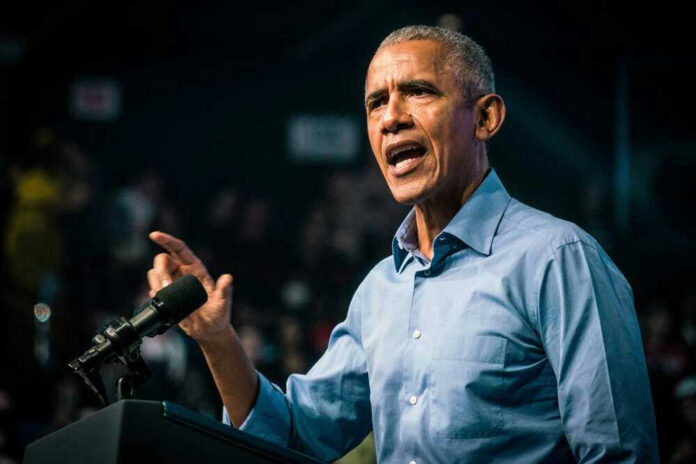
Declassified records have exposed former President Barack Obama’s orchestration of a “treasonous conspiracy” to sabotage the Trump administration’s transition of power.
At a Glance
- Newly declassified records suggest Obama officials politicized intelligence on Russian interference.
- Tulsi Gabbard, now Director of National Intelligence, calls for criminal investigations.
- Obama-era officials face potential legal repercussions and scrutiny.
- Trump and allies use revelations to vindicate his presidency.
Obama’s Alleged Sabotage of Trump’s Presidency
The release of 114 pages of declassified Obama administration records by Director of National Intelligence Tulsi Gabbard has reignited a fierce debate over the origins and conduct of the Russia investigation.
These documents suggest that the intelligence community was instructed to produce assessments that politicized Russian interference in the 2016 election. The implications of this are staggering: a former administration allegedly using the intelligence apparatus to delegitimize a duly elected president.
Obama’s December 2016 meeting with top national security officials, including James Clapper and John Brennan, reportedly set the stage for crafting a narrative that would undermine Trump’s presidency.
The subsequent years saw the release of the Steele dossier and the Mueller investigation, which served to cast doubt on Trump’s legitimacy and fuel partisan discord. Now, with these new revelations, the question arises—was this all a meticulously crafted political ploy?
The Players and Their Roles
Tulsi Gabbard, in her current role, has been at the forefront of bringing these documents to light. She accuses former Obama officials, including Clapper and Brennan, of engaging in a calculated effort to mislead the public and derail Trump’s presidency.
Gabbard’s motivation is clear: transparency and accountability. She has labeled these alleged actions as “treasonous,” a serious accusation that, if proven, could have profound implications.
Gabbard’s call for criminal investigations adds a layer of legal gravity to the situation, as the Justice Department has confirmed receipt of her criminal referral.
This move has placed Obama-era officials under intense scrutiny, with Congress, led by Senate Judiciary Committee Chair Chuck Grassley, conducting its own investigations into the matter. The stakes are high, and the potential fallout could reshape perceptions of political accountability.
Trump’s Response and Political Repercussions
Former President Trump has seized upon these revelations to vindicate his presidency and criticize his political opponents. On social media, he has called for accountability and highlighted what he perceives as a deliberate effort to undermine his administration.
His response taps into a broader sentiment among his supporters, who view these developments as proof of a corrupt political establishment.
For Republicans, these revelations offer a potent tool to rally their base and challenge the narrative of Russian interference. The declassification of these documents could influence upcoming elections, intensifying partisan divides and shaping the political landscape.
As investigations continue, the potential legal ramifications for those involved could serve as a cautionary tale for future administrations.
The Broader Impact on Intelligence and Trust
The implications of these findings extend beyond immediate political consequences. The credibility of the intelligence community is at stake, as these revelations suggest a dangerous precedent of politicizing intelligence assessments.
This could erode public trust in intelligence institutions and election integrity safeguards, raising concerns about transparency and accountability.
In the long term, this episode might discourage intelligence officials from providing candid assessments, fearing political repercussions. It also underscores the need for reforms to ensure that intelligence and law enforcement agencies remain impartial and free from political manipulation.
As the investigation unfolds, the spotlight will remain on how these institutions navigate the complexities of political influence and maintain their integrity.