

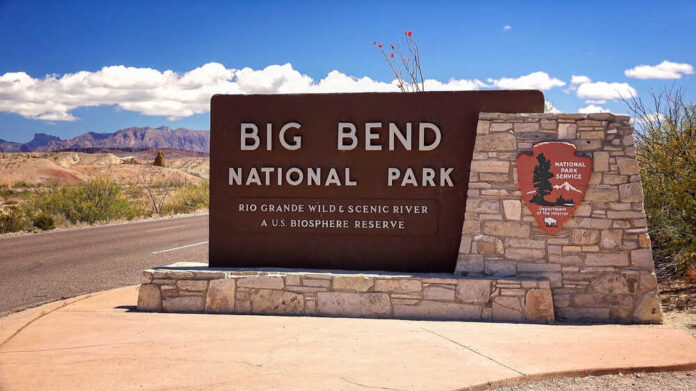
The government hit pause on bulldozers inside Big Bend National Park after a $1.7 billion border build sparked a Texas-sized backlash.
Story Snapshot
- Customs and Border Protection paused construction activities inside Big Bend National Park.
- A $1.7 billion award tied to Big Bend work triggered confusion over what would be built.
- Local sheriffs and park leaders argued the terrain already acts as a barrier.
- Officials said plans include roads and vehicle barriers, not a 30-foot wall in the park.
What Paused, Who Hit the Brakes, and Why It Matters
Customs and Border Protection paused construction work inside Big Bend National Park after days of public outcry and claims of damage near iconic canyons. Agency leaders said the pause allows on‑site review and next steps planning.
The halt came after a large contract tied to “border wall in Big Bend Texas” appeared in federal records and set off alarms among residents and conservation groups. The White House backed stepped-up border security, but the park location forced a hard reset in real time.
Federal records show a $1.7 billion delivery order awarded to a major builder for a Big Bend segment, the largest upfront award of its kind in the region to date. The label read “border wall,” which fueled fears of a continuous steel wall cutting through the national park.
Customs and Border Protection later said funded work in the Big Bend area would include vehicle barriers in select spots, patrol roads, and surveillance technology, not a towering wall through the park itself. The mismatch between the label and the plan stoked confusion.
The Local Revolt That Forced a Rethink
Five Big Bend‑area sheriffs issued a joint statement opposing heavy border infrastructure in this sector, arguing steep mountains, deep canyons, and the Rio Grande already block vehicles and people. Terrell County Sheriff Thaddeus Cleveland, a Republican and former Border Patrol agent, said he supports border security but not vehicle barriers placed where a car cannot physically drive.
Their message was simple: strategy must match terrain, not headlines. When local lawmen across party lines push back, smart policymakers listen.
Former Big Bend National Park superintendents urged the Department of Homeland Security to avoid waiving bedrock environmental laws for park construction, calling such work unnecessary and highly destructive.
Conservation groups reported bulldozers clearing native plants near Santa Elena Canyon and warned that legal waivers meant no environmental or archaeological surveys before ground disturbance. These claims sharpened the case for a timeout. A pause to inspect routes, review biology, and hear locals is common sense, not capitulation.
What The Plan Says Versus What The Terrain Allows
Customs and Border Protection has signaled a layered approach: roads to move agents, targeted vehicle barriers, and cameras to extend eyes across long stretches. That mix fits broader research, which finds barriers can reduce crossings in some places but work best with manpower and sensors, and less so in rugged terrain that already slows movement.
Big Bend is the definition of rugged. If the goal is results, planners should shift from mileage targets to choke points, overwatch, and rapid response where terrain helps, not hinders.
🇺🇲Border construction was halted today at Big Bend National Park, at least temporarily.
It just so happened that some of the park’s major attractions were in the way of a new patrol road and vehicle barriers being bulldozed along the southern border.
The work has drawn… pic.twitter.com/fOc7pLMVnW
— Mario Nawfal (@MarioNawfal) August 18, 2026
Critics say the Big Bend area records lower crossing activity than many border sectors, so new barriers would bring high cost and low gain. That argument aligns with a stewardship lens: focus dollars where the return is real, and avoid wrecking a crown‑jewel park to make a point.
Proponents counter that roads and vehicle barriers still matter to block drug runners and give agents access. Both ideas can be true, which is why the pause should lead to a map‑by‑map recalibration instead of a blanket yes or no.
How To Turn A Pause Into A Plan That Works
Policymakers should set three filters. First, mission impact: prove each mile of road or barrier cuts response time or blocks a known route, with sector data and agent input. Second, terrain leverage: place assets where canyons, cliffs, and river bends amplify them, and skip areas nature already secures.
Third, park protection: keep heavy work outside sensitive park zones; where routes must pass close, use light‑touch methods, reversible surfaces, and pre‑work cultural and habitat checks. That balance meets security goals while respecting Texas land and taxpayers.
Sources:
apnews.com, bigbendsentinel.com, fox26houston.com, cnn.com, spectrumlocalnews.com, newsweek.com, san.com