
A quiet Sunday at a California golf club turned into a hard test of how far protective security must go when a man with ammo started closely watching plans for President Trump’s visit.
Story Snapshot
- Man seen taking detailed photos and videos at Trump National Golf Club before a presidential visit
- Deputies and federal agents say he carried ammo on his body and kept a loaded pistol in his truck
- Search of his home uncovered more weapons and handwritten notes about security and weapons
- Case shows how modern threat teams act early, before intent is fully clear, to protect public leaders
Armed man draws attention at Trump National Golf Club
Federal agents working security at Trump National Golf Club in Rancho Palos Verdes spotted the man walking the grounds on Sunday, two days before President Trump was scheduled to arrive for a political event. Agents said he was not just enjoying the ocean view.
He moved in ways that looked methodical, stopped at access points, and aimed his phone at cameras, guard posts, and routes that would matter for a presidential visit. Authorities say that pattern triggered their concern.
BREAKING: A man has been charged after authorities in the US found a gun concealed in his car and ammunition in his pocket at a golf course owned by Donald Trump near Los Angeles.
https://t.co/nCQljwgkhc📺 Sky 501 and YouTube pic.twitter.com/fxuiYBfALQ
— Sky News (@SkyNews) August 5, 2026
Agents watched him take photos and videos while he appeared to track security planning activities, including areas where staff were meeting and mapping out how to guard the president.
When deputies from the Los Angeles County Sheriff’s Department contacted him, they report he had a magazine loaded with hollow-point rounds in his pocket. Investigators say those rounds are designed to expand in the body and cause more damage, which is one reason they cause more alarm than basic target ammunition.
From suspicious behavior to arrest and search warrants
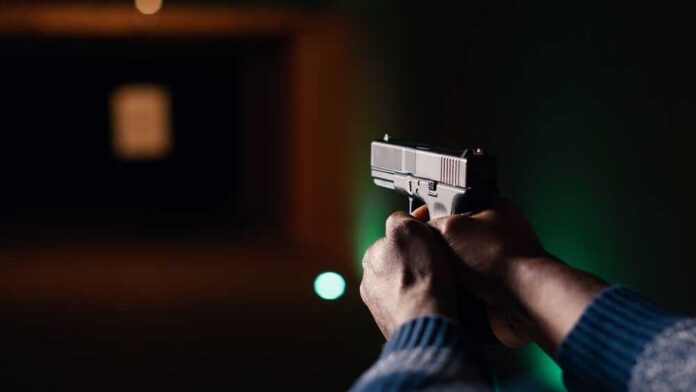
Deputies detained the man on the property and searched his vehicle, a pickup truck parked near the club. Inside, they say they found a loaded semi-automatic pistol and additional ammunition.
That discovery, combined with his behavior around cameras and guard locations, led them to arrest him on weapons-related allegations under California law and turn the case over to federal partners. Later federal filings identify him as a 38-year-old man from Downey, a city in Los Angeles County.
Detectives and federal agents then sought a search warrant for his residence. At his home, they report finding more firearms, ammunition, and several notebooks. Authorities say the notebooks contained detailed comments about security, weapons, and public figures, enough to raise more questions about what he was planning or studying.
At this point, he has been charged with firearm-related crimes, and court records show he has pleaded not guilty, which is his right under the law. The case now moves from the fast pace of security work into the slower, rule-bound world of federal court.
Protective intelligence and why intent comes second
This arrest did not happen in a vacuum. Since President Trump first entered national politics, his properties have drawn repeated security incidents, from a fatal shooting near Mar-a-Lago to gun cases at golf clubs in Florida and now California.
Protective teams have learned that waiting for clear proof of intent can mean waiting too long. Modern threat assessment focuses on behavior, access, and weapons first, then lets later evidence decide whether that early alarm was justified.
Guidance used by the United States Secret Service and other agencies teaches that surveillance-like behavior around a venue, plus the presence of weapons, is enough to act even if a suspect never says a word about plans.
That model reflects common sense: if someone repeatedly studies routes, cameras, and guard posts while armed, authorities cannot afford to treat it as a harmless hobby.
Security at Trump venues and the politics of prevention
Trump properties have become magnets not only for supporters but also for unstable individuals and, in some cases, alleged attackers. Federal filings in a recent Florida case describe a suspect with a rifle near Trump’s golf course, now charged with attempted assassination of a presidential candidate.
When you stack that history next to a man walking a Los Angeles course with hollow-point rounds, a loaded pistol, and what look like security notes, it becomes easier to see why deputies and agents took no chances.
NEW: Federal authorities arresting an armed California man at Trump National Golf Club in southern California just two days before the president's visit.
Jeanine John Taele pleading not guilty after allegedly monitoring security pic.twitter.com/CbCqneDVSz
— Saltpy Goat (@trump_supp) August 5, 2026
Some commentators online quickly labeled the California case another assassination attempt. The public record so far does not spell out an attack plan, and under American law the man is presumed innocent until proven guilty.
Still, based on what has been reported, authorities acted within a clear protective logic: they saw unusual behavior, confirmed the presence of dangerous ammunition and a loaded weapon, and moved to control the risk.
Sources:
apnews.com, abcnews.com, facebook.com, youtube.com, bbc.com, palmbeachpost.com, aljazeera.com, npr.org, uscp.gov, secretservice.gov