

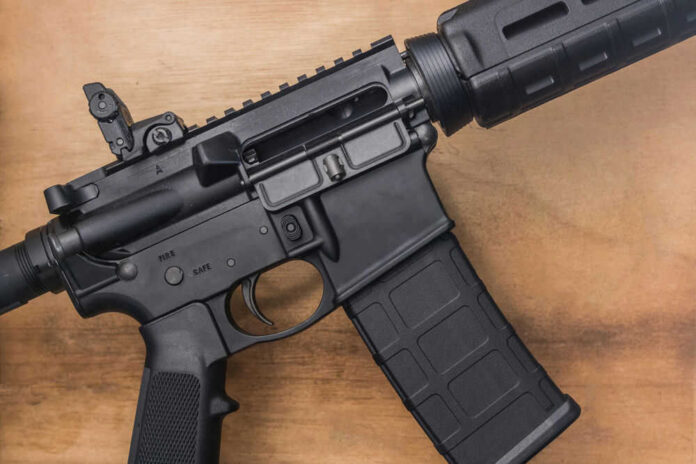
The Supreme Court’s decision to finally take up AR-15 “assault weapon” bans could redefine the Second Amendment for a generation of gun-owning Americans.
Story Snapshot
- The Court will review bans on AR-15-style rifles in Connecticut and Cook County, Illinois, after years of lower courts upholding similar laws.
- These cases will test whether millions of commonly owned semi-automatic rifles are protected “arms” under the Second Amendment.
- Past rulings used balancing tests and vague “assault weapon” labels that clash with the Supreme Court’s newer text-and-history standard.
- Gun control advocates claim public safety demands these bans, but crime data and Supreme Court precedent strongly favor gun owners.
Supreme Court Steps Into the Assault Weapon Ban Fight
The Supreme Court has agreed to hear challenges to assault weapon bans in Connecticut and Cook County, Illinois, putting AR-15-style rifles at the center of the nation’s gun rights debate.
These laws target semi-automatic rifles that gun control advocates label “assault weapons,” even though those rifles are owned by millions of law-abiding Americans for self-defense, sport shooting, and home protection.
The Court’s term, beginning in October, will now include the most direct test yet of how far the Second Amendment reaches into modern firearm technology.
US Supreme Court to hear challenge to state-level assault rifle bans https://t.co/FrA8hDV4DX https://t.co/FrA8hDV4DX
— Reuters (@Reuters) July 1, 2026
Connecticut’s ban was expanded directly after the Sandy Hook Elementary School tragedy, with lawmakers claiming that stricter rules would save lives by keeping “military-style” rifles out of civilian hands. Cook County adopted similar restrictions, backed by courts that said AR-15 platforms were better suited for the battlefield than the home.
For years, lower federal courts in several circuits have upheld these bans, even while acknowledging that the rifles they target are widely owned and used. Until now, the Supreme Court mostly stayed out of these disputes, letting those rulings stand.
How Earlier Courts Narrowed Second Amendment Rights
Before this term, every federal appeals court to face an assault weapon ban upheld it, often by using a two-part “interest balancing” test that weighed gun rights against public safety claims. That approach downplayed the Supreme Court’s rule from District of Columbia v. Heller, which said the Second Amendment protects bearable arms “in common use” for lawful purposes.
Some courts went even further, saying modern semi-automatic rifles were similar to machine guns and therefore outside constitutional protection, even though they fire only one round per trigger pull.
Connecticut, New York, Maryland, Massachusetts, and Illinois all saw their bans approved under this looser framework, where judges leaned heavily on legislative testimony and expert claims rather than strict constitutional text.
Advocates for these laws argue there is a long tradition of banning “dangerous and unusual” weapons and that rifles most “useful in military service” can be prohibited without violating the Second Amendment.
But these decisions rarely confronted the fact that AR-15s and similar rifles are among the most popular civilian firearms in the country, and thus hardly “unusual.”
Bruen, Heller, and the Shift Toward Text, History, and Tradition
Recent Supreme Court cases have changed the ground under these bans. In Heller, the Court confirmed that the Second Amendment protects an individual right to own firearms and highlighted that weapons “in common use” are at the core of that protection.
Later, in New York State Rifle and Pistol Association v. Bruen, the Court rejected interest-balancing tests and ordered lower courts to judge gun laws by the text of the Second Amendment and the nation’s historical tradition of firearm regulation. That standard leaves much less room for modern policy preferences dressed up as safety measures.
Legal scholars note that bans on some of the most popular rifles and magazines directly burden that core right because they restrict ordinary Americans from owning tools they actually use for self-defense.
Mark W. Smith and others have argued that many appeals courts simply dodged Heller’s “in common use” test in order to uphold assault weapon bans, creating rulings that conflict with Supreme Court precedent.
Justice Brett Kavanaugh, while on a lower court, wrote that semi-automatic rifles commonly owned by citizens are protected arms, which casts doubt on laws that single them out for prohibition.
Public Safety Claims Versus Real-World Numbers
Gun control advocates point to mass shootings and argue that banning AR-15-style rifles will reduce the damage these killers can do, citing research that claims mass shooting deaths were lower during the 1994 federal assault weapons ban.
Groups like Giffords Law Center say assault weapons are “uniquely dangerous,” and they highlight historical language about restricting dangerous and unusual weapons to defend modern bans. These arguments have strongly influenced lawmakers and judges in states that favor more gun control.
𝐒𝐔𝐏𝐑𝐄𝐌𝐄 𝐂𝐎𝐔𝐑𝐓 𝐀𝐆𝐑𝐄𝐄𝐒 𝐓𝐎 𝐃𝐄𝐂𝐈𝐃𝐄 𝐈𝐅 𝐓𝐇𝐄 𝐂𝐎𝐍𝐒𝐓𝐈𝐓𝐔𝐓𝐈𝐎𝐍 𝐏𝐑𝐎𝐓𝐄𝐂𝐓𝐒 𝐀𝐑-𝟏𝟓 𝐎𝐖𝐍𝐄𝐑𝐒𝐇𝐈𝐏
The Court announced it will take up whether cities and states can ban Americans from owning AR-15s and similar semi-automatic rifles — a… pic.twitter.com/HfbBFwIlm9
— M.A. Rothman (@MichaelARothman) July 1, 2026
Critics respond that these bans focus on cosmetic features and political labels, not on clear technical differences that would justify removing constitutional protection. They also note that federal crime statistics show rifles of all types, including AR-15s, are used in a small share of gun homicides nationwide, far fewer than handguns.
While the horror of school shootings rightly angers the public, using rare but shocking events to strip millions of responsible citizens of popular self-defense tools raises deep concerns about government overreach and erosion of core rights.
What Is at Stake for Gun Owners and the Constitution
The new Supreme Court review will decide whether states may ban entire categories of commonly owned semi-automatic rifles simply by calling them “assault weapons.” If the Court applies Bruen’s text-and-history test strictly, it will need to ask whether there is any real historical tradition of forbidding ordinary citizens from owning the era’s standard long guns.
So far, history mainly shows rules for truly unusual weapons or for dangerous people, not blanket bans on mainstream arms. That history favors gun owners who see these laws as power grabs rather than safety tools.
For conservative Americans worried about inflation, crime, and federal overreach, this fight is about more than hardware. It is about whether the government can chip away at a clear constitutional right by using vague labels and emotional rhetoric.
A ruling that strikes down the Connecticut and Cook County bans would protect millions of ordinary citizens and send a message that the Second Amendment still means what it says. A ruling that upholds them would invite more states to test how far they can go in disarming their own people.
Sources:
apnews.com, youtube.com, x.com, instagram.com, ap.org, supreme.justia.com, reddit.com