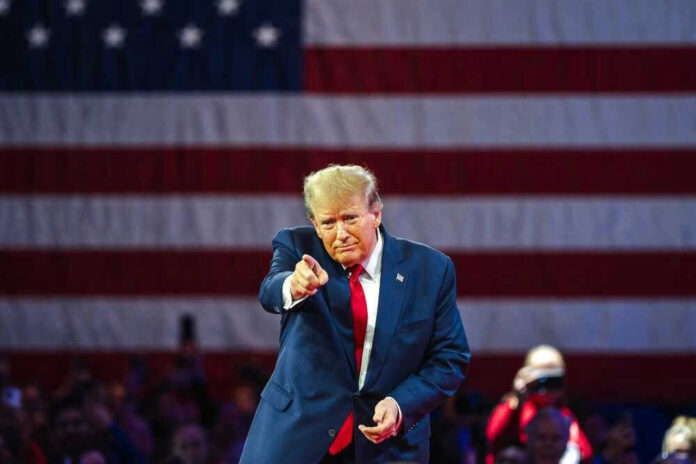
In a decisive move to combat the opioid crisis, President Donald Trump has signed the HALT Fentanyl Act, aiming to close legal loopholes and hold traffickers accountable.
At a Glance
- The HALT Fentanyl Act permanently classifies all fentanyl-related substances as Schedule I under the Controlled Substances Act.
- The legislation received bipartisan support, reflecting the urgent need to address the crisis.
- Families affected by fentanyl overdoses were present at the signing, underscoring the personal impact of the crisis.
- The law grants law enforcement expanded authority to prosecute fentanyl-related offenses.
A New Chapter in the Opioid Crisis
President Trump has taken a significant step by signing the HALT Fentanyl Act, a piece of legislation that permanently classifies all fentanyl-related substances as Schedule I under the Controlled Substances Act.
This move aims to close legal loopholes that traffickers have exploited by slightly modifying chemical structures to evade prosecution.
The opioid crisis, initially driven by prescription opioids, has seen an alarming rise in deaths due to illicit fentanyl, a synthetic opioid far more potent than morphine.
The urgency of the situation has brought a rare moment of bipartisan cooperation in Congress, with both Republicans and Democrats recognizing the need for stronger legal tools to tackle the crisis.
The law provides law enforcement agencies, including the DEA and FBI, with expanded authority to prosecute offenses related to fentanyl and its analogues, marking a crucial step in the fight against the opioid epidemic.
The Faces Behind the Legislation
The signing ceremony at the White House was attended by lawmakers and families who have been directly affected by the fentanyl crisis. Individuals like Greg Swan and Anne Funder, who have tragically lost children to fentanyl overdoses, were present, highlighting the personal and emotional stakes of the legislation. Their presence served as a poignant reminder of the lives lost and the urgent need for action.
President Trump, in his remarks, described the bill as a “historic step toward justice for every family touched by the fentanyl scourge.” He emphasized his administration’s commitment to removing drug dealers from the streets and ending the overdose epidemic.
The administration has also been pushing to designate drug cartels as foreign terrorist organizations and to pressure China and Mexico to curb the production and trafficking of fentanyl.
Implications and Challenges Ahead
The HALT Fentanyl Act is now in effect, granting immediate authority to law enforcement to tackle a broader range of fentanyl-related substances. This development raises the stakes for drug traffickers, who now face tougher penalties and increased legal risk.
As the law takes hold, communities heavily affected by the opioid crisis hope to see a reduction in overdose deaths and drug availability.
However, the road ahead is not without challenges. Critics caution that harsher penalties may not address the root causes of addiction and could lead to increased incarceration rates.
Public health experts argue that while enforcement is necessary, a comprehensive approach that includes treatment and prevention is crucial to effectively combating the crisis. The debate over the balance between law enforcement and public health approaches continues to shape the discourse around the opioid epidemic.