
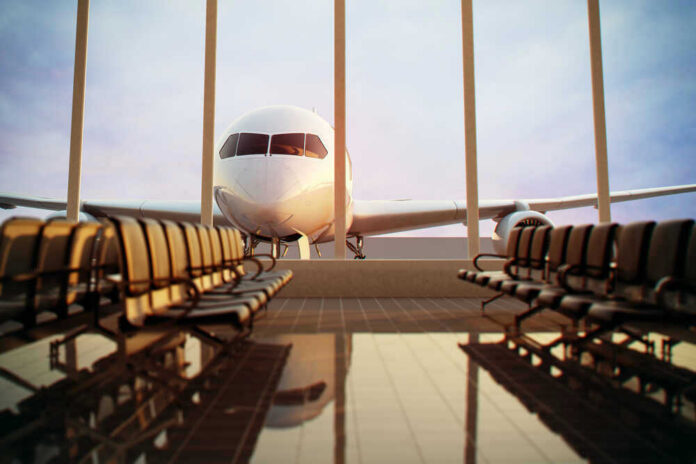
A Copa Airlines passenger jet and a UPS cargo plane collided on a taxiway at Miami International Airport, leaving two people with minor injuries that did not require a trip to the hospital.
Quick Take
- The crash happened around 9:15 p.m. at a taxiway intersection as one plane arrived and the other prepared to depart.
- The Copa Boeing 737’s wingtip struck the nose of the UPS Boeing 767 while both aircraft were taxiing.
- Two people were treated at the scene by Miami-Dade Fire Rescue and did not need to be taken to a hospital.
- Airport officials rerouted traffic to other taxiways, so the collision caused no wider shutdown of flights.
- The Federal Aviation Administration (FAA) is investigating, and officials have not yet said what caused the planes to collide.
What Happened On The Taxiway That Night
Miami-Dade Aviation Department communications director Greg Chin said the two aircraft made contact at the intersection of two taxiways at roughly 9:15 p.m. One plane was arriving, the other was heading out for departure. The FAA confirmed the aircraft involved as a Copa Airlines Boeing 737 and a UPS Boeing 767 cargo jet.
Air traffic controllers had instructed the UPS crew to give way to the #CopaAirlines flight, which was heading to its gate after landing, while the #UPScargoplane was preparing to depart for #Bogota , #Colombia , according to the FAA. pic.twitter.com/LbFUynOINh
— SANJEEV CHAUHAN (@SanjeevCrime) November 15, 2026
The FAA said the point of impact was specific: the Copa jet’s wingtip clipped the nose of the UPS plane while both aircraft were moving on the ground. That detail matters because it tells investigators exactly where to focus their physical inspection and their review of ground movements leading up to the contact.
Video from the scene and from onlookers quickly spread online, showing the two aircraft nose to wingtip on the tarmac under airport lighting. The images matched what officials described, giving the public a visual anchor for a story that otherwise relied on statements from the airport and the airlines.
Injuries Stayed Minor, Operations Kept Moving
Two people suffered injuries in the collision. Chin said Miami-Dade Fire Rescue treated both at the scene for what he called minor injuries, and neither needed transport to a hospital. UPS said in a statement that it was aware of an incident involving one of its aircraft on the ground in Miami, that its crew was safe, and that the company would work with authorities to find out what happened.
Copa Airlines said its passengers got off the plane normally and that two people received treatment for what the airline called apparent minor injuries. Despite the dramatic images, the Miami-Dade Aviation Department said the airport kept running close to normal. Flights were sent to other taxiways, and officials said there was no broader impact to airport operations at the time.
Why The Cause Still Isn’t Settled
Airport officials said plainly that they did not yet know what caused the two planes to hit each other, and the FAA said its investigation was continuing. That is a normal and honest position this early in any ground-collision probe. Investigators still need radar data, taxi clearance records, and crew accounts before they can say who did what and why.
Ground collisions like this one almost never come down to one single mistake. National Transportation Safety Board records from past taxiway incidents show that these events usually involve a mix of factors: clearance confusion, limited visibility from the cockpit, tight taxiway geometry, or a controller not issuing a hold instruction in time. One past case at an Alaska airport found that wingtips collided at a taxiway intersection because the intersection itself was too small for two aircraft to occupy safely at once, and no one told either plane to give way.
<<<<<<< SEARCH
That history is useful context, not an excuse. Pilots and controllers carry the responsibility to keep aircraft separated on the ground, full stop. If the eventual FAA findings point to a clearance error or a missed call, that should be addressed directly and the responsible party held accountable. Taxpayers and travelers expect a system with layered safeguards, and when those layers fail even briefly, it deserves a real answer, not a shrug.
=======
That history is useful context, not an excuse. Pilots and controllers carry the responsibility to keep aircraft separated on the ground, full stop. If the eventual FAA findings point to a clearance error or a missed call, that should be addressed directly and the responsible party held accountable. Travelers expect a system with layered safeguards, and when those layers fail even briefly, it deserves a real answer, not a shrug.
>>>>>>> REPLACE
For now, the facts on record are narrow but solid: two specific aircraft, a specific intersection, a specific time, and two people with injuries minor enough to avoid the hospital. The open question is not whether this happened. It happened, and multiple parties with no reason to agree on a false story have confirmed the same basic details. The open question is what exact combination of human and procedural factors let two multi-ton aircraft end up in the same space at the same time.
Expect the FAA’s eventual report to fill in the missing pieces: the clearance history, the taxiway diagram, and whichever cockpit or controller action set the collision in motion. Until then, the airport has already done the responsible thing by rerouting traffic and keeping flights moving, and the airlines have been transparent about the injuries and the safety of their crews.
Sources:
foxnews.com, livenowfox.com, yahoo.com