
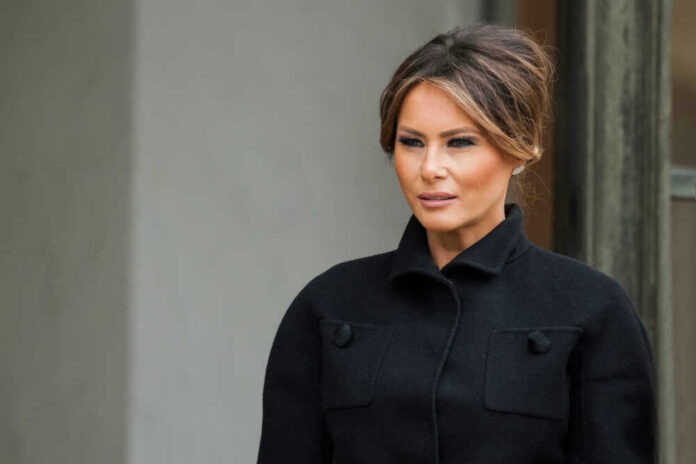
The White House says First Lady Melania Trump personally secured a city-sized ceasefire in war-torn Oleshky to get civilians out and aid in.
Story Snapshot
- The White House credited Melania Trump as “Exclusive Intermediary” for an Oleshky ceasefire.
- Russian and Ukrainian officials acknowledged a limited, local pause tied to aid and evacuation.
- Ukraine’s human rights ombudsman outlined a three-step plan: ceasefire, aid, evacuation.
What happened and why Oleshky mattered
The White House announced that First Lady Melania Trump brokered a localized ceasefire in Oleshky, a Russian-occupied city on the Dnipro’s left bank, to allow aid delivery and to set up an evacuation route. The statement said she initiated talks with both sides and worked through a representative “directly with Russian and Ukrainian leadership” as “Exclusive Intermediary”. The plan focused on a pause in fighting, humanitarian access, and a method for civilians to move to safety. That narrow scope made the deal plausible inside a brutal front.
Officials in Moscow and Kyiv confirmed a local pause tied to humanitarian goals, according to major outlets. A Kremlin spokesman acknowledged her coordinating role, and coverage cited both sides’ negotiators as parties to the arrangement. Ukraine’s human rights ombudsman, Dmytro Lubinets, described the process in three stages: ceasefire, aid, evacuation, crediting the First Lady’s coordination as the trigger for talks to begin. These claims framed the effort as practical relief, not a sweeping peace plan.
The timeline tangle and what remains unclear
Confusion over timing clouded the rollout. The White House set October 29 as the start for the ceasefire window, while Russian and Ukrainian references pointed to implementation beginning October 27 in local time zones. Reports did not name a firm duration. No public rules of engagement or verification plan appeared in official releases. Without published terms, the public record shows an arrangement existed, but it does not reveal the full text, signatures, or enforcement measures a hard skeptic would want.
The White House said non-military teams from Russia and Ukraine would fan out to residents and organize transport. It also said an unnamed American media organization would document the process. That monitoring promise sounds good, but the identity of the outlet was not disclosed in the published materials. Until that footage or logs surface, outside confirmation of on-the-ground aid deliveries or evacuations remains thin. The core facts still rest on official statements and attributed reports, which are strong but not exhaustive.
Credit, collaboration, and the Vatican wrinkle
Praise and pushback arrived fast. Vatican officials said Pope Leo XIV contacted Russian and Ukrainian leaders days before the White House announcement and helped press for an Oleshky pause. The Vatican’s top diplomat credited the pope with initiating the effort, and Ukrainian negotiator Davyd Arakhamia reportedly described a longer process that involved both the pope and Melania Trump rather than a solo mission. That version challenges exclusive credit, not the existence of a humanitarian pause.
Here is the common-sense read. If several actors pushed at once, that aligns with how small ceasefires usually form in hot wars. Many voices work back channels. One person often emerges as the face of the moment. Americans should welcome a pause that moves kids and grandparents out of danger. Arguing over who gets how much credit matters less than whether the pause holds and saves lives. Still, the White House put a clear stamp on the First Lady’s role, and named Ukrainian officials backed a sequence that began under her coordination.
What counts as success from here
Success now depends on what happens in streets and stairwells, not press rooms. Real success means aid trucks arrive, basements empty, and civilians cross to safer ground without shells overhead. Verifiable proof looks like synchronized incident logs, evacuation rosters, and video that can be geolocated and time-stamped. If the unnamed American outlet exists, its raw records should surface. If they do, the facts will outlast the spin. If they do not, doubt will grow, even if the pause happened.
FIRST LADY MELANIA TRUMP SECURES CEASEFIRE BETWEEN RUSSIA AND UKRAINE, LOCALIZED TO OLESHKY https://t.co/d8tvoEqFGK pic.twitter.com/zDpBXUfwQt
— JohnTitor17 (@JTitor17) October 26, 2026
The lesson for future pauses is simple and tough. Set a tight window. Write down rules everyone can follow. Publish monitoring steps the public can see. Name who is in charge at each checkpoint. Americans value results over theater. If the Oleshky pause delivered real aid and safe passage, keep that model. If not, fix the gaps and try again. Civilians do not need perfection. They need quiet skies for a day long enough to get out.
Sources:
abcnews.com, cnn.com, apnews.com, bbc.com, people.com