
Russia freed 74-year-old American Stephen Hubbard during a meeting in St. Petersburg, and a simple question follows: how did this finally happen after four long years?
Story Snapshot
- Steve Witkoff confirmed Hubbard’s release while meeting Vladimir Putin.
- Putin said Hubbard was taken to Pulkovo Airport in St. Petersburg.
- Hubbard was designated wrongfully detained by the U.S. State Department.
- Trump said he raised Hubbard’s case with Putin before Witkoff’s visit.
What Happened, Where, and Who Spoke On the Record
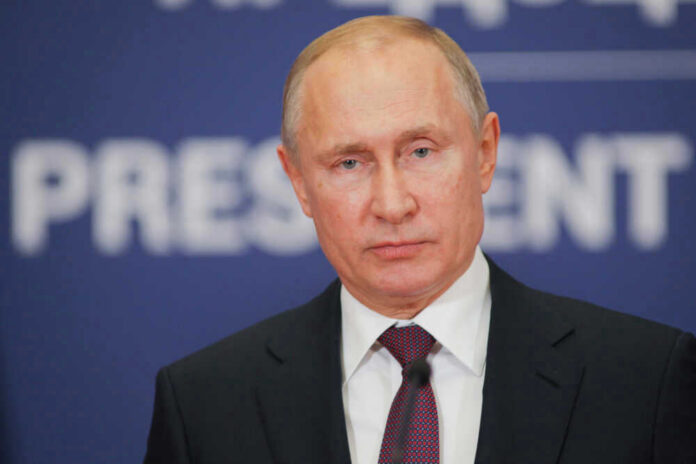
Russia released Stephen Hubbard, a retired American teacher from Michigan, during a meeting in St. Petersburg between Russian President Vladimir Putin and U.S. envoy Steve Witkoff. Witkoff confirmed the release in the room, and Russian state media echoed the news soon after. Putin said Hubbard had been moved to Pulkovo Airport following the release, giving a clear point on the map and a next step in the process. The report marks a rare on-the-spot confirmation from both sides.
Hubbard’s case moved into the national spotlight because of its length and the stark split in narratives. Russia convicted him on charges tied to fighting in Ukraine. The United States government classified him as wrongfully detained, which signaled that this was not a normal criminal case to Washington. That designation changes who handles the case and how hard the government pushes. It puts the file with the Special Presidential Envoy for Hostage Affairs and elevates the urgency.
The Long Road From Capture To Release
Reports place Hubbard’s detention in eastern Ukraine in April 2022, early in the wider war. He then spent years in Russian custody and, in October 2024, received a sentence of nearly seven years after a closed trial, according to outlets that tracked the case. The accounts describe “more than four years” behind bars by the time of his release in October 2026. That duration mirrors a grim global trend: hostage and wrongful detention cases often stretch for years before resolution.
The release did not appear out of thin air. Witkoff traveled to Russia to press the issue face-to-face. President Trump said he had raised Hubbard’s case with Putin before that visit and publicly linked the push to broader diplomacy with Moscow. This sequence matters. It shows a line of effort, not a photo op. It also reflects a U.S. approach that pairs firm advocacy for citizens with selective leverage, a mix that tends to move stubborn cases without paying with chaos later.
Why This Fits A Broader Pattern
Hubbard’s case follows a now-familiar pattern: a foreign government jails an American on charges it insists are criminal, while the United States says the detention is wrongful and shifts to a different playbook. That playbook includes focused diplomacy and high-level outreach. The designation as wrongfully detained triggers that shift, moving the case from routine consular support to active negotiation. The goal is simple to state and hard to achieve: bring an American home without encouraging the next seizure.
🇺🇸🇷🇺 Trump says numerous people who called for immediate sanctions on Russia have apologized to him, saying they did not know he was negotiating the release of Stephen Hubbard, which he described as a major and important deal for the U.S. He added that imposing sanctions would… pic.twitter.com/bDYlTbNuTz
— KOSO🇳🇬 (@KosoNwa1) October 21, 2026
Critics often argue that any contact with adversaries “rewards bad behavior.” That view has moral power but weak practical results when a citizen sits in a foreign cell. Common sense says measure outcomes: Did the American come home, and what did the United States give up? Public reporting so far ties Hubbard’s release to direct engagement by Trump and Witkoff, not to a declared exchange or concession. The facts available point to pressure applied with discipline rather than a lopsided deal.
What We Know About Hubbard And What Comes Next
Hubbard is a 74-year-old retired teacher from Michigan, described as a long-time traveler who was in Ukraine when the war broke out. Russia accused him of fighting with Ukrainian forces. U.S. officials and family members disputed those claims. The United States marked him as wrongfully detained in 2025, underscoring the government’s view that politics, not proof, drove the outcome of his case. After his release, he was routed through Pulkovo Airport for onward travel and processing.
Next steps usually move fast but carefully. U.S. officials seek a medical check, a debrief, and time with family. Diplomatic teams log the details needed to prevent copycat seizures. Leaders also weigh the lesson. Tight, personal diplomacy can work when paired with clear red lines and a refusal to glamorize kidnappings as policy wins. Bringing an American home is not left or right. It is the baseline duty of a serious country. Hubbard’s return is one more case where that duty was met.
Sources:
cbsnews.com, bostonglobe.com, cnn.com, bbc.com, foxnews.com