
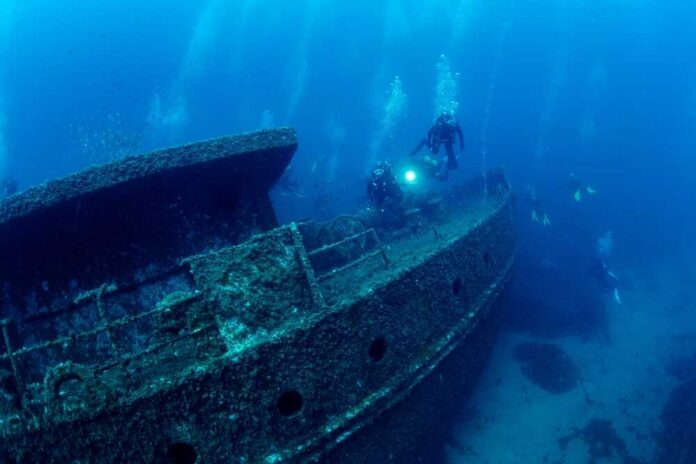
Off Turkey’s Kekova Island, divers found a Bronze Age cargo field with more than 30 jars and three stone anchors—an intact time capsule without the ship.
Story Snapshot
- Archaeologists documented an Early Bronze Age cargo cluster near Kekova Island.
- More than 30 storage jars and three stone anchors define a coherent wreck scatter.
- Pottery style dates the loss to about 4,400–4,700 years ago.
- Turkey’s culture ministry backed the age range after 2024 survey work.
A Bronze Age ship’s shadow on the seabed
Archaeologists working off Turkey’s southern coast mapped a seafloor spread of cargo that points to a ship lost in the Early Bronze Age. The cluster sits near Kekova Island, a known maritime corridor with rocky coasts and sudden wind shifts. Divers logged more than 30 ceramic storage jars and three stone anchors in close association, the hallmark of a wreck rather than random trash. Reporters described the jars as amphora-like containers built for hauling bulky goods across open water.
Expedition lead Hakan Öniz of Akdeniz University called the site a “time capsule at the bottom of the sea,” a plain phrase that fits the evidence. Pottery does not drift in neat clusters by chance, and anchors do not migrate uphill against currents. The spatial pattern signals a single loss event, even though the ship’s wood is gone. That is common in salt water. Organic hulls decay. Heavy cargo stays. Anchors pin the footprint, marking where a crew fought for control and failed.
How archaeologists pinned the age
Dating hinges on the shape, rims, and fabric of the jars. Specialists compare these traits to other well-dated finds on land. The Kekova assemblage matches the Early Bronze Age, about 4,400 to 4,700 years ago. Turkey’s culture ministry echoed that range in public statements, and news desks repeated it after briefings and field notes from the 2024 survey. That window reaches back to the time the Great Pyramid rose in Egypt, placing this voyage near the dawn of complex trade by sea in the region.
Typology is a standard tool when wood is gone. Most ancient wrecks rely on their cargo for dates. A study in the journal Antiquity urged teams to add independent anchors—short-lived organics or radiocarbon when possible—because pottery-based dates can be off. That is sound advice. Here, the date rests on strong ceramic comparison, but no wood survives for direct testing. The claim still stands as a best-fit range supported by specialists and the official Turkish release.
What the jars and anchors reveal
Storage jars of this size and build point to bulk transport. Traders may have carried olive oil, wine, or other staples that shaped diets and deals. The team has not reported residue tests, so the cargo remains a likely but unconfirmed mix. The three stone anchors matter as much as the jars. Multiple anchors suggest a seagoing hull, not a river raft. They also hint at seamanship under stress, where a captain may have dropped more than one anchor to hold the bow into waves or to keep off a lee shore.
Archaeologists uncover what’s left of ancient shipwreck dating back 4,400 years near Turkish island https://t.co/hzZ536emKq pic.twitter.com/CWgkJusrcf
— bulletinindy (@bulletinindy) October 14, 2026
The site fills a key gap between coastal hops and later deep-water trade, as shown by famous wrecks like Uluburun. Early sailors read stars, winds, and currents with little metal and no charts. Yet they moved heavy goods across capes that still scare weekend skippers. This wreck scatter shows the kit they used and the reach they had, centuries before alphabetic scripts spread. Each jar is a data point; together they map a network of trust, risk, and profit across the eastern Mediterranean.
Why “oldest shipwreck” matters—and how to treat the label
Media called the site the world’s oldest shipwreck, or at least a prime candidate. The superlative grabs attention, but the value runs deeper. The scene tells a clean story of organized trade at scale, with standard containers and proper anchors. That is civilization on the move. The case sits on coherent field mapping, clear leadership, and a ministry statement. Those align with common sense and conservative values: name your sources, show your work, and let facts lead.
What comes next on the seabed and in the lab
Teams will likely expand mapping, log exact jar positions, and recover select items for study. Lab work could include residue analysis inside jars to confirm cargo. If divers find rope, seeds, or pitch sealed in fragments, radiocarbon could tighten the date. Independent ceramic checks can test the typology call. Each step would sharpen the timeline, confirm contents, and fix the wreck’s place in maritime history. For now, the seafloor holds a tight, telling picture of a very old loss.
Sources:
cbsnews.com, abcnews.com, bbc.com, aa.com.tr, cnn.com, bbc.co.uk, thenationalnews.com